

CONTACT
Please contact us for shipping details.
The proliferation of 18650 lithium-ion cells in high-demand applications necessitates a profound understanding of their maintenance, particularly the recharge process. This document examines the critical principles and practices for a safe and effective 18650 battery recharge. It delineates the electrochemical reactions that govern charging, emphasizing the constant current/constant voltage (CC/CV) methodology as the standard for preserving cell health and longevity. The analysis extends to common pitfalls, including the use of improper charging equipment, mismanagement of voltage and current, and disregard for environmental factors like temperature. By investigating the consequences of these errors, such as diminished capacity, reduced cycle life, and significant safety hazards like thermal runaway, this work provides a comprehensive framework for users. The objective is to equip both novices and professionals with the requisite knowledge to optimize the 18650 battery recharge process, thereby maximizing the operational lifespan and ensuring the safe use of these ubiquitous power sources.
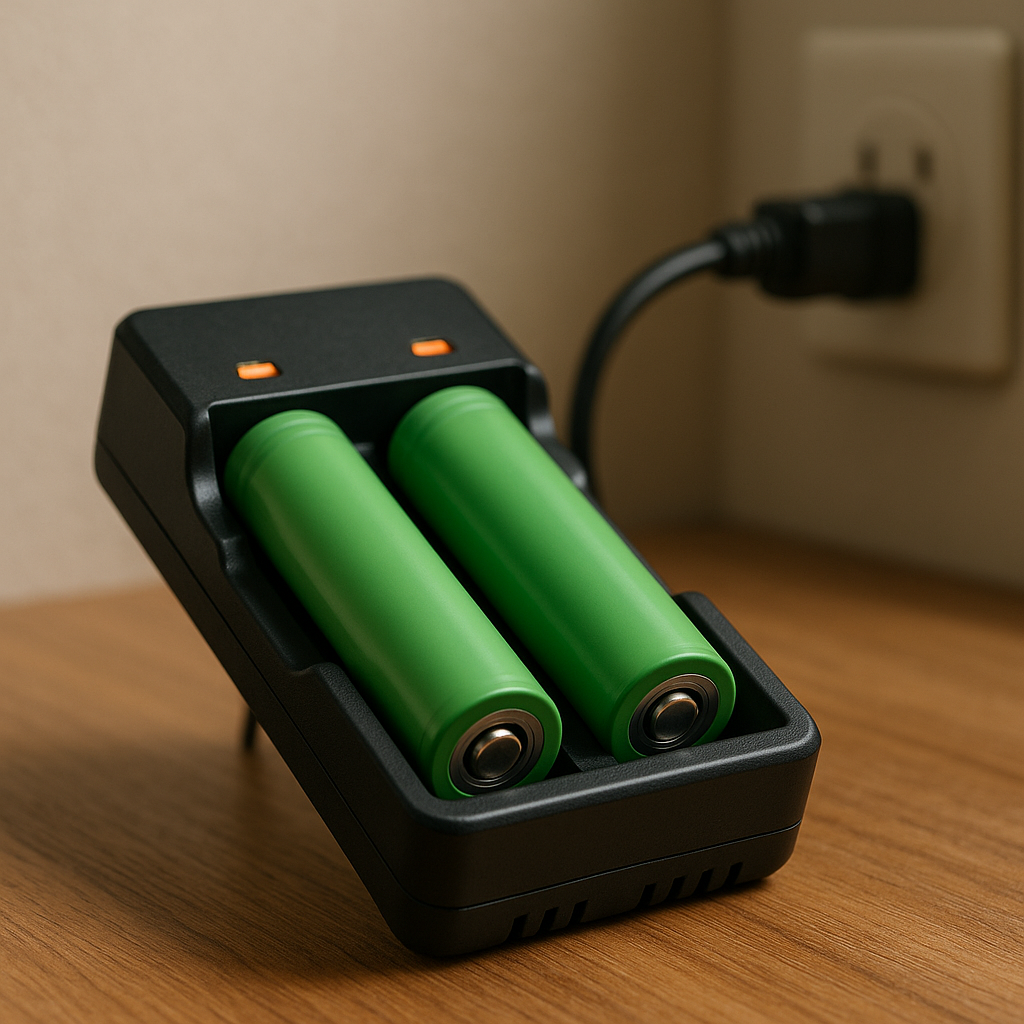
Before we can explore the nuances of the 18650 battery recharge process, it is beneficial to first establish a foundational understanding of what this battery is. The name "18650" is not a brand or a model number in the conventional sense; rather, it is a dimensional classification for a specific size of lithium-ion (Li-ion) rechargeable battery. The name itself is a descriptor: "18" refers to its diameter in millimeters, "65" refers to its length in millimeters, and the "0" signifies that it has a cylindrical shape. Think of it like a larger, more powerful cousin of the common AA battery you might find in a remote control.
These cells have become extraordinarily popular due to their excellent balance of energy density, power output, and respectable cycle life. You will find them powering a vast array of devices, from high-performance flashlights and laptops to power tools, electric vehicles, and vaping devices. Their ability to store a significant amount of energy in a relatively compact and lightweight form makes them an ideal choice for portable electronics that require substantial power.
However, this high energy density comes with a responsibility. Unlike the more forgiving nickel-cadmium (NiCd) or nickel-metal hydride (NiMH) batteries of the past, lithium-ion chemistries are sensitive. They operate within a strict set of parameters, and deviating from these can lead not just to poor performance or a shortened lifespan, but also to serious safety risks ereplacementparts.com. This is precisely why a meticulous approach to the 18650 battery recharge procedure is not just recommended; it is imperative. The process is not merely about replenishing energy; it is a delicate electrochemical dance that, when performed correctly, preserves the battery's health and ensures its safety.
To truly appreciate the charging process, let's take a brief journey inside an 18650 cell. Imagine two main components: the anode (typically made of graphite) and the cathode (made from a lithium metal oxide, such as lithium cobalt oxide or lithium manganese oxide). Separating them is a micro-perforated sheet called a separator, and everything is bathed in a liquid electrolyte.
When you use the battery (discharge it), lithium ions travel from the anode, through the electrolyte and separator, to the cathode. This movement of ions creates a flow of electrons in the external circuit, which is the electricity that powers your device.
The 18650 battery recharge process is simply the reverse of this. An external power source—your charger—applies a voltage to the terminals. This electrical pressure forces the lithium ions to leave the cathode and travel back to the anode, where they are stored, ready for the next discharge cycle. The core principle of charging is to move these ions back to their starting position without causing damage to the physical structures of the anode, cathode, or separator. This is where the intricacies of voltage, current, and temperature management become so profoundly important. A poorly managed 18650 battery recharge can cause these internal components to degrade, leading to the problems we will explore in detail.
To navigate this topic, it helps to be familiar with a few key terms that will appear throughout our discussion. Understanding this language is the first step toward mastering the 18650 battery recharge.
| Term | Definition | Why It Matters for Recharging |
|---|---|---|
| Voltage (V) | The measure of electrical potential difference, akin to pressure in a water pipe. A standard 18650 has a nominal voltage of 3.6V/3.7V. | The charger must apply a precise voltage. Too high a voltage (overcharging) is the single most dangerous mistake and can cause permanent damage and safety risks. |
| Capacity (Ah/mAh) | Ampere-hours or milliampere-hours. This represents how much energy the battery can store, similar to the size of a fuel tank. A typical 18650 has a capacity between 2000mAh and 3500mAh. | Capacity determines the charging time. A higher capacity battery will take longer to recharge at the same current. |
| C-Rate | The rate at which a battery is charged or discharged relative to its capacity. 1C for a 3000mAh battery is a charge/discharge current of 3000mA (3A). | Charging at too high a C-rate generates excessive heat and stresses the battery, significantly reducing its lifespan. A rate of 0.5C to 0.8C is often recommended. |
| Cycle Life | The number of full charge-discharge cycles a battery can endure before its capacity drops to a specified percentage (usually 80%) of its initial rating. | Proper recharging practices are the most significant factor in maximizing a battery's cycle life, which typically ranges from 300 to 500 cycles for 18650s (Battery University, 2010). |
| State of Charge (SoC) | The current charge level of the battery, expressed as a percentage (0% = empty, 100% = full). | Managing SoC is vital for longevity. Storing a battery at 100% or letting it drop to 0% frequently will degrade it much faster than keeping it in a mid-range. |
With this foundational knowledge, we are now prepared to explore the common, yet critical, mistakes made during the 18650 battery recharge process. Each mistake represents a deviation from the ideal conditions that these sensitive cells require, and understanding them is the key to unlocking their full potential safely and economically.
One of the most frequent and consequential errors in handling the 18650 battery recharge is the selection of the charger itself. It is a common temptation to think of a charger as a simple power adapter, grabbing whatever fits the battery. This perspective, however, is a dangerous oversimplification. For lithium-ion batteries, the charger is not just a power source; it is an intelligent control system. Using the wrong type of charger, or even a poor-quality one of the correct type, can drastically shorten your battery's life and, in the worst cases, create a severe safety hazard.
Let's start by considering the different types of rechargeable batteries that have been common in power tools and other devices. The three main chemistries you will encounter are Nickel-Cadmium (NiCd), Nickel-Metal Hydride (NiMH), and Lithium-Ion (Li-ion) ereplacementparts.com. Each of these chemistries has a fundamentally different internal structure and requires a unique charging algorithm.
NiCd and NiMH Chargers: These chargers are designed for nickel-based chemistries. They often use a method called "delta-V" detection to determine when a battery is full. As a NiCd or NiMH battery reaches full charge, its voltage slightly drops. The charger detects this small voltage dip and terminates the charge. They also often continue to supply a low "trickle charge" to keep the battery topped off.
Li-ion Chargers: These chargers operate on a completely different principle known as Constant Current/Constant Voltage (CC/CV). We will explore this in greater depth, but in essence, the charger supplies a constant current until the battery reaches its peak voltage (4.2V for a standard 18650), and then holds that voltage constant while the current gradually tapers off. Crucially, a proper Li-ion charger completely cuts off the current once charging is finished. There is no trickle charge.
Using a NiCd or NiMH charger for an 18650 battery is a recipe for disaster. The charger will not recognize the 4.2V cutoff point. It will continue to force current into a battery that cannot accept any more, leading to a condition called overcharging. This causes the internal temperature and pressure to rise rapidly. Metallic lithium begins to plate onto the anode, which can puncture the separator and cause an internal short circuit. The result is often thermal runaway—a violent and uncontrollable chain reaction where the battery vents hot, flammable gases and can even explode.
The term "smart charger" is not just a marketing gimmick; it refers to a charger that incorporates a microprocessor to actively monitor and control the 18650 battery recharge process. It is your primary defense against damaging your batteries.
A quality smart charger for 18650s will perform the following functions:
The hidden risk of counterfeit and uncertified chargers cannot be overstated. A charger that looks legitimate on the outside can be dangerously deficient on the inside. These units often cut corners by omitting essential safety features. They might fail to terminate the charge correctly, use a crude approximation of the CC/CV algorithm, or lack any form of over-temperature or over-voltage protection. The small amount of money saved by purchasing a cheap, unbranded charger is a poor trade-off for the risk of destroying hundreds of dollars' worth of batteries or causing a fire. Always purchase chargers from reputable brands and retailers like Nitecore or Xtar that stand behind their products.
Think of it this way: you would not put the cheapest, lowest-octane fuel you could find into a high-performance sports car. The 18650 battery is a high-performance energy cell. It deserves a high-quality "fueling" system to match.
Having established the importance of a quality charger, we must now turn our attention to the electrical principles that the charger applies. The concepts of voltage and current are at the very heart of the 18650 battery recharge process. Misunderstanding or mismanaging these two variables is akin to driving a car by stomping on the pedals without knowing which is the accelerator and which is the brake. The consequences can range from suboptimal performance to catastrophic failure.
The standard, accepted, and safest method for a Li-ion 18650 battery recharge is the CC/CV algorithm. Let's break down this two-stage process using a simple analogy: filling a glass with water from a pitcher.
Stage 1: Constant Current (CC) This is the main phase of charging. Imagine you start pouring water into the empty glass at a steady, fast rate. The charger does the same with electricity, supplying a constant, regulated current to the battery. For an 18650, this current is typically set between 0.5C and 1C. So, for a 3000mAh battery, the constant current would be between 1500mA (1.5A) and 3000mA (3A). During this stage, the battery's voltage rises steadily. This phase is responsible for charging the battery to approximately 70-80% of its total capacity. It is the "bulk" charging phase.
Stage 2: Constant Voltage (CV) As you fill the glass, you slow down the pouring rate as the water level nears the brim to avoid spilling. The charger does something analogous. Once the battery's terminal voltage reaches its peak—4.20V for a standard 18650 cell—the charger switches to the constant voltage stage. It holds the voltage steady at exactly 4.20V. Because the battery's voltage is now very close to the charger's voltage, the electrical "pressure" difference is small, and the current the battery accepts begins to drop. This is the "absorption" or "saturation" charge phase. It tops off the remaining 20-30% of the capacity. The charger monitors this declining current, and when it falls to a predetermined level (usually around 3% of the C-rate, or about 100mA for our 3000mAh example), the charger terminates the cycle completely.
This two-stage process is non-negotiable for Li-ion chemistry. It ensures a fast yet safe recharge, filling the battery efficiently without exceeding its critical voltage limit.
Overcharging is the single most destructive thing you can do to an 18650 battery. It occurs when a charge is continued after the battery is full, or when the charging voltage exceeds the 4.20V limit. The tolerance for this is incredibly small, often just +/- 0.05V per cell (Battery University, 2010). A charger applying 4.25V might seem close enough, but it is already stressing the cell.
When a Li-ion cell is overcharged, a process called lithium plating occurs. Instead of lithium ions interleaving neatly into the graphite anode, they begin to deposit on the anode's surface as metallic lithium. These deposits form sharp, needle-like structures called dendrites. These dendrites can grow through the microporous separator and create an internal short circuit by touching the cathode. This internal short is what leads to a rapid, uncontrolled release of energy, otherwise known as thermal runaway.
Even if thermal runaway does not occur, overcharging permanently damages the battery. The plated lithium is no longer available for the electrochemical reaction, leading to a direct and irreversible loss of capacity. The process also generates excess heat and gas, increasing internal pressure and accelerating the degradation of other components. This is why a charger that does not terminate the charge correctly, or one that uses a "trickle charge" like a NiCd charger, is so hazardous. It is continuously pushing the battery into an overcharged state.
The C-rate simply describes the charge or discharge current relative to the battery's capacity. As we've noted, a 1C rate for a 3000mAh battery is 3A. A 0.5C rate is 1.5A. While many 18650 cells can technically handle a 1C charge rate, it is not always the best practice for longevity.
Think of it like this: you can floor the accelerator in your car to get up to speed quickly, but doing so every single time puts more wear and tear on the engine than accelerating gently. Charging at a high C-rate generates more internal heat. Heat is the enemy of battery longevity. It accelerates the parasitic chemical reactions inside the cell that lead to capacity loss over time.
For maximizing the cycle life of your 18650 batteries, a charge rate of 0.5C to 0.8C is generally recommended. For our 3000mAh battery, this would be a current of 1.5A to 2.4A. The charge will take slightly longer, but the reduced stress and lower heat will pay dividends in the form of more total charge cycles over the battery's life. Always check the manufacturer's datasheet for your specific 18650 cell, as it will specify the maximum recommended charge current. Some high-drain cells designed for power tools are built to withstand higher charge rates, but for general use, a gentler approach is always a safer and more economical bet. The patience you exercise during the 18650 battery recharge will be rewarded with a longer-lasting and more reliable battery.
The electrochemical reactions that govern the 18650 battery recharge are highly sensitive to temperature. We can think of temperature as the environment in which these reactions occur. Just as a delicate plant will not thrive if it is too cold or too hot, a lithium-ion battery will suffer significant and often permanent damage if charged outside its optimal temperature range. Ignoring the ambient temperature during charging is a common oversight that can severely compromise both the performance and the safety of your batteries.
The generally accepted safe temperature range for charging Li-ion batteries is between 0°C and 45°C (32°F and 113°F). Charging outside this window, in either direction, introduces a host of problems.
Charging a lithium-ion battery at temperatures below freezing (0°C or 32°F) is particularly dangerous. At these low temperatures, the chemical reactions inside the battery slow down considerably. The anode's ability to accept lithium ions is significantly reduced.
Imagine trying to stuff clothes into an already full suitcase quickly. If you go too fast, the clothes will just pile up on top instead of fitting inside. When you attempt an 18650 battery recharge in the cold, a similar thing happens. The anode cannot absorb the incoming lithium ions fast enough. As a result, the lithium ions begin to plate onto the surface of the anode as metallic lithium, the very same dendrite-forming process that occurs during overcharging.
This plating is not just inefficient; it is irreversible and hazardous.
If you must charge in a cold environment, the battery must be warmed to above freezing first. Many smart chargers designed for power tool systems, like those from Milwaukee, incorporate temperature sensors that will prevent a charge from starting until the battery pack is within a safe temperature range.
While charging in the cold is more acutely dangerous, charging in high temperatures—generally above 45°C (113°F)—is a primary driver of accelerated aging. Heat acts as a catalyst for the unwanted parasitic chemical reactions inside the battery.
Think of it as leaving a carton of milk out on a hot day. The heat drastically speeds up the processes that cause it to spoil. For a Li-ion battery, high temperatures during charging cause:
It is crucial to charge your 18650s in a cool, well-ventilated area. Never leave them charging in direct sunlight, in a hot car, or on a surface that traps heat. If you notice a battery or charger becoming excessively warm to the touch during a normal 18650 battery recharge, you should immediately discontinue use and investigate the cause. It could be a sign of a faulty battery, a poor charger, or simply an inadequate charging environment. Managing temperature is a simple but profoundly effective way to protect your investment and ensure safe operation.
Beyond the hardware and environmental conditions, the way you manage the battery's charge level on a day-to-day basis has a significant impact on its long-term health. Many users, accustomed to older battery technologies, unknowingly apply habits that are detrimental to modern lithium-ion cells. Properly managing the State of Charge (SoC) is a subtle but powerful strategy for maximizing the cycle life of your 18650s.
Let's begin by dispelling a persistent myth. Older NiCd batteries suffered from a phenomenon known as the "memory effect." If a NiCd battery was repeatedly recharged after being only partially discharged, it would "remember" this partial capacity and refuse to deliver energy below that point on subsequent cycles. To combat this, it was common practice to fully discharge NiCd batteries before recharging them.
This habit has, for many, carried over to Li-ion batteries. However, lithium-ion batteries do not suffer from the memory effect. The underlying chemistry is completely different. In fact, intentionally fully discharging a Li-ion battery is one of the worst things you can do for its longevity. The practice is not only unnecessary but actively harmful.
The key concept to understand is Depth of Discharge (DoD). This refers to the percentage of the battery's capacity that has been used. A 100% DoD means you have used the entire battery, from 100% down to 0%. A 50% DoD means you used half the capacity, perhaps from 80% down to 30%.
There is a direct and well-documented inverse relationship between DoD and the total number of cycles a battery can provide. Deeper discharges put more stress on the battery's internal components.
Consider the following table, which illustrates the typical relationship between DoD and cycle life for a Li-ion battery (data adapted from Battery University, 2010).
| Depth of Discharge (DoD) | State of Charge (SoC) Swing | Estimated Charge Cycles |
|---|---|---|
| 100% | 100% to 0% | 300 - 500 |
| 80% | 90% to 10% | 600 - 800 |
| 60% | 80% to 20% | 1,200 - 1,500 |
| 40% | 70% to 30% | 2,000 - 2,500 |
| 20% | 60% to 40% | 4,000 - 5,000 |
The data is stark. Regularly discharging the battery fully (100% DoD) yields the lowest number of total cycles. Conversely, using smaller, partial discharges dramatically increases the cycle life. A battery that is only ever discharged by 20% might last ten times as long as one that is always fully depleted.
This does not mean you should only ever use 20% of your battery. That would be impractical. The key takeaway is that "shallow" discharge and recharge cycles are far gentler on the battery than deep ones. For your power tools or other devices, this means it is better to top off the battery after a moderate amount of use rather than waiting for it to be completely dead. Avoiding the extremes of the SoC range is the goal.
Another critical aspect of SoC management is storage. Leaving a lithium-ion battery on the charger, or storing it at a 100% state of charge for extended periods, is highly detrimental. A fully charged battery is at its peak voltage (4.2V). This high-voltage state places the internal components, particularly the electrolyte, under constant stress. This stress accelerates the parasitic reactions that cause irreversible capacity loss.
Think of it like a rubber band that is stretched to its absolute limit. Leaving it in that state of high tension will cause it to lose its elasticity much faster than if it were stored in a relaxed state. A Li-ion battery at 100% SoC is in a state of high electrical tension. This effect is magnified by high temperatures. A battery stored at 100% SoC in a hot environment will degrade with astonishing speed.
For this reason, you should never leave your batteries sitting in the charger for days on end. Once the 18650 battery recharge is complete, remove the batteries. If you are not going to use them for a while, it is best not to charge them to 100% in the first place. This leads us to the ideal storage condition.
For long-term storage (anything more than a few weeks), the ideal state of charge for a lithium-ion battery is between 40% and 50%. At this SoC, the battery's voltage is near its nominal 3.6V-3.7V level, which is a state of very low internal stress.
Storing a battery at this level in a cool place (around 15°C or 60°F is ideal) is the gold standard for preserving its health. The rate of capacity loss due to aging will be at its absolute minimum. Before storing your 18650s, either partially use them or use a smart charger that has a storage charge function to bring them to the correct level. This simple act of preparation can add years to the usable life of your batteries.
The previous discussions have focused on the electrochemical and electrical aspects of the 18650 battery recharge process. However, the physical condition of the battery is an equally vital component of its overall safety and performance. A battery that is physically compromised should never be charged, regardless of how sophisticated your charger is. Neglecting to inspect and handle your batteries with care is an invitation for failure.
Before every single 18650 battery recharge, you should perform a quick but thorough physical inspection of the cell. It takes only a few seconds and is your first line of defense against charging a dangerous battery.
You should be looking for:
Many devices, such as high-power flashlights or power tool battery packs, use multiple 18650 cells together in series or parallel. When you use multiple cells in a single device, it is crucial that the cells are "married." This means the cells should be of the same brand, model, and capacity, and they should have been purchased at the same time and exclusively used and charged together as a set for their entire lives.
Why is this so important? As batteries age, their capacity and internal resistance change. If you mix an old cell with a new cell in a series connection, the old, weaker cell will be a problem. During discharge, the weaker cell will be depleted first. As the other cells continue to supply power, they can force the depleted cell into an over-discharged state, even reversing its polarity, causing permanent damage. During charging, the new, higher-capacity cell will take longer to charge. If the charger only monitors the total pack voltage, it might terminate the charge when the pack voltage is reached, but the individual cells could be dangerously out of balance, with some being undercharged and others being overcharged.
Always use a dedicated, matched set of batteries for your multi-cell devices. Label your married sets (e.g., "A1, A2", "B1, B2") and never mix them. This ensures they age together and share the load and charge evenly, maximizing both performance and safety.
The high energy density of 18650 cells means they must be handled with respect. Never carry loose 18650 batteries in your pocket or bag where they can come into contact with keys, coins, or other metal objects. This is a leading cause of accidental shorts and battery failures. Always transport and store your batteries in dedicated plastic battery cases. These cases are inexpensive and are the single most important accessory for any 18650 user. They keep the batteries isolated and protected from both short circuits and physical damage. Proper handling is a fundamental part of the overall safety protocol for any 18650 battery recharge and usage cycle.
Mastering the five fundamental rules of 18650 battery recharge will place you well ahead of the average user in terms of safety and battery care. However, for those who work with multi-cell packs or need to charge in the field, a deeper understanding of more advanced concepts is beneficial. These principles govern the complex battery packs found in modern cordless tools and provide options for mobile power solutions.
When you have multiple 18650 cells connected in series to create a higher voltage pack (as is common in power tools from brands like DeWalt or Makita), simply applying a bulk voltage to the entire pack for charging is insufficient and unsafe. This is where a Battery Management System (BMS) becomes essential. A BMS is an electronic circuit board integrated into the battery pack that acts as the brain, monitoring and managing the health of the individual cells.
A BMS performs several critical functions during the 18650 battery recharge and discharge cycles:
Virtually all commercial power tool battery packs, laptop batteries, and EV batteries contain a sophisticated BMS. It is the unseen guardian that makes using these high-voltage, high-capacity lithium-ion packs safe for the consumer. When you are building your own battery packs, incorporating a correctly specified BMS is not an optional extra; it is a mandatory safety component.
There are often situations, particularly for professionals on a job site or outdoor enthusiasts, where access to a standard wall outlet for an 18650 battery recharge is not available. This is where power inverters and converters become incredibly useful tools, turning your high-capacity power tool batteries into portable power stations.
A power inverter is a device that converts the direct current (DC) from your battery into alternating current (AC), the same type of power that comes from a wall outlet. This allows you to plug in your standard 18650 smart charger, laptop adapter, or other AC-powered devices directly into your power tool battery. For example, a quality power inverter for your tool batteries can be an invaluable piece of equipment, providing the flexibility to charge various devices away from the grid. These devices often include additional features like USB ports for charging phones and tablets directly.
A converter or adapter, on the other hand, typically modifies the DC output of the battery to a different DC voltage, often providing USB (5V DC) or other common DC outputs. These are excellent for directly charging smaller electronics without the need for their original AC adapters.
When using these devices, it is important to be mindful of the power draw. An inverter has an efficiency rating (usually 85-95%), meaning some power is lost as heat during the DC-to-AC conversion. Ensure that the total wattage of the devices you plug into the inverter does not exceed the inverter's continuous power rating. Using these multi-functional portable power solutions responsibly provides immense convenience, effectively leveraging the investment you have already made in your power tool battery platform. The BMS within your power tool battery will still protect the battery from being over-discharged by the inverter, but it is good practice to monitor the battery's charge level and not run it completely flat.
Q1: Can I use a charger with a higher amp (A) rating to charge my 18650 battery faster?
You can, but with caution. A higher amperage charger will complete the constant current phase more quickly. However, you should never exceed the maximum charge current specified by the battery manufacturer, which is typically 1C (e.g., 3A for a 3000mAh battery). Charging at rates closer to 0.5C (1.5A for a 3000mAh battery) is gentler on the battery, generates less heat, and will result in a longer overall cycle life. Speed comes at the cost of longevity.
Q2: Is it okay to leave my 18650 batteries in the charger overnight?
While a quality smart charger will terminate the charge and prevent overcharging, it is not ideal to leave batteries sitting at a 100% state of charge for extended periods. The high-voltage state stresses the battery and accelerates aging. It is best practice to remove the batteries from the charger once they are full. Leaving them in for a few hours after the charge is complete is unlikely to cause harm, but leaving them for days or weeks is detrimental.
Q3: My 18650 battery has a small tear in the plastic wrap. Can I just put electrical tape over it?
No, you should not use electrical tape as a permanent fix. The entire metal can of the battery (except the top button) is the negative terminal. A tear in the wrap exposes this, creating a serious short circuit risk. You should either properly re-wrap the battery using a purpose-made 18650 PVC heat-shrink wrap and insulator ring or safely dispose of the battery. Until then, store it in a plastic case where it cannot contact any metal.
Q4: I have two 18650 batteries, one is older than the other. Can I use them together in my dual-battery device?
This is strongly discouraged. Using batteries of different ages, capacities, or discharge histories together is unsafe. The cells will be unbalanced, leading to one cell being over-discharged during use and potentially overcharged during charging. This damages the batteries and creates a safety hazard. Always use a "married" set of batteries that have been bought, used, and charged together their entire lives.
Q5: Why shouldn't I fully drain my 18650 battery before recharging? I thought this was good for batteries.
That practice was for older NiCd batteries that suffered from "memory effect." Lithium-ion batteries do not have a memory effect. In fact, fully discharging them (deep cycling) puts significant strain on their chemistry and drastically reduces their total cycle life. It is much better for the battery's health to perform partial discharges and recharges (e.g., use it down to 30% and charge it back to 80%).
Q6: Can I charge my 18650 batteries with my car's USB port?
Yes, you can, provided you are using a proper 18650 charger that is powered by USB. The car's USB port simply acts as the 5V power source for your smart charger. The charger itself will then correctly apply the CC/CV algorithm to the battery. Standard USB ports are typically low current (500mA), so charging will be slow, which is perfectly fine for the battery. Never attempt to directly wire a battery to a 5V USB source without a proper charge controller.
Q7: My battery feels warm during charging. Is this normal?
A slight temperature rise, perhaps 5-10°C (9-18°F) above ambient temperature, can be normal during the 18650 battery recharge process, especially with faster charge rates. However, if the battery becomes hot to the touch, you should immediately stop charging. Excessive heat is a sign of a problem, such as too high a charge current, high internal resistance in an aging battery, or a faulty charger.
The 18650 lithium-ion battery is a marvel of modern engineering, packing tremendous energy into a small space. This power, however, demands a commensurate level of respect and knowledge. The path to maximizing the life and ensuring the safety of these cells is paved not with complex equipment, but with a consistent application of correct principles. The 18650 battery recharge process is the most frequent and critical interaction we have with these power sources, and it is where good habits yield the greatest rewards.
By internalizing the five core principles—using a quality smart charger, managing voltage and current through the CC/CV protocol, respecting temperature limits, managing the state of charge to avoid extremes, and maintaining the physical integrity of the cells—you transform battery maintenance from a chore into a skill. You move from being a passive consumer of energy to an informed custodian of it. These practices will not only save you money by extending the lifespan of your batteries but will also provide the peace of mind that comes from operating your devices safely. The energy to power your tools and technology is in your hands; so too is the knowledge to manage it wisely.
Battery University. (2010, September 14). BU-409: Charging lithium-ion. https://batteryuniversity.com/article/bu-409-charging-lithium-ion%C2%A0
Battery University. (2010, September 6). BU-105: Battery definitions and what they mean. https://batteryuniversity.com/article/bu-105-battery-definitions-and-what-they-mean
eReplacementParts.com. (2025). Cordless power tool buying guide: How to choose battery type. https://www.ereplacementparts.com/repair-center/article/3084/Cordless_Power_Tool_Buying_Guide_How_to_Choose_Battery_Type.html?srsltid=AfmBOooWze_JBx625oNDOd7RaApn04XhAQim65zCY_HQOi97TJW-E50J
Ryobi Tools. (2025). Batteries & chargers. https://www.ryobitools.com/products/batteries-chargers
Tenergy. (2025). Batteries - Chemistry. https://www.tenergy.com/batteries/chemistry
{"one"=>"Select 2 or 3 items to compare", "other"=>"{{ count }} of 3 items selected"}