

CONTACT
Please contact us for shipping details.
The selection of a 36V lithium-ion battery represents a critical decision for users of high-demand equipment, including power tools, golf carts, and marine trolling motors. This decision extends beyond mere voltage compatibility, involving a nuanced understanding of internal chemistry, electronic management systems, and performance metrics. An improper choice can lead to diminished performance, reduced operational lifespan, and significant safety hazards. This document examines the common yet costly mistakes made during the procurement process. It analyzes the fundamental differences between lithium iron phosphate (LiFePO4) and lithium nickel manganese cobalt oxide (NMC) chemistries, highlighting their respective strengths in safety, longevity, and energy density. Furthermore, it elucidates the indispensable role of the Battery Management System (BMS) in protecting the investment and ensuring safe operation. By deconstructing concepts such as capacity, discharge rate, and cycle life, this guide provides a framework for evaluating the total cost of ownership, urging a shift from prioritizing upfront cost to assessing long-term value and reliability.
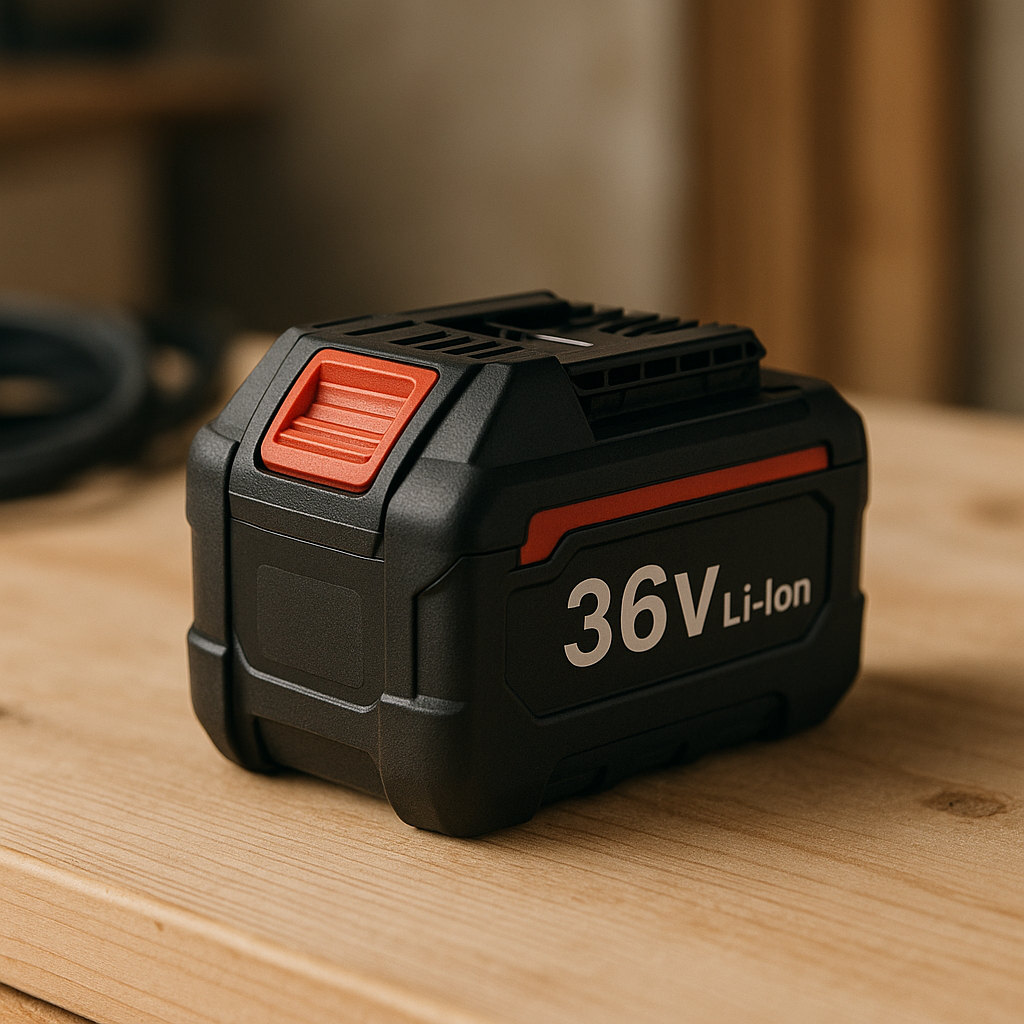
Embarking on the purchase of a 36V Li battery without a foundational grasp of its internal chemistry is akin to navigating a complex landscape without a map. The term "lithium-ion" is not a monolith; it is an umbrella category housing distinct chemical formulations, each with a unique profile of strengths, weaknesses, and ideal applications. The choice between these chemistries is perhaps the most consequential decision you will make, directly influencing the battery's safety, lifespan, performance, and ultimately, its suitability for your specific equipment. A failure to appreciate these distinctions often leads to a frustrating mismatch where a battery, despite having the correct voltage, consistently underperforms or fails prematurely.
Before we differentiate, let's establish a common ground. At its heart, any lithium-ion battery operates on a simple, elegant principle: the movement of lithium ions. During discharge, lithium ions travel from a negative electrode (the anode, typically graphite) through a liquid or solid medium called an electrolyte, to a positive electrode (the cathode). This migration of ions causes a corresponding flow of electrons in the external circuit, creating the electrical current that powers your device. When you charge the battery, an external voltage is applied to reverse this process, forcing the lithium ions back from the cathode to the anode, where they are stored, ready for the next discharge cycle (Buchmann, 2021). The material used for the cathode is what primarily defines the battery's characteristics and gives it its name. For 36V systems, two cathode chemistries dominate the market: Lithium Iron Phosphate (LiFePO4) and variations of Lithium Nickel Manganese Cobalt Oxide (NMC).
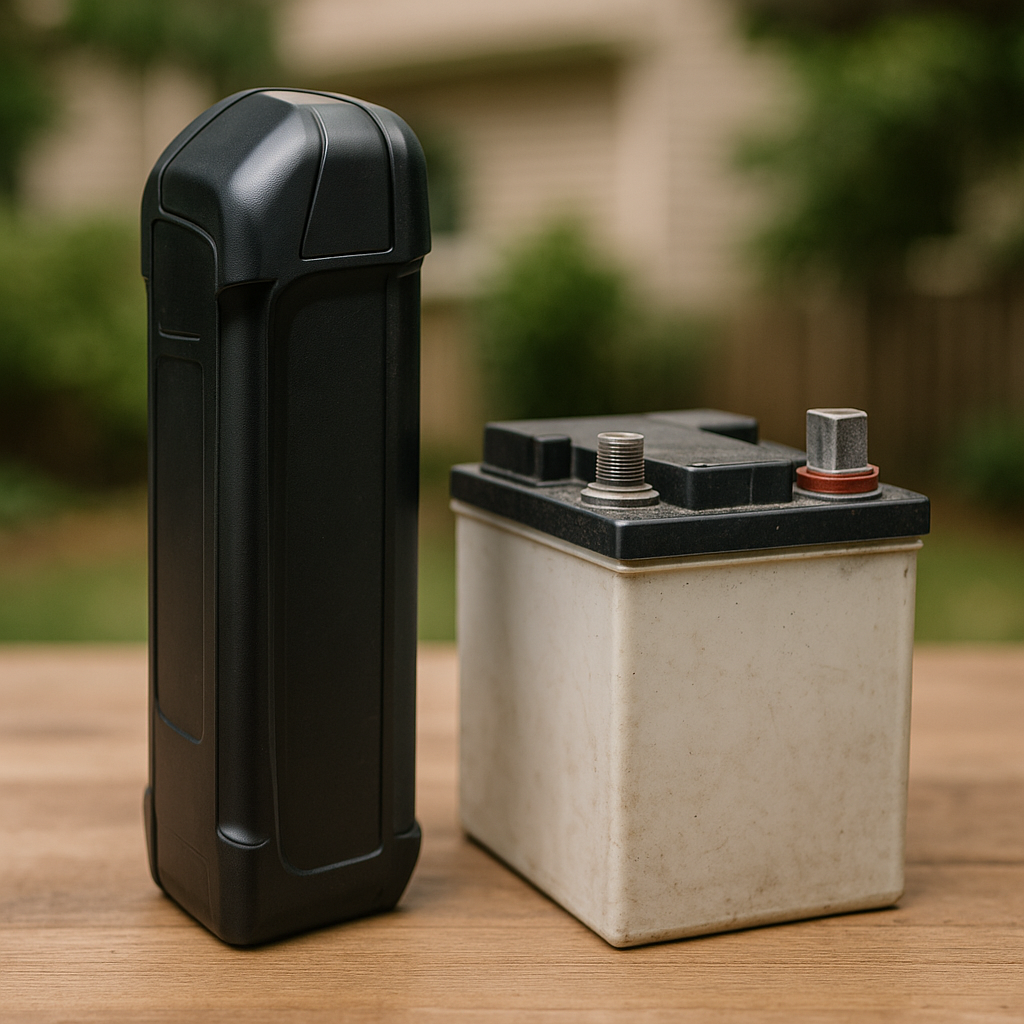
Thinking about these two chemistries as different types of athletes can be helpful. LiFePO4 is the marathon runner: incredibly stable, safe, and possessing astounding endurance over a very long career. NMC is the sprinter: lighter, more energy-packed for its size, but with a shorter, more intense career and a slightly higher risk of burnout. This distinction is critical because the demands of a high-torque drill are vastly different from those of a lightweight e-bike or a trolling motor that runs for hours on end.
| Feature | Lithium Iron Phosphate (LiFePO4) | Lithium Nickel Manganese Cobalt (NMC) |
|---|---|---|
| Nominal Voltage | ~3.2V per cell | ~3.6V-3.7V per cell |
| Cycle Life | 2,000 - 7,000+ cycles | 500 - 2,000 cycles |
| Safety (Thermal Runaway) | Very High (~270°C / 518°F) | Moderate (~170°C - 210°C) |
| Energy Density | Lower (90-160 Wh/kg) | Higher (150-220+ Wh/kg) |
| Performance in Cold | Moderate; capacity loss below freezing | Better than LiFePO4 but still impacted |
| Cost | Initially higher, lower total cost of ownership | Lower upfront cost, higher long-term cost |
Let’s unpack this table. LiFePO4's lower nominal voltage means that to create a 36V pack, you typically need more cells in series (often 12 cells) compared to an NMC pack (often 10 cells). While this can make LiFePO4 packs slightly larger and heavier for the same energy capacity, their two standout features are safety and cycle life. The phosphate-based cathode is exceptionally stable, making thermal runaway—a dangerous chain reaction of overheating—extremely unlikely. This inherent safety is a massive advantage in applications where the battery might be subject to physical stress or high temperatures. Coupled with a cycle life that can be three to ten times longer than NMC, the long-term value proposition of LiFePO4 becomes clear.
NMC, on the other hand, excels in energy density. It can pack more energy into a smaller and lighter package, making it a favorite for applications where weight is a primary concern, such as in certain electric vehicles and high-performance portable electronics. However, this higher energy density comes at the cost of reduced thermal stability and a shorter overall lifespan (e-ReplacementParts.com, 2025).
So, how do you apply this knowledge? Consider the context.
Choosing the wrong chemistry is the foundational error from which many other problems spring. A lightweight NMC battery might seem attractive for your trolling motor until it fails after only a couple of seasons, whereas a slightly heavier LiFePO4 pack would have served you for a decade.
If the lithium cells are the heart of your 36V Li battery, the Battery Management System (BMS) is its brain and central nervous system. It is an electronic sentinel that works silently in the background, yet its presence and quality are arguably the most critical factors for both the safety and longevity of your battery pack. To purchase a lithium-ion battery without scrutinizing its BMS is to invest in a high-performance engine without ensuring it has a functional cooling system or oil pressure gauge. The consequences of a poor or absent BMS range from a frustratingly short battery life to catastrophic, dangerous failure.
A BMS is a small circuit board integrated into the battery pack that monitors and manages all aspects of its performance and safety. Lithium-ion cells are powerful but also sensitive. They operate happily within a specific window of voltage, current, and temperature. A quality BMS ensures they never stray outside that safe operating area. Its primary functions include:
The market is flooded with cheap 36V lithium-ion batteries that cut corners, and the BMS is often the first place manufacturers do so. A low-quality BMS might lack a proper balancing function, or it might have poorly calibrated cutoff points. The results are insidious.
Without cell balancing, the pack's performance will degrade with every cycle. You'll notice the runtime getting shorter and shorter. The charger might indicate the battery is full, but in reality, only one cell has reached the maximum voltage, while others lag behind. The BMS stops the charge to protect that one cell, leaving the rest of the pack undercharged. The reverse happens on discharge. The BMS will cut power when the first cell hits the low-voltage cutoff, even if other cells still have plenty of energy. This "weakest link" problem is the primary killer of multi-cell lithium packs.
Worse, a BMS with faulty protection circuits is a serious safety risk. It may fail to prevent overcharging or overheating, creating the conditions for a fire.
When evaluating a 36V Li battery, you must inquire about its BMS. A reputable seller like will be transparent about the specifications of their management systems. Here's what to confirm:
Never assume a battery has a quality BMS just because it's a lithium-ion pack. A well-built battery with a sophisticated BMS is a complex piece of engineering. Ignoring this vital component is a shortcut to disappointment and danger.
After navigating the complexities of chemistry and control systems, we arrive at the performance metrics that most directly translate to your user experience: capacity and discharge rate. Many buyers make the error of focusing solely on one number—usually the amp-hour rating—while completely ignoring the other. This is like buying a car based only on the size of its gas tank without considering the engine's horsepower. A battery's ability to not only store energy but also deliver it on demand is what determines its real-world usefulness. A mismatch between the battery's capabilities and the tool's requirements is a recipe for frustration, poor performance, and premature battery failure.
The capacity of a battery is measured in Amp-hours (Ah). At its simplest, this number tells you how much current the battery can deliver over a period of time. A 5Ah battery can theoretically deliver 5 amps of current for one hour, or 1 amp for five hours, or 10 amps for 30 minutes. Think of the Ah rating as the volume of water in a reservoir. A larger reservoir (higher Ah) holds more water and can supply a town for a longer period.
When selecting a 36V Li battery, a higher Ah rating directly translates to longer runtime. A 6Ah battery will run your power tool or trolling motor roughly twice as long as a 3Ah battery under the same load. However, simply choosing the highest Ah you can find isn't always the right move. Higher capacity packs are physically larger, heavier, and more expensive. The key is to match the capacity to your needs. For a drill used for quick jobs around the house, a 2Ah or 3Ah pack might be perfectly adequate and more ergonomic. For a lawn mower or a trolling motor, where extended runtime is paramount, a 6Ah, 9Ah, or even larger pack is the logical choice.
This is the metric that is most often ignored, and it is critically important. The C-rating defines the maximum safe continuous and peak rate at which a battery can be discharged. "C" simply stands for the battery's capacity in Amp-hours. A C-rating is expressed as a number followed by "C" (e.g., 10C, 20C).
To find the maximum continuous discharge current in amps, you multiply the C-rating by the battery's capacity in Ah.
Let's use an example: A 36V, 5Ah battery with a 10C rating.
This means the battery can safely provide 50 amps of current continuously without overheating or being damaged. Many batteries also specify a "peak" or "burst" C-rating, which is a higher rate it can sustain for a few seconds, which is important for the initial startup of powerful motors.
Here is where the mistake happens. Imagine you have a powerful circular saw that can draw up to 60 amps under a heavy load, like cutting through dense hardwood. You purchase a budget 36V Li battery that is 5Ah but only has a 10C rating (50A max). The moment you put the saw under load, you are trying to pull 60 amps from a battery that is only designed to safely deliver 50.
What happens next? The battery's voltage will sag dramatically. The tool will feel weak and may stall. Internally, the battery is being strained beyond its limits. The BMS might trip and cut the power off entirely. If the BMS is of low quality and doesn't intervene, the cells will rapidly overheat, causing irreversible damage and significantly shortening their lifespan. In a worst-case scenario, this kind of abuse can lead to a dangerous thermal event.
Conversely, using a high C-rating battery for a low-draw device (like an LED work light) is perfectly fine; the battery is simply not being pushed to its limit. The problem always arises from asking for more power than the battery is built to give.
When shopping, especially for high-demand power tools, you must consider the C-rating. Reputable manufacturers of performance batteries, such as this large-capacity 36V battery, design their packs with C-ratings appropriate for the intended tools. Cheap, no-name batteries often use cells with low C-ratings to cut costs, making them unsuitable for anything but the lightest-duty tasks. Always verify that the battery's maximum continuous discharge current can comfortably exceed the maximum current draw of your most demanding tool.
In the pursuit of power and runtime, it is easy to become fixated on the immediate performance of a battery. However, the true economic and practical value of a 36V Li battery is revealed over its entire operational life. A critical error many consumers make is taking the "cycle life" number printed on a specification sheet at face value, without understanding the crucial variable that governs it: the Depth of Discharge (DoD). Ignoring the profound relationship between how deeply you discharge your battery and how many cycles it will last is a surefire way to be disappointed by its longevity and to misunderstand its total cost of ownership.
A battery's cycle life refers to the number of full charge-and-discharge cycles it can endure before its capacity falls to a certain percentage of its original rating, typically 80%. For example, a battery with a rated cycle life of 2,000 cycles means that after being fully charged and discharged 2,000 times, it will still retain at least 80% of its initial capacity. It does not mean the battery is "dead" at 2,001 cycles; it simply means its performance has degraded to that point.
The mistake is assuming this number is a constant. It is not. The cycle life figure advertised by manufacturers is almost always based on a specific, and often optimistic, set of laboratory conditions, including a controlled temperature and, most importantly, a defined Depth of Discharge (eReplacementParts.com, 2025).
Depth of Discharge (DoD) refers to the percentage of the battery's capacity that has been used. Discharging a 5Ah battery until it has delivered 4Ah of energy means you have subjected it to an 80% DoD. This is where the chemistry of lithium-ion batteries reveals a fascinating and vital characteristic: they are far less stressed by shallow cycles than by deep ones.
Consistently discharging your battery to 100% DoD (running it until it is completely empty) is the most stressful way to use it and will yield the lowest number of total cycles. In contrast, using only 50% of its capacity before recharging can multiply its total cycle life by a factor of three, four, or even more. This effect is particularly pronounced in LiFePO4 chemistry, which is renowned for its durability.
Consider this a mental exercise: Imagine your battery's lifespan not as a fixed number of uses, but as a total amount of energy it can process. By taking smaller "withdrawals" (shallow discharges), you cause less wear and tear for each transaction, allowing you to make many more withdrawals over its lifetime.
Here is a typical representation of how DoD affects the cycle life of a high-quality LiFePO4 battery:
| Depth of Discharge (DoD) | Estimated Cycle Life |
|---|---|
| 100% | ~2,000 Cycles |
| 80% | ~3,500 Cycles |
| 50% | ~7,000 Cycles |
| 20% | ~15,000+ Cycles |
The implications of this table are profound. A user who regularly runs their trolling motor until the battery dies might only get 2,000 outings. A user who recharges after using about half the capacity could potentially get 7,000 outings from the exact same battery.
This leads to a more sophisticated way of evaluating a battery's value: its total energy throughput, often measured in kilowatt-hours (kWh), over its lifetime. This figure represents the total amount of work the battery can do before it needs replacement.
Let's compare two scenarios for a 36V, 100Ah LiFePO4 battery:
By simply changing the usage pattern to favor shallower discharges, the total energy delivered by the battery over its life increases by over 75%. This is why, for applications like golf carts or solar energy storage, it is often wise to "oversize" the battery bank. A larger bank means that daily use constitutes a smaller DoD, drastically extending the system's lifespan and reducing the long-term cost per kWh. When you purchase a 36V Li battery, you are not just buying stored energy for today; you are investing in a power source for years to come. Understanding and respecting the DoD-cycle life relationship is the key to maximizing that investment.
The process of replenishing a lithium-ion battery is a delicate electrochemical dance, and the charger is the choreographer. Using the wrong charger, or even a poor-quality one designed for the correct chemistry, is one of the most common and damaging mistakes a user can make. It's equivalent to putting diesel in a gasoline engine; it might seem to work for a moment, but internal damage is guaranteed. A charger is not merely a power supply; it is an intelligent device that must communicate with the battery, respect its chemical needs, and follow a precise charging algorithm to ensure safety, performance, and longevity.
The first and most dangerous error is assuming any power adapter with the right voltage will suffice. This is especially true for users migrating from older lead-acid or NiCd technologies. A lead-acid charger, for example, has a completely different charging profile that is destructive to a lithium-ion battery. It may use a high-voltage equalization phase or a continuous float charge, either of which will overcharge a lithium battery, leading to irreversible capacity loss and creating a significant fire risk.
You must use a charger that is explicitly designed for the specific lithium chemistry of your 36V Li battery pack. A charger for a LiFePO4 pack will have a different maximum voltage setting (around 14.6V for a 12V equivalent, or 43.8V for a 36V pack) than one for an NMC pack. Using the wrong one will either chronically undercharge or dangerously overcharge your battery.
A proper lithium-ion charger follows a two-stage algorithm known as Constant Current/Constant Voltage (CC/CV). Understanding this process helps to appreciate why a dedicated charger is so critical (Buchmann, 2025).
Stage 1: Constant Current (CC): When you first plug in a discharged battery, the charger applies a constant, steady current (the "C" in CC). The current level is typically between 0.5C and 1C of the battery's capacity. During this stage, the battery's voltage rises steadily as it absorbs the bulk of the charge. This is where most of the "fast charging" happens, bringing the battery to roughly 80-85% of its capacity.
Stage 2: Constant Voltage (CV): Once the battery pack's voltage reaches its peak target (e.g., 43.8V for a 36V LiFePO4 pack), the charger switches its strategy. It now holds the voltage constant at that peak level. As the battery becomes saturated, its internal resistance increases, and the amount of current it will accept begins to drop. The charger simply supplies whatever current the battery will take. This "topping off" phase is crucial for getting the battery to 100% capacity, but it is also the most stressful phase for the cells due to the sustained high voltage. The charge cycle is considered complete when the current drops to a predetermined low level, typically around 3-5% of the battery's Ah rating. At this point, a quality charger shuts off completely.
A low-quality charger can fail in several ways. It might not have a precise voltage cutoff, allowing the battery to be held in the high-stress CV stage for too long or at too high a voltage. It might lack the circuitry to properly detect when the current has dropped sufficiently, failing to terminate the charge and instead applying a continuous "trickle charge."
Unlike lead-acid batteries, lithium-ion batteries cannot absorb overcharge. A continuous trickle charge, even a small one, will cause metallic lithium to plate onto the anode, which is a primary cause of cell degradation and a major safety hazard. It can lead to an internal short circuit, thermal runaway, and fire (Buchmann, 2025).
Furthermore, a cheap charger may produce "dirty" power with voltage spikes or electrical noise, which can confuse or damage the battery's BMS. The BMS might interpret a voltage spike as an over-voltage condition and shut down charging prematurely, or it could fail to react to a real problem.
When investing in a high-performance 36V Li battery, you must consider the charger as an integral part of the system. Purchase the charger recommended by the battery manufacturer or one from a reputable brand with a proven track record. Ensure its specifications—output voltage and support for CC/CV charging—perfectly match your battery's chemistry and voltage. Skimping on the charger to save a few dollars is a false economy that puts your much larger battery investment, and potentially your safety, at risk.
In the technical world of battery specifications, it is remarkably easy to get lost in the data—voltages, capacities, C-ratings—and completely forget the most basic, tangible questions: Will it actually fit? And how will it affect the usability of my equipment? The physical characteristics of a 36V Li battery—its dimensions, weight, and connector type—are not secondary considerations. They are fundamental to its successful integration. Choosing a battery based on electronic specs alone, without confirming its physical compatibility, can lead to a frustrating realization that your powerful new battery is nothing more than an expensive paperweight because it simply doesn't work with your gear.
This seems obvious, but it is a surprisingly common oversight, especially when replacing batteries in devices with tightly constrained battery compartments, such as many cordless power tools or custom-built e-bikes. Before purchasing any 36V Li battery, you must measure the available space in your device.
A battery is useless if you cannot connect it to your device. While this might seem straightforward, the world of power connectors is vast and often non-standardized.
The switch from lead-acid to a 36V lithium-ion battery often brings a significant and welcome reduction in weight—often by 50% or more. This is a huge advantage. However, the specific weight and how it is distributed still matters.
In essence, the physical integration of the battery is just as important as the electrical integration. Take the time to measure your space, check your connectors, and consider the impact of the battery's weight. This due diligence ensures that when your new 36V Li battery arrives, it will be a perfect fit, ready to power your adventures without any frustrating surprises.
In a market with a bewildering array of choices, the price tag is often the most immediate and tempting differentiator. The allure of a "cheap" 36V Li battery can be powerful, promising the benefits of lithium technology without the premium cost. However, making a purchase decision based solely on the initial upfront price is one of the most significant and costly mistakes a buyer can make. This approach ignores the crucial concept of Total Cost of Ownership (TCO) and often leads to a cycle of poor performance, early failure, and repeated replacement costs that far exceed the initial "savings." A truly informed decision weighs the initial price against the battery's longevity, reliability, and the assurance provided by a solid warranty.
Why are some 36V lithium-ion batteries so much cheaper than others? The cost is cut by compromising on the three pillars of a quality battery:
The result is a battery that might work out of the box but is destined for an early grave. You may find its runtime diminishes noticeably after just a few dozen cycles, or it may fail completely just after its minimal warranty period expires.
A more intelligent way to assess value is to calculate the Total Cost of Ownership, which can be simplified as the cost per unit of energy delivered over the battery's entire life.
Let's compare a cheap battery with a quality one for a trolling motor application:
Battery A (Budget): 36V, 50Ah LiFePO4. Cost: $400. Advertised cycle life of 1,000 cycles (a generous estimate for a budget pack).
Battery B (Quality): 36V, 50Ah LiFePO4. Cost: $700. Realistic cycle life of 3,500 cycles (at 80% DoD).
In this scenario, the "expensive" battery is actually half the cost over its lifespan. You would have to buy and replace the cheap battery more than three times to get the same amount of work done as the single quality battery. The initial savings are an illusion. This is why investing in a reputable product, like a premium 36V power tool battery, makes sound economic sense in the long run.
Finally, a manufacturer's warranty is a direct reflection of their confidence in their product's quality and longevity. A cheap battery may come with a short 6-month or 1-year warranty. A reputable manufacturer offering a high-quality 36V Li battery will stand behind their product with a multi-year warranty, sometimes 3, 5, or even 10 years for large-format LiFePO4 batteries.
This warranty is your insurance against premature failure. It demonstrates that the company has used quality components and expects its product to last. Good customer support is also part of this equation. If you have a problem, can you easily reach someone who can help you? A company that invests in customer support is a company that cares about its reputation and its customers' satisfaction.
When you are faced with a choice, don't let the sticker price be your only guide. Consider the battery's specified cycle life, the reputation of the manufacturer, and the length and terms of the warranty. The smarter investment is almost always the one that provides the lowest cost per cycle, not the lowest cost at the checkout.
1. Can I use a 40V charger on a 36V Li battery? No, this is not recommended and can be dangerous. Lithium-ion battery systems require a charger with a precise voltage output matched to the battery's chemistry and cell count. A "36V" battery and a "40V" battery, while sounding similar, have different peak charge voltages. A 40V charger will almost certainly overcharge a 36V battery, leading to permanent damage, reduced lifespan, and a significant risk of fire. Always use the charger specifically designed for your battery.
2. How long should a 36V Li battery last? The lifespan is best measured in charge cycles, not years, and it depends heavily on the chemistry, depth of discharge, and operating conditions. A quality LiFePO4 battery can last anywhere from 2,000 to over 7,000 cycles. If you use it and recharge it twice a week, that could translate to 20+ years of service. An NMC battery typically has a shorter life, often in the range of 500 to 1,500 cycles.
3. What's the difference between a 36V and a "40V MAX" battery? This is mostly marketing terminology. Both batteries are typically composed of 10 lithium-ion cells in series. A "36V" rating refers to the battery's nominal (or average) voltage during discharge (10 cells × 3.6V/cell = 36V). A "40V MAX" rating refers to the battery's maximum voltage when it is fully charged (10 cells × 4.0V/cell = 40V, though some may charge to 4.2V/cell). They are often the same type of battery, just named differently. However, you must still ensure compatibility within a brand's specific tool platform.
4. Can I build my own 36V Li battery pack? While it is technically possible for those with advanced electronics knowledge, it is strongly discouraged for the average user. Building a safe and reliable pack requires sourcing quality, matched cells, spot-welding them correctly, and integrating a properly programmed Battery Management System (BMS). The risks of getting it wrong are significant, including poor performance, short circuits, and fire. It is far safer and often more cost-effective in the long run to purchase a professionally manufactured and certified battery pack.
5. How do I store a 36V Li battery for the winter? For long-term storage, you should not store a lithium-ion battery fully charged or fully empty. The ideal state of charge for storage is between 40% and 60%. Charge or discharge the battery to this level, and then store it in a cool, dry place. Avoid extreme temperatures. Storing a battery at a high state of charge, especially in a hot environment, accelerates capacity loss. Check the charge level every 2-3 months and top it up to the 40-60% range if needed.
6. Is a 36V lithium-ion battery better than a lead-acid one for my trolling motor? Yes, in almost every measurable way. A 36V LiFePO4 battery will be about half the weight, provide a much longer and more consistent runtime (due to its flat discharge curve), can be recharged much faster, and will last 5-10 times as many cycles as a lead-acid battery. While the upfront cost is higher, the total cost of ownership is significantly lower, and the on-the-water performance is far superior.
The journey to selecting the right 36V Li battery is one of diligent inquiry, moving beyond superficial specifications to a deeper appreciation of the technology. The process requires a shift in perspective from viewing a battery as a simple commodity to recognizing it as a sophisticated power system. By understanding the critical distinctions in lithium chemistry, you align the battery’s inherent nature with the demands of your application. By valuing the silent, protective role of the Battery Management System, you safeguard both your investment and your personal safety. Appreciating the interplay between capacity, discharge rate, and cycle life allows you to calculate true long-term value, transcending the misleading simplicity of the upfront price. A battery, its charger, and its physical integration are not separate components but a unified system that functions optimally only when all parts are in harmony. Avoiding these common mistakes empowers you to make a choice that delivers not just electricity, but also reliability, longevity, and confidence in the tools and vehicles that power your work and passion.
Buchmann, I. (2021, October 21). BU-105: Battery definitions and what they mean. Battery University. https://batteryuniversity.com/article/bu-105-battery-definitions-and-what-they-mean
Buchmann, I. (2021, October 25). BU-409: Charging lithium-ion. Battery University. https://batteryuniversity.com/article/bu-409-charging-lithium-ion
Complete Battery Source. (2021). Power tool batteries.
eReplacementParts.com. (2025). Cordless power tool buying guide: How to choose battery type.
RYOBI Tools. (2025). Batteries & chargers.
{"one"=>"Select 2 or 3 items to compare", "other"=>"{{ count }} of 3 items selected"}