

CONTACT
Please contact us for shipping details.
An examination of portable power sources reveals a fundamental choice between two dominant chemistries: alkaline and lithium. This analysis provides a comprehensive comparison, evaluating their performance across several critical metrics relevant to consumers and professionals in 2025. It investigates the underlying electrochemical principles that dictate the operational characteristics of each battery type. Key points of comparison include voltage stability under load, energy density, cycle life, operational temperature range, safety considerations such as leakage and thermal runaway, and a nuanced economic assessment of lifetime value versus initial acquisition cost. The discussion also explores best practices for charging, maintenance, and long-term storage, drawing upon established industry guidelines. The objective is to equip the reader with a deep, evidence-based understanding, enabling an informed decision when selecting between alkaline or lithium batteries for applications ranging from low-drain household electronics to high-demand power tools, ultimately clarifying which technology offers the superior solution for specific use cases.
The selection of a battery is far more than a simple purchase; it is a decision that impacts the performance, reliability, and longevity of our electronic devices. From the television remote that sits quietly for months to the cordless drill that roars to life on a demanding job site, the power source within is the unsung hero. In the contemporary landscape of portable energy, the debate often centers on two formidable contenders: the ubiquitous alkaline battery versus the high-performance lithium battery. Understanding the fundamental differences between these two is not merely an academic exercise. It is a practical necessity for anyone looking to optimize their tools and gadgets. This guide presents a structured, seven-point examination to illuminate the path toward making a well-reasoned choice, moving beyond marketing claims to a place of genuine comprehension. We will explore the very heart of these power cells, their chemical souls, to see how they dictate behavior under real-world conditions.
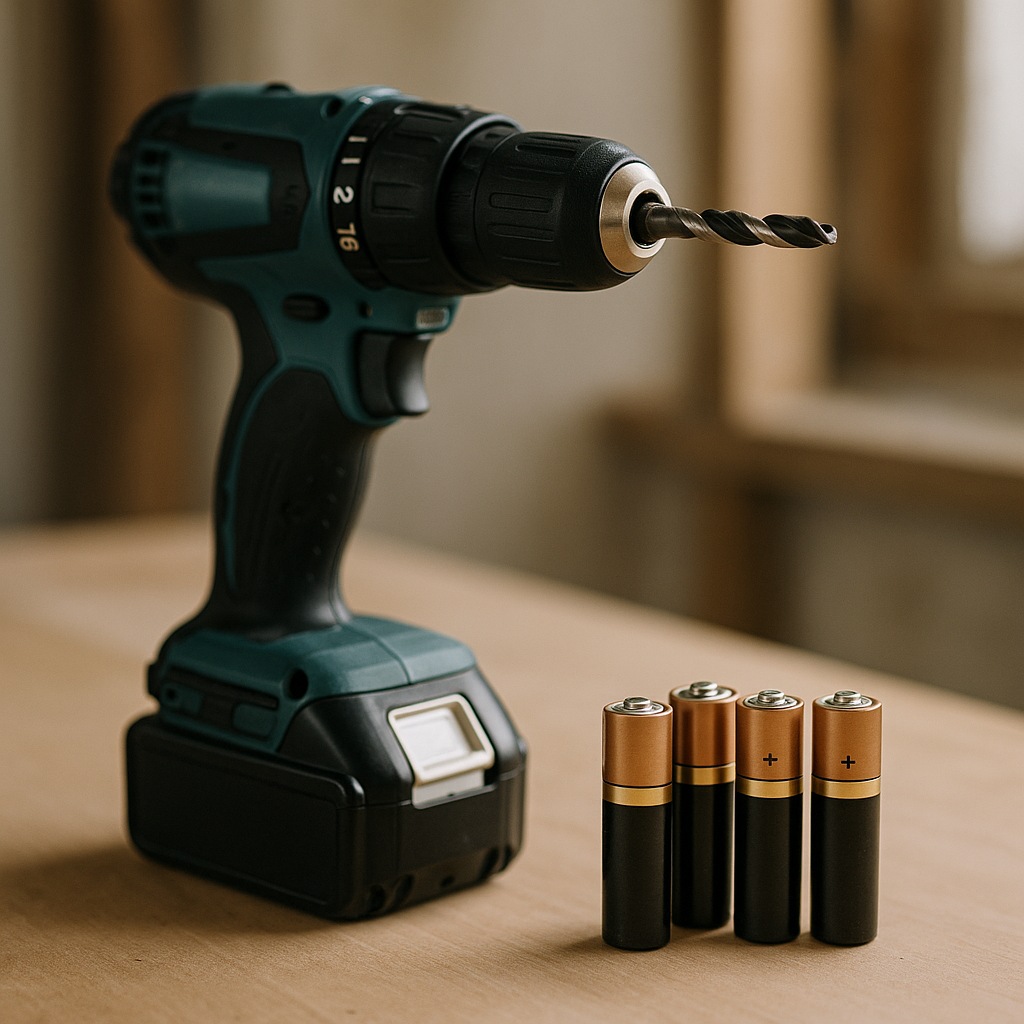
To truly grasp the performance disparities between these power sources, one must first appreciate the distinct electrochemical engines operating within them. A battery is not a magical box of electricity; it is a miniature, self-contained chemical plant designed to convert stored chemical energy into electrical energy through a controlled reaction. The materials used, their arrangement, and the nature of their interaction define a battery's entire personality—its strength, its stamina, and its temperament.
The alkaline battery has been a mainstay of portable power for over half a century, and for good reason. Its construction is a marvel of cost-effective engineering. At its core, an alkaline cell utilizes zinc powder as the anode (the negative electrode) and manganese dioxide as the cathode (the positive electrode). These two components are separated by a paper layer and are immersed in an alkaline electrolyte, typically potassium hydroxide. This is where the "alkaline" name originates.
When you place an alkaline battery in a device and complete the circuit, the zinc at the anode begins to oxidize, releasing electrons. These electrons flow out of the battery, through your device (powering it in the process), and back into the battery at the cathode. Here, they are accepted by the manganese dioxide, which is reduced. The potassium hydroxide electrolyte facilitates this entire process by allowing ions to move between the electrodes, completing the chemical reaction. One of the defining features of this chemistry is that it is a one-way street. The reaction is non-reversible, which is why standard alkaline batteries are single-use. Once the zinc is consumed, the battery is depleted.
The term "lithium battery" can be slightly confusing because it encompasses both primary (single-use) and secondary (rechargeable) types. For single-use applications, like AA or 9V batteries, the chemistry is often lithium-iron disulfide (Li-FeS2). These offer a significant performance jump over their alkaline counterparts.
For rechargeable applications, such as power tool battery packs or solar storage systems like the Generac PWRcell 2, the dominant chemistries are lithium-ion (Li-ion) variants. These batteries function on a principle of intercalation. Think of it like a bookshelf. The electrodes, typically a graphite anode and a metal oxide cathode, have layered structures. During charging, lithium ions are forced from the cathode, travel through the electrolyte, and neatly slot themselves into the spaces within the graphite anode—like putting books onto a shelf. During discharge, the process reverses: the lithium ions move back to the cathode, releasing electrons that power your device.
A particularly robust and safe variant is Lithium Iron Phosphate (LiFePO4), lauded for its long cycle life and thermal stability (Power-Sonic, 2023). This chemistry is becoming increasingly popular in applications where safety and longevity are paramount, from deep-cycle marine batteries to off-grid power storage. The choice between different lithium chemistries often involves a trade-off between energy density, cost, and safety, but all represent a significant departure from the alkaline model.
Energy density is arguably the most dramatic point of divergence between these technologies. It measures how much energy can be packed into a given size (volumetric energy density) or weight (gravimetric energy density). Here, lithium is the undisputed champion. A primary lithium AA battery can have a capacity of 3,000 milliamp-hours (mAh) or more, while a premium alkaline AA battery typically tops out around 2,500 mAh.
This difference may seem modest on paper, but its implications are profound. For a device that requires a lot of power, the higher energy density of lithium means much longer runtime. Furthermore, lithium's gravimetric energy density is vastly superior. A lithium battery can provide the same amount of power as an alkaline battery at a fraction of the weight. For handheld power tools, drones, or any device where weight is a factor, this advantage is transformative. It means less user fatigue, greater portability, and improved efficiency. The table below provides a simplified comparison.
| Feature | Alkaline (e.g., AA) | Primary Lithium (e.g., AA) | Rechargeable Lithium-Ion (e.g., 18650 cell) |
|---|---|---|---|
| Primary Chemistry | Zinc-Manganese Dioxide | Lithium-Iron Disulfide | Various (e.g., LiFePO4, NMC) |
| Rechargeable? | No | No | Yes (typically 500-2000 cycles) |
| Nominal Voltage | 1.5V | 1.5V (but holds higher voltage under load) | 3.2V - 3.7V per cell |
| Energy Density | Good | Excellent | Very High |
| Weight | Heavy | Lightweight | Very Lightweight |
| Shelf Life | ~10 years | ~15-20 years | Loses charge over time; requires maintenance |
A battery's voltage is akin to the water pressure in a pipe. While the total amount of water in the tank (capacity) is important, the pressure determines how forcefully that water can be delivered. For many modern electronics, especially those with motors or microprocessors, a consistent and strong "pressure" is not just beneficial; it is a requirement for proper operation. The comparison of alkaline or lithium batteries reveals starkly different approaches to delivering that pressure over their lifespan.
Imagine you start a task with a full battery. How that battery's voltage behaves as it drains is described by its discharge curve. An alkaline battery begins its life at a nominal 1.5 volts. However, as soon as you start drawing power, that voltage begins a long, slow, and steady decline. Halfway through its life, it might only be providing 1.2 volts. Near the end, it could be less than 1.0 volt. For a low-drain device like a wall clock, this gradual fade is perfectly acceptable. The clock's simple mechanism can function across a wide voltage range.
A primary lithium battery, while also rated at 1.5 volts, tells a very different story. It maintains a voltage close to its initial rating for almost its entire discharge cycle. Only at the very end of its life does the voltage drop off sharply. This "flat" discharge curve is a hallmark of lithium chemistry. Rechargeable lithium-ion batteries exhibit a similar characteristic, holding a steady voltage (e.g., 3.6V for many packs) throughout the majority of their use before a rapid drop. This stability is a direct consequence of their electrochemical process. The energy required to move a lithium ion from the anode to the cathode changes very little as the battery discharges, resulting in consistent power output.
The shape of the discharge curve has massive real-world consequences. Consider a high-drain device like a digital camera with a flash, a powerful LED flashlight, or a cordless drill. These devices are power-hungry. They need a strong, consistent voltage to perform optimally.
When using alkaline batteries in a camera, you might find that after just a few dozen shots with the flash, the camera reports a low battery warning and refuses to fire the flash, even though the batteries still have a significant amount of energy left. The issue is not that the batteries are empty; the problem is that their voltage has sagged below the camera's operational threshold. The flash requires a quick, high-current pulse, and the weakened alkaline cells can no longer provide the necessary voltage "pressure" to charge the flash capacitor quickly enough.
Now, substitute those with lithium batteries. Because of their flat discharge curve, they will continue to provide the required voltage to power the flash correctly for hundreds of shots. The drill will maintain its peak torque for longer, the flashlight will remain brighter, and the camera will keep firing. The decision between alkaline or lithium batteries for these applications becomes a choice between frustratingly short periods of peak performance and sustained, reliable operation.
Voltage sag is a phenomenon closely related to the discharge curve. It refers to the temporary drop in a battery's voltage when a sudden, large amount of current is drawn from it. All batteries experience this to some degree due to their internal resistance. Think of internal resistance as a bottleneck in the pipe; the faster you try to pull water through, the more pressure you lose at the bottleneck.
Alkaline batteries have a relatively high internal resistance, which increases as they discharge. When a power tool motor starts up, it creates a huge initial current draw. An aging alkaline battery's voltage can sag so dramatically under this load that it falls below the tool's low-voltage cutoff, causing the tool to shut down or fail to start, even if it worked a moment before on a lighter task.
Lithium batteries, especially those designed for high-drain use, have exceptionally low internal resistance. They can handle massive current spikes with minimal voltage sag. This is why they are the standard for high-performance applications. They can deliver the instantaneous power needed for a motor to start or a flash to fire without their voltage collapsing. This characteristic ensures that the device has access to the battery's full power potential from start to finish.
When we evaluate a battery's worth, we are often asking two related but distinct questions. First, how much work can it do on a single charge? Second, how many times can it do that work before it needs to be replaced? The first question pertains to capacity, while the second relates to cycle life and shelf life. A thorough evaluation of alkaline or lithium batteries must address both dimensions to paint a complete picture of their long-term value and utility.
Capacity is typically measured in amp-hours (Ah) or milliamp-hours (mAh). As noted by the experts at , this rating usually represents the current a battery can deliver over a 20-hour period until its voltage drops to a specified cutoff point. A 100 Ah deep-cycle battery, for example, can theoretically supply 5 amps for 20 hours. For single-use batteries, this is the end of the story—their capacity is their total lifespan. A primary lithium AA might offer 3000 mAh, while an alkaline might offer 2500 mAh. The lithium cell will simply run longer.
For rechargeable batteries, the conversation shifts to cycle life. A "cycle" is one full charge and discharge. How a battery is treated during these cycles dramatically affects its overall lifespan. A key concept here is the Depth of Discharge (DOD). Discharging a battery to 80% of its capacity is a deeper cycle than discharging it to only 30%. As a general rule, shallower cycles lead to a much longer battery life. For instance, a LiFePO4 battery might be rated for 2,000 cycles at 100% DOD. The same battery, if only discharged to 50% DOD in each cycle, might last for 6,000 cycles or more. This principle is why systems like residential solar storage are designed to avoid deep discharges whenever possible, preserving the health of the expensive battery bank (Generac Power Systems, 2025).
Alkaline batteries are not designed for cycling, but rechargeable lithium-ion batteries are built for it. A typical power tool battery pack might be rated for 500-1000 full cycles before its capacity degrades to about 80% of its original rating. High-quality deep-cycle lithium batteries, often using LiFePO4 chemistry, can last for several thousand cycles, making them a viable long-term investment for applications like RVs, boats, or off-grid power.
What happens to a battery when it's not being used? It slowly loses its charge through a process called self-discharge. The rate of this loss is a critical factor for batteries intended for storage, such as those in emergency kits, smoke detectors, or seasonal equipment.
Alkaline batteries have an excellent shelf life. A modern alkaline cell can retain up to 90% of its charge after 10 years of storage at room temperature. This makes them a reliable choice for "set it and forget it" applications.
Primary lithium batteries are even better. With an extremely low self-discharge rate, they can be stored for 15 to 20 years and still be ready for action. This exceptional longevity makes them the superior choice for life-safety devices like smoke alarms or emergency preparedness kits where failure is not an option.
Rechargeable lithium-ion batteries have a more complicated relationship with self-discharge. They lose charge faster than their primary counterparts, typically a few percent per month. More importantly, leaving them in a fully discharged state for an extended period can cause irreversible damage to the cell's internal structure (Power-Sonic, 2023). Conversely, storing them at a 100% charge for long periods can also accelerate capacity loss. For this reason, the best practice for long-term storage of rechargeable lithium batteries is to maintain them at a state of charge (SoC) of around 40-50%. This balanced state minimizes stress on the electrodes and preserves the battery's health.
Deep cycle applications involve drawing a steady amount of power over a long period. This is the world of trolling motors, wheelchairs, golf carts, and RV house batteries. While alkaline batteries are never used for these tasks, the comparison between traditional lead-acid batteries and modern deep-cycle lithium batteries is highly relevant.
Lead-acid batteries, the long-time incumbents, suffer from something called the Peukert effect. As explained by , this means that the faster you discharge them, the less total capacity you get. A battery rated at 100 Ah over 20 hours might only deliver 70 Ah if you drain it in 5 hours. Lithium batteries are largely immune to this effect. Their available capacity remains relatively constant regardless of the discharge rate. This means a 100 Ah lithium battery will deliver close to 100 Ah of usable energy whether you discharge it over 20 hours or 2 hours. This makes them far more efficient for high-power deep-cycle use.
| Characteristic | Alkaline | Primary Lithium | Rechargeable Lithium-Ion | Deep-Cycle Lead-Acid |
|---|---|---|---|---|
| Use Case | Low-drain, long-storage | High-drain, critical storage | High-drain, frequent use | Deep-cycle, stationary |
| Typical Cycle Life | 1 | 1 | 500 - 2,000+ | 200 - 1,000 |
| Self-Discharge | Very Low (~1% per year) | Extremely Low (<1% per year) | Moderate (2-5% per month) | High (5-15% per month) |
| Best for Storage | Yes | Ideal | No (requires maintenance) | No (requires trickle charge) |
| Capacity Under Load | Poor (voltage sags) | Excellent (stable voltage) | Excellent (stable voltage) | Fair (Peukert effect) |
A battery’s chemical reactions are highly sensitive to temperature. Just as a car engine performs differently on a frigid winter morning compared to a sweltering summer afternoon, a battery's ability to deliver power is profoundly affected by its thermal environment. For users who operate tools outdoors, store devices in vehicles, or rely on batteries in unconditioned spaces, understanding the temperature limitations of alkaline or lithium batteries is of paramount importance.
Cold is the enemy of battery chemistry. Lower temperatures slow down the electrochemical reactions inside a battery, which increases its internal resistance and reduces its effective capacity. This effect is particularly pronounced in alkaline batteries.
At 32°F (0°C), an alkaline battery might only be able to deliver about 75% of its room-temperature capacity. As the temperature drops further, its performance plummets. Below 0°F (-18°C), an alkaline battery can become virtually useless, especially for any device that requires a decent amount of current. You may have experienced this yourself: a car remote with an alkaline battery that works fine indoors but fails to unlock the doors after being left in a cold car overnight. The battery isn't dead; it's just too cold to function properly.
Lithium batteries, by contrast, are winter warriors. Their chemistry is far less affected by cold. A primary lithium battery can operate effectively down to -40°F (-40°C). While they do experience some capacity loss in the cold, it is far less severe than with alkalines. They can still deliver high currents, making them the only viable choice for outdoor winter activities, from digital photography in the snow to operating equipment in frigid climates. Rechargeable lithium-ion batteries also fare much better than alkalines, though they have their own cold-weather quirks. While they can discharge in cold temperatures, charging them below freezing can cause permanent damage, a process known as lithium plating. That is why high-end battery systems often include heaters or will prevent charging until the battery warms up.
While cold temporarily reduces performance, heat is a more insidious foe that causes permanent damage and accelerates a battery's demise. High temperatures increase the rate of all chemical reactions, including the undesirable ones that lead to degradation and self-discharge.
Storing or using alkaline batteries in high heat (for example, in a car's glove box during summer) will significantly shorten their lifespan and increase the risk of leakage. The increased internal pressure can cause the seals to fail, releasing corrosive potassium hydroxide.
Lithium batteries also suffer in the heat. High temperatures are the number one factor in reducing the calendar life of a rechargeable lithium-ion battery. A battery that might last for ten years at room temperature might only last for two or three if consistently operated in a hot environment. Heat accelerates the breakdown of the electrolyte and causes parasitic reactions at the electrodes, leading to a permanent loss of capacity. Safety is also a major concern. Excessive heat can trigger thermal runaway in lithium-ion cells, a dangerous chain reaction that we will discuss in more detail later. This is why power tools and electric vehicles have sophisticated thermal management systems to keep their batteries cool during heavy use and fast charging.
Let's ground these concepts in everyday situations.
Imagine you are a contractor working outdoors in a northern climate. In the winter, your power tools equipped with lithium-ion batteries will continue to operate reliably, even on the coldest days. If you were trying to use a device powered by alkaline cells, you would likely face constant frustration and failure.
Consider an emergency flashlight stored in your car. In the summer, the interior of a car can exceed 150°F (65°C). An alkaline battery in that flashlight is at high risk of leaking and corroding the contacts, rendering the flashlight useless when you need it most. A primary lithium battery would not only survive the heat but would also be ready to perform flawlessly if you needed it during a winter blizzard months later.
For a home emergency kit stored in a basement or garage, where temperatures can fluctuate, the choice between alkaline or lithium batteries for devices like a weather radio or flashlight becomes a question of reliability. The 20-year shelf life and wide operating temperature range of lithium batteries provide a level of confidence that alkaline batteries simply cannot match. The small additional upfront cost becomes a trivial price for the assurance that your emergency equipment will work when it matters.
The discussion surrounding alkaline or lithium batteries takes a significant turn when we consider reusability. For single-use batteries, maintenance is non-existent. For rechargeable systems, however, proper care is the single most important factor in determining their lifespan and performance. The practices of charging, storing, and routine upkeep are not mere suggestions; they are the rules of engagement for extracting maximum value from your investment.
Standard alkaline batteries are primary cells, meaning they are designed for a single use. Their internal chemistry is not reversible. Attempting to recharge a standard alkaline battery is not only ineffective but also extremely dangerous. It can cause a buildup of hydrogen gas within the sealed cell, leading to rupture and leakage of corrosive electrolyte. While some "rechargeable alkaline" batteries exist, they are a niche product with limited cycle life and performance, generally not competing with modern lithium-ion systems.
Lithium-ion batteries, on the other hand, are secondary cells built from the ground up for repeated cycling. Their chemistry is designed to be fully reversible. This reusability is their defining economic and environmental advantage. A single lithium-ion power tool battery can replace hundreds, or even thousands, of single-use batteries over its lifetime, drastically reducing waste and long-term cost.
Charging a lithium-ion battery is a more delicate process than topping up an old lead-acid battery. Using the wrong charger or an improper technique can shorten the battery's life or, in a worst-case scenario, create a safety hazard. As the battery experts at Power-Sonic (2023) explain, a dedicated lithium-specific charger is always the best choice.
These "smart" chargers, like many offered by , follow a multi-stage charging algorithm, typically Constant Current/Constant Voltage (CC/CV).
Using a charger designed for lead-acid batteries on a lithium battery is risky. While some voltage ranges overlap, a lead-acid charger might use a voltage that is too high or may not terminate correctly, leading to overcharging and potential damage (Power-Sonic, 2023).
How you store your rechargeable batteries during the off-season has a huge impact on their health. As previously mentioned, leaving a lithium-ion battery on a shelf for months is not ideal. It will self-discharge, and if the voltage drops too low, it may be unrecoverable.
The best practice for long-term storage is to charge or discharge the battery to a storage voltage, which corresponds to about 40-50% state of charge. Store it in a cool, dry place. For very long-term storage, it is advisable to perform a maintenance cycle every 6-12 months. This involves fully charging the battery, fully discharging it, and then returning it to its 50% storage charge (Power-Sonic, 2023). This helps keep the internal chemistry active and prevents the battery from falling into a deep sleep from which it cannot awaken.
The terminals are the gateway for power to enter and leave the battery. Keeping them clean and free of corrosion is a simple but vital maintenance step. For alkaline batteries, the primary enemy is leakage. The white, crusty substance that forms around a leaking alkaline is potassium hydroxide, which is caustic. It should be cleaned carefully with a mild acid like vinegar or lemon juice on a cotton swab, followed by cleaning with a soft, dry cloth.
For lithium-ion battery packs, the terminals are usually more robust and less prone to corrosion. However, they can still accumulate dirt and grime, especially on a job site. Regularly wiping the contacts on both the battery and the tool with a clean, dry cloth ensures a solid electrical connection. A poor connection creates high resistance, which generates heat, wastes energy, and can lead to poor performance or even damage to the tool and battery. Some users apply a very thin layer of dielectric grease to the terminals to protect them from moisture and oxidation, a good practice for equipment used in damp environments.
The power stored within a battery is immense for its size. Managing that power safely is a primary concern in battery design. Both alkaline and lithium chemistries have their own unique risk profiles. A mature understanding of the choice between alkaline or lithium batteries requires facing these risks head-on and appreciating the engineering solutions designed to mitigate them.
Anyone who has discovered a forgotten electronic device with its battery compartment filled with a crystalline, corrosive mess is familiar with the primary failure mode of alkaline batteries: leakage. This occurs for a couple of reasons. As an alkaline battery discharges, it produces hydrogen gas. Normally, this is managed internally, but over-discharge or attempting to recharge it can produce gas faster than it can be recombined, increasing internal pressure. Furthermore, over time, the steel can that contains the cell can corrode from the inside out, eventually allowing the caustic potassium hydroxide electrolyte to seep out.
This leakage is not just messy; it is destructive. The electrolyte will corrode the battery contacts, circuit boards, and other metal components of the device, often damaging it beyond repair. While modern alkaline batteries from reputable brands have improved seals and are less prone to leakage than their predecessors, the risk is never zero. It is a fundamental vulnerability of the chemistry, especially in old, fully discharged, or overheated cells. For this reason, it is always recommended to remove alkaline batteries from devices that will be stored for an extended period.
Lithium batteries do not leak corrosive fluid in the same way alkalines do. Their primary safety concern is a far more dramatic event known as thermal runaway. Lithium-ion batteries contain a flammable organic electrolyte. If a cell is damaged, overcharged, punctured, or short-circuited, it can begin to heat up uncontrollably.
This initial heating can trigger a chain reaction. At a certain temperature, the internal components begin to break down, releasing more heat and flammable gases. The temperature spikes rapidly, potentially reaching over 1000°F (540°C). This can cause the cell to violently vent hot gas, smoke, and flames, and can easily ignite neighboring cells in a battery pack, leading to a fire or explosion.
While this sounds alarming, and media reports have highlighted such incidents, it is important to place the risk in context. Billions of lithium-ion cells are used safely every day. Thermal runaway is a rare event, and modern batteries are engineered with multiple layers of safety to prevent it.
The key to the safety and reliability of any rechargeable lithium-ion battery pack is the Battery Management System (BMS). The BMS is an intelligent circuit board built into the battery pack that acts as its brain and guardian. It constantly monitors the battery's condition and protects it from dangerous situations. A quality BMS, like those found in PowerToolCell products, will typically provide the following protections:
In essence, a well-designed BMS makes the powerful lithium-ion chemistry safe and reliable for everyday use. When comparing alkaline or lithium batteries, it is this sophisticated electronic oversight that allows the high energy density of lithium to be harnessed without unacceptable risk. The simple, non-rechargeable alkaline cell has no such intelligence; its safety relies solely on its physical integrity.
The final, and for many, the most decisive factor in the choice between alkaline or lithium batteries is cost. However, a simple comparison of the price tag on the shelf is misleading. A true economic analysis requires a deeper look at the total cost of ownership, factoring in performance, lifespan, and the specific demands of the application. It is a classic case of upfront cost versus long-term value.
There is no contest here: alkaline batteries are significantly cheaper to purchase. A multi-pack of AA alkaline batteries can be bought for a fraction of the cost of a comparable pack of primary lithium AAs. For rechargeable systems, the disparity is even greater. A single high-quality lithium-ion power tool battery pack can cost as much as dozens of disposable alkaline batteries.
For a consumer with a handful of low-drain devices around the house—like remote controls, wall clocks, or a simple computer mouse—the low upfront cost and long shelf life of alkaline batteries make them a perfectly logical and economical choice. The performance advantages of lithium would be overkill, and the cost would be difficult to justify. In these scenarios, the economic argument heavily favors alkaline.
The economic picture flips entirely when we consider high-drain devices or frequent use. Let's create a hypothetical scenario: a contractor who uses a cordless flashlight on the job every day.
Alkaline Option: Let's say the flashlight requires two AA batteries and a set of premium alkalines costs $2.00. In a high-use flashlight, these might last for 8 hours of continuous use. Over a year of work (approx. 250 workdays), if the flashlight is used for 2 hours a day, the contractor would need a new set of batteries every 4 days.
Rechargeable Lithium Option: The contractor buys a flashlight that uses a single rechargeable 18650 lithium-ion cell. The initial purchase includes the flashlight, one battery, and a charger for $50.00. That single battery can be recharged at least 500 times.
In this high-use scenario, the rechargeable lithium option pays for itself in less than six months and offers vastly superior performance (brighter, more consistent light) throughout its life. The same logic applies to power tools, where a single rechargeable pack can endure hundreds of cycles, saving thousands of dollars compared to any conceivable disposable battery solution.
For primary (non-rechargeable) batteries in a high-drain device like a professional photographer's camera flash, the math is similar. A set of lithium AAs might cost three times as much as alkalines, but they may last five to seven times longer, providing a lower cost-per-shot in addition to better performance and reliability.
A complete economic assessment in 2025 must also consider the environmental cost. Single-use batteries, primarily alkaline, contribute a massive amount of waste to landfills. While battery recycling programs exist, participation rates are often low. Each discarded alkaline battery represents a small package of manufactured materials, including steel, zinc, and manganese, that is used once and then thrown away.
Rechargeable lithium-ion batteries drastically reduce this waste stream. One rechargeable battery can prevent hundreds of disposables from entering the landfill. While the manufacturing of lithium-ion batteries is energy-intensive and involves the mining of materials like lithium and cobalt, their long service life and high efficiency can offset this initial impact. As battery recycling technology improves, the ability to recover valuable materials from spent lithium-ion packs will further enhance their environmental credentials. For businesses and individuals conscious of their environmental footprint, the shift from a disposable to a rechargeable power model represents a significant and positive change.
Q1: Can I use lithium batteries in any device that takes alkaline batteries? For primary (non-rechargeable) AA, AAA, 9V, etc., batteries, the answer is generally yes. A 1.5V lithium battery is designed as a direct, high-performance replacement for a 1.5V alkaline. It will provide longer life and better performance, especially in high-drain devices or extreme temperatures. However, for rechargeable systems, you must never mix chemistries. Do not attempt to use a lithium-ion power tool battery in a tool designed for older Nickel-Cadmium (NiCd) batteries unless it is specifically stated as compatible by the manufacturer.
Q2: Why are lithium batteries more expensive than alkaline batteries? The cost difference stems from both the raw materials and the complex manufacturing process. Lithium is a more expensive raw material than the zinc and manganese used in alkaline cells. Furthermore, manufacturing lithium-ion batteries, especially rechargeable ones, is a highly technical process. It requires clean-room environments and sophisticated machinery. The inclusion of a protective Battery Management System (BMS) circuit board in every rechargeable pack also adds to the cost. You are paying for higher performance, lighter weight, and advanced safety features.
Q3: Is it worth using lithium batteries in low-drain devices like TV remotes? From a purely performance-based perspective, it is generally not necessary. A TV remote draws very little power, so the high-current capability of a lithium battery is wasted. Alkaline batteries will last for a very long time in this application at a much lower cost. However, there is one compelling reason to consider lithium: leak prevention. If the device is valuable or an heirloom, using primary lithium batteries eliminates the risk of a forgotten alkaline battery leaking and destroying the electronics.
Q4: How do I know when to recharge my lithium-ion battery? It is best not to wait until the battery is completely dead. Most experts recommend recharging when the battery reaches about 20% capacity. Regularly running a lithium-ion battery completely flat can shorten its overall lifespan. Modern power tools and devices often have a fuel gauge indicator to help you monitor the charge level. Following the principle of shallower discharges leading to longer life, topping up the battery after each moderate use is a good practice.
Q5: What is the safest way to dispose of old batteries? Disposal methods differ. Alkaline batteries can often be disposed of in normal household trash in many municipalities, but checking local regulations is always best. Lithium batteries, both primary and rechargeable, should never be thrown in the trash. Their high energy content poses a fire risk in waste collection and landfill facilities. They must be taken to a designated battery recycling center or a retailer with a take-back program. Before recycling, it is a good safety practice to tape over the terminals to prevent accidental short circuits.
Q6: Can I bring lithium batteries on an airplane? Yes, but there are strict rules. Spare (uninstalled) lithium-ion batteries are prohibited in checked baggage and must be carried in your carry-on luggage. The terminals should be protected from short-circuiting by keeping them in their original retail packaging, a battery case, or by taping over the terminals. There are also limits on the size (measured in Watt-hours) of the batteries you can bring. For most consumer electronics like phones, laptops, and cameras, the batteries are well within the allowable limits.
Q7: Will using a third-party replacement battery void my tool's warranty? This is a complex issue that depends on the tool manufacturer's warranty policy and consumer protection laws like the Magnuson-Moss Warranty Act in the United States. Generally, a manufacturer cannot void your warranty simply because you used a third-party part. They would need to prove that the third-party battery was defective and caused the damage to the tool. Reputable third-party battery suppliers, like PowerToolCell, design their products to meet or exceed original equipment manufacturer (OEM) specifications to ensure compatibility and safe operation.
The journey through the worlds of alkaline and lithium batteries reveals a landscape of nuanced trade-offs. There is no single "best" battery; there is only the best battery for a specific task, budget, and set of priorities. The humble alkaline cell, with its low cost and impressive shelf stability, remains a sensible and economical choice for the legion of low-power devices that populate our homes. Its gradual voltage decline and vulnerability to cold are acceptable compromises for its convenience and affordability in these roles.
Conversely, the ascent of lithium technology has been nothing short of revolutionary for applications where power, performance, and weight are paramount. For the professional on a job site, the photographer in the field, or the adventurer in the wilderness, the flat discharge curve, low-temperature resilience, and high energy density of lithium are not luxuries—they are enablers. The higher initial cost is repaid many times over in reliability, extended runtime, and reduced long-term expense. The decision between alkaline or lithium batteries, therefore, becomes an exercise in self-awareness: understanding the demands of your devices and aligning your choice with those needs. By moving past the surface-level price and considering the deeper characteristics of chemistry, voltage, capacity, and safety, you empower yourself to make a truly intelligent investment in power.
{"one"=>"Select 2 or 3 items to compare", "other"=>"{{ count }} of 3 items selected"}