

CONTACT
Please contact us for shipping details.
This analysis examines the performance characteristics of the batterie 9v lithium in comparison to its traditional alkaline counterpart, focusing on five key data-supported metrics relevant in 2025. It investigates the objective differences in energy capacity (mAh), voltage stability under load, operational range in extreme temperatures, long-term viability as indicated by shelf life, and the total cost of ownership over a decade. The discussion synthesizes technical specifications with practical applications, such as in smoke detectors, professional audio equipment, and high-precision electronic testing tools. By deconstructing the electrochemical properties that govern these performance traits, the document provides a rational framework for understanding why the higher initial investment in a lithium 9V battery often yields superior reliability, longevity, and economic value. This objective comparison moves beyond simple marketing claims to offer a nuanced, evidence-based perspective, enabling users to make an informed decision grounded in the specific power demands and environmental conditions of their devices.
It might seem peculiar, in an age of USB-C charging and integrated power packs, to devote a serious discussion to the humble 9-volt battery. This rectangular power source, with its distinct snap-on terminals, feels like a relic from a bygone era of transistor radios and the first generation of remote controls. Yet, to dismiss it is to overlook its quiet, persistent importance in our daily lives. The 9V format endures not out of nostalgia, but out of necessity. It powers some of the most critical, and often unnoticed, devices that ensure our safety, enable our creativity, and verify our work.
Think for a moment about the silent guardian in your hallway: the smoke detector. Its function is non-negotiable, and its power source must be absolutely dependable, often for a year or more at a time. Consider the multimeter in an electrician's toolkit or the wireless microphone on a performer's stage. These are not devices where power failure is a mere inconvenience; it can compromise a project, ruin a performance, or even create a safety hazard. The 9V battery provides a compact, self-contained power solution with a higher voltage than standard AA or AAA cells, making it ideal for these low-drain but high-stakes applications.
This brings us to a crucial distinction that often trips up even savvy consumers: not all 9V batteries are created equal. For decades, the alkaline battery was the default choice—cheap, ubiquitous, and adequate for many tasks. But the landscape of battery chemistry has evolved dramatically. The emergence of the batterie 9v lithium has introduced a paradigm shift, presenting a technology that, while bearing a higher upfront cost, promises a fundamentally different level of performance. This isn't just an incremental improvement; it's a leap in longevity, reliability, and resilience.
The central question we must grapple with is one of value. Is the premium price of a batterie 9v lithium a justifiable expense, or is it an unnecessary extravagance? To answer this, we cannot rely on simple anecdotes or marketing slogans. We must engage in a disciplined examination of the underlying science and the practical, data-backed evidence. This exploration is not merely for the technically inclined; it is for anyone who depends on these small powerhouses to work without fail. It is for the homeowner who wants peace of mind, the musician who demands a flawless show, and the technician who needs their instruments to be accurate every single time. Through a careful analysis of lifespan, voltage stability, temperature tolerance, shelf life, and long-term cost, a clearer picture emerges—one that challenges our conventional thinking about the cost of reliability.
When we talk about a battery's life, what we are truly discussing is its capacity—its ability to store and deliver energy over time. The most common unit for this is the milliampere-hour (mAh). At its simplest, a milliampere-hour is a measure of electrical charge. It tells us how many milliamperes (mA) of current a battery can supply for one hour. A battery rated at 1200 mAh, for instance, could theoretically deliver 1200 mA for one hour, 600 mA for two hours, or 1 mA for 1200 hours. While this is a simplification, as discharge rates affect total capacity (a concept known as Peukert's Law), it provides a foundational metric for comparison (Battery University, n.d.).
It is in this fundamental measure of capacity that the batterie 9v lithium establishes its first and most dramatic advantage over its alkaline counterpart.
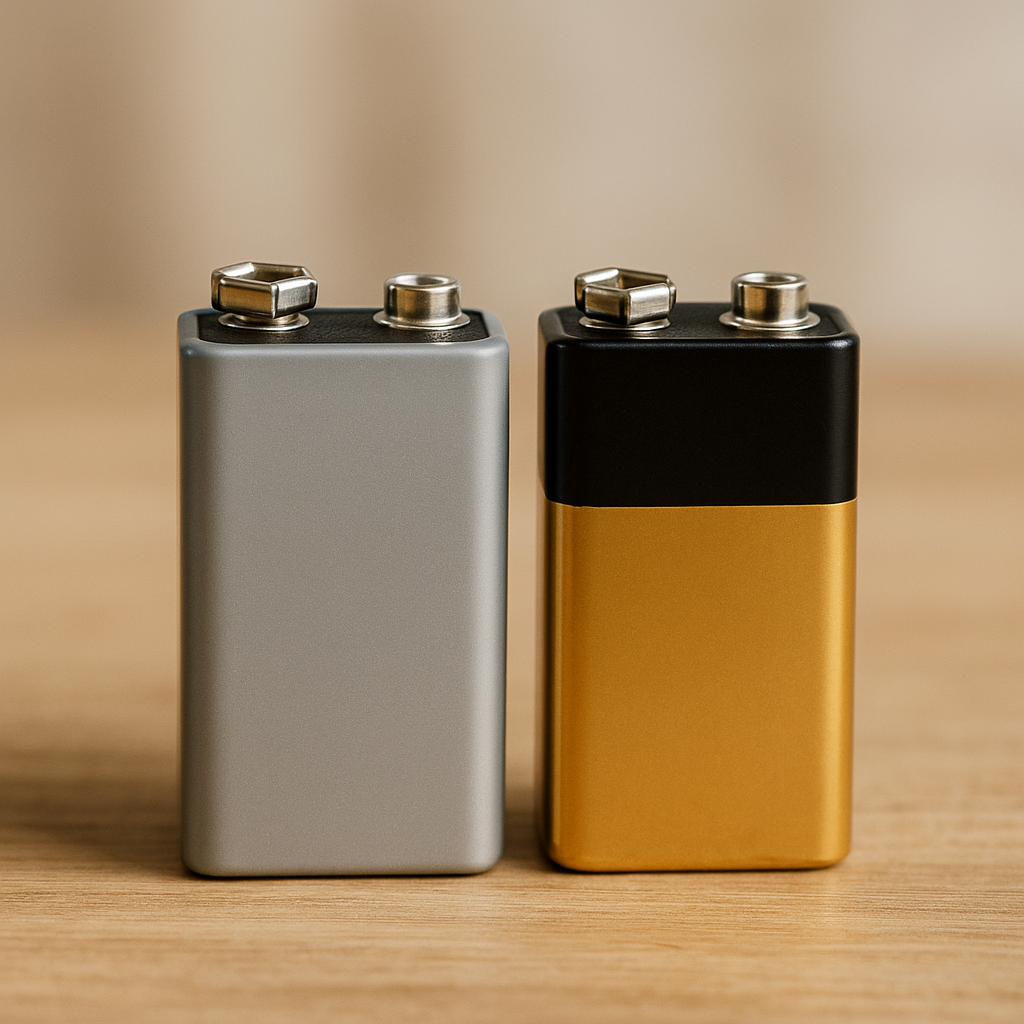
To ground this in reality, let's look at some typical figures. A standard alkaline 9V battery, the kind you might find in any supermarket checkout aisle, typically offers a capacity between 500 and 600 mAh. In contrast, a batterie 9v lithium, specifically one using Lithium-Manganese Dioxide (Li-MnO2) chemistry, which is common for this format, boasts a capacity that often ranges from 1000 mAh to 1200 mAh.
| Feature | Typical Alkaline 9V | Typical Lithium 9V |
|---|---|---|
| Chemistry | Zinc-Manganese Dioxide (Zn-MnO2) | Lithium-Manganese Dioxide (Li-MnO2) |
| Nominal Voltage | 9V | 9V |
| Typical Capacity (mAh) | 500 - 600 mAh | 1000 - 1200 mAh |
| Operating Temperature | 0°C to 60°C (32°F to 140°F) | -20°C to 60°C (-4°F to 140°F) |
| Shelf Life | ~5-7 years | ~10-15 years |
| Weight | ~45 grams | ~34 grams |
As the table clearly illustrates, a batterie 9v lithium can hold approximately double the energy of an alkaline battery. This is not a marginal difference; it is a profound disparity that translates directly into real-world performance. A device powered by a lithium 9V cell can, under similar conditions, operate for roughly twice as long.
Capacity alone, however, does not tell the full story. The manner in which a battery delivers its energy is just as important. This is best visualized through a "discharge curve," a graph that plots the battery's voltage over time as it is used. It is here that the fundamental difference in chemistry becomes visually apparent.
An alkaline battery's discharge curve is a gentle, continuous slope downwards. It starts strong, but its voltage steadily declines throughout its life. Imagine a slow, steady leak in a tire. This means that a device powered by an alkaline cell will receive progressively less voltage as the battery drains, which can lead to performance issues long before the battery is fully depleted.
The discharge curve for a batterie 9v lithium, on the other hand, is strikingly different. It is characterized by a long, flat plateau. The battery maintains a nearly constant voltage for the vast majority of its operational life, followed by a sharp drop-off only at the very end. This means a device receives consistent, optimal power until the battery is almost completely exhausted. This flat discharge curve is a hallmark of lithium-based chemistries and is a key reason for their superior performance in demanding electronics (Buchmann, 2021).
Let's translate this into a scenario of profound importance: the smoke detector. A smoke detector is a low-drain device, meaning it consumes very little power continuously. It is designed to last for months, if not a year or more, on a single battery.
When an alkaline 9V battery is used, its slowly declining voltage can cause the detector's low-battery chirp to start prematurely. The detector's circuitry is designed to trigger the alert when the voltage drops below a certain threshold. Because the alkaline battery's voltage is always decreasing, it might reach this threshold when it still has 20% or even 30% of its total energy remaining. You are forced to replace a battery that isn't truly empty.
With a batterie 9v lithium, the situation is different. Because of its flat discharge curve and higher capacity, it provides a steady voltage for a much longer period. The low-battery chirp will only sound when the battery is genuinely near the end of its life, maximizing its use and extending the replacement interval significantly. For a device designed to protect lives, this enhanced reliability and longevity are not just a convenience; they are a critical safety feature. A lithium 9V battery in a smoke detector can often last for several years, dramatically reducing the "nuisance chirps" that tempt people to disable their detectors altogether.
The concept of voltage stability, which we briefly introduced with the discharge curve, deserves a more focused examination. It is a characteristic that separates a merely adequate power source from a high-performance one, and it is here that the batterie 9v lithium truly distinguishes itself as the superior choice for professional and sensitive electronics.
Voltage is the electrical "pressure" that pushes current through a device's circuit. Just as consistent water pressure is needed for a shower to work properly, consistent voltage is required for electronic components to function as their designers intended. When voltage sags, performance can become erratic or fail completely.
As we've established, alkaline batteries exhibit a significant voltage drop over their lifespan. A fresh alkaline 9V battery might measure around 9.5V with no load, but as soon as it's put to work, the voltage begins to decline. Under a moderate load, it might quickly drop to 8.4V, then 7.5V, and so on, until it can no longer power the device.
This phenomenon is particularly problematic for two types of devices:
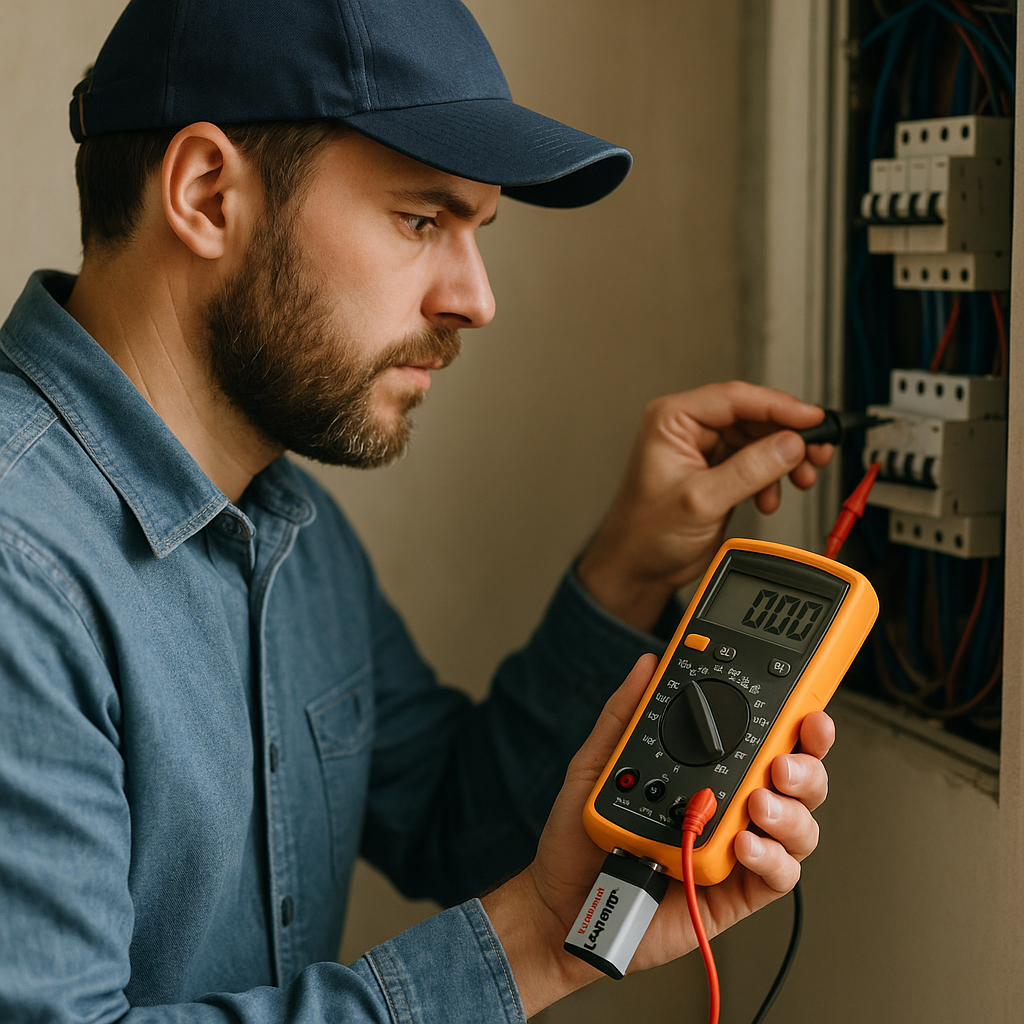
Think of the multimeter. Its entire purpose is to provide precise measurements. If the battery's voltage sags below the regulator's minimum input, the device's internal reference voltage could become unstable, leading to inaccurate readings. For an electrician working on a live circuit, an inaccurate voltage reading isn't just an error; it's a potentially life-threatening failure of their equipment.
The batterie 9v lithium offers a powerful solution to this problem. Its internal chemistry, based on lithium metal, has a much lower internal resistance compared to alkaline's zinc-based chemistry. This, combined with its inherently flat discharge curve, allows it to maintain a stable and high operating voltage even under significant load.
Where an alkaline battery's voltage might sag to 7.5V halfway through its life, a batterie 9v lithium will still be delivering a steady 8.5V or more. It provides that consistent "pressure" that high-performance devices crave.
Consider the world of professional audio. An electric guitar player using a pedalboard powered by 9V batteries needs their effects pedals—overdrive, delay, reverb—to sound consistent throughout a three-hour show. If they use alkaline batteries, they might notice their tone becoming "muddy" or less dynamic as the night wears on. This is a direct result of the declining voltage starving the pedal's sensitive analog circuits. By switching to a batterie 9v lithium, they ensure that their pedals receive the same clean, consistent power from the first song to the final encore, preserving their tone and performance.
This stability is not a minor feature; it is the very foundation of reliability for any tool where precision and consistency are paramount. It is the reason why professionals, from musicians to medical technicians, are increasingly specifying lithium batteries for their most critical equipment. The higher initial cost is seen as an investment in predictable, repeatable, and trustworthy performance.
The environment in which a battery operates can have a profound impact on its ability to perform. Temperature, in particular, acts as a critical external variable that can either throttle or enable the electrochemical reactions happening within the cell. The capacity of a battery to function reliably across a wide spectrum of temperatures is a measure of its robustness. In this domain, the chemical architecture of the batterie 9v lithium provides a decisive and often crucial advantage over traditional alkaline cells.
At its core, a battery is a controlled chemical reaction that produces electrical energy. Like most chemical reactions, its rate is highly dependent on temperature. As temperatures drop, the electrolyte inside a battery—the medium that allows ions to flow between the anode and cathode—becomes more viscous, akin to honey thickening in a refrigerator. This increased viscosity slows down ion mobility, which in turn increases the battery's internal resistance and reduces its ability to deliver current.
For an alkaline battery, this effect is particularly pronounced. The aqueous potassium hydroxide electrolyte used in alkaline cells begins to perform poorly as temperatures approach freezing (0°C or 32°F). Below this point, its ability to deliver meaningful power plummets. A device that works perfectly at room temperature, such as an electronic door lock or an outdoor weather sensor, might fail completely on a cold winter morning if powered by an alkaline battery. The battery isn't empty; its chemical engine has simply seized up in the cold.
The batterie 9v lithium utilizes a non-aqueous, organic solvent-based electrolyte. This fundamental difference in chemistry is the key to its superior cold-weather performance. These organic electrolytes have a much lower freezing point and maintain their fluidity and ionic conductivity at temperatures far below the freezing point of water.
Consequently, a typical batterie 9v lithium can operate effectively down to -20°C (-4°F), and some specialized variants can function even colder. This makes it the only viable choice for a wide range of applications that must endure harsh winter conditions. Consider a wildlife researcher placing a remote tracking collar on an animal in the Rocky Mountains, or a telecommunications technician servicing equipment on a remote tower in Alaska. In these scenarios, the reliability of the power source is non-negotiable, and alkaline batteries are simply not an option.
High temperatures present a different set of challenges. Heat accelerates the chemical reactions inside a battery. While this can temporarily increase a battery's power output, it comes at a steep cost. Elevated temperatures dramatically increase the rate of self-discharge (the battery losing charge while not in use) and accelerate the degradation of internal components, permanently reducing the battery's overall lifespan and capacity.
Both alkaline and lithium 9V batteries are generally rated for operation up to around 60°C (140°F). However, the damage caused by heat is more severe for alkaline cells. Leaving an alkaline-powered device in a hot car on a summer day can lead to a significant and irreversible loss of capacity. Furthermore, the risk of leakage and corrosion is much higher for alkaline batteries under heat stress, which can damage the device they are intended to power.
While a batterie 9v lithium is also stressed by heat, its sealed construction and more stable chemistry make it more resistant to leakage. Although its lifespan will also be reduced by prolonged exposure to high temperatures, its performance degradation is generally less severe than that of its alkaline counterpart. For devices used in hot climates or environments with poor ventilation, the enhanced durability of a lithium battery offers a clear advantage.
In essence, the choice between alkaline and lithium becomes a question of the operational environment. For devices kept in the stable, climate-controlled world of a home or office, an alkaline battery may suffice. But for any device that will face the unpredictable and often harsh realities of the outdoors, the wide operational temperature range of a batterie 9v lithium is an essential feature for ensuring consistent and reliable power.
One of the most insidious ways a battery can fail is by simply doing nothing at all. This slow, silent drain of energy that occurs even when a battery is not connected to a device is known as self-discharge. It is a natural and unavoidable consequence of the chemistry within the cell. The rate of this self-discharge is a critical measure of a battery's long-term viability, especially for applications where a power source must remain ready for years before it is called into service. It is in this dimension of shelf life that the batterie 9v lithium demonstrates one of its most remarkable and valuable characteristics.
Self-discharge occurs due to secondary chemical reactions that take place inside the battery, consuming the active materials without producing a useful external current. The rate of these parasitic reactions is dictated by the battery's chemistry and the ambient storage temperature. Higher temperatures, as we've noted, accelerate all chemical reactions, including those responsible for self-discharge.
For a standard alkaline 9V battery, the self-discharge rate is typically around 2-3% per year when stored at room temperature (around 20°C or 68°F). This means that after five years of sitting in a drawer, an alkaline battery may have lost 10-15% of its original capacity. After ten years, it could have lost a quarter or more of its power, rendering it unreliable for any critical application. This is why alkaline batteries often have an expiration date printed on their packaging, typically 5 to 7 years from the date of manufacture.
The batterie 9v lithium is built on a fundamentally more stable chemical system. The lithium metal anode and manganese dioxide cathode, combined with the non-aqueous electrolyte, are far less prone to the unwanted side reactions that plague alkaline cells. The result is an exceptionally low self-discharge rate, often less than 1% per year.
This means a batterie 9v lithium can be stored for 10 years and still retain over 90% of its original capacity. This is a game-changing level of reliability. It transforms the battery from a consumable item with a limited shelf life into a long-term component of a preparedness kit or a piece of critical equipment.
Consider the implications for emergency devices. A flashlight, a portable weather radio, or a backup medical device stored in an emergency preparedness kit must work flawlessly when it is needed, which could be years after it was packed. If that kit is stocked with alkaline batteries, there is a significant risk that they will be partially or fully depleted when an emergency strikes. Stocking the kit with lithium batteries provides the confidence that the power will be there when it matters most.
This long shelf life also has significant logistical and economic benefits for organizations and professionals. A fire department can stock its supply of replacement batteries for smoke detectors and other equipment without worrying about them expiring on the shelf. A production company can keep a supply of batteries for its wireless microphones and field recorders, knowing they will be ready for a shoot months or even years later. The initial investment in a batterie 9v lithium is also an investment in long-term readiness and reduced waste from expired stock.
The ability to hold a charge for a decade or more is not just a technical specification; it is a promise of dependability. It is the assurance that when you reach for that device—whether in a moment of crisis, a professional engagement, or simply a long-forgotten project—the power will be ready and waiting.
At first glance, the financial argument seems heavily skewed against the batterie 9v lithium. A single lithium 9V battery can cost three to five times as much as its alkaline equivalent. For any budget-conscious consumer, this initial price difference can be a significant barrier. It feels like an indulgence, a premium paid for performance that may not seem immediately necessary. However, this narrow focus on upfront cost is a classic example of a false economy. A more rigorous analysis, one that considers the total cost of ownership (TCO) over the lifespan of a device, reveals a very different and often surprising economic reality.
The true cost of a battery is not just its purchase price. It is the purchase price divided by the service life it provides. When we factor in the superior capacity and longevity of lithium technology, the calculation changes dramatically.
Let's construct a practical model to illustrate this point. We will compare the cost of powering a common, low-drain device—a household smoke detector—over a ten-year period, which is the typical recommended lifespan of the detector itself.
Assumptions:
| Metric | Alkaline 9V | Lithium 9V |
|---|---|---|
| Initial Battery Cost | $2.50 | $7.50 |
| Service Life per Battery | 1.5 years | 9 years |
| Batteries Needed over 10 Years | 10 years / 1.5 years = 6.67 (round up to 7 batteries) | 10 years / 9 years = 1.11 (round up to 2 batteries) |
| Total Battery Cost over 10 Years | 7 batteries * $2.50/battery = $17.50 | 2 batteries * $7.50/battery = $15.00 |
| Number of Replacement Events | 6 | 1 |
In this scenario, despite the batterie 9v lithium being three times more expensive at the outset, it actually proves to be the more economical choice over the ten-year life of the smoke detector. The savings are modest, but this calculation does not even account for the non-monetary costs: the time and effort of acquiring and replacing the battery six additional times, or the annoyance of the low-battery chirp.
The economic advantage of lithium becomes even more pronounced in high-drain devices. Let's consider a musician who uses a wireless guitar system for two 3-hour gigs per week.
Assumptions:
Alkaline Cost:
Lithium Cost:
In this high-drain scenario, the annual cost is nearly identical. However, the lithium option provides a significant non-monetary benefit: reliability and peace of mind. The musician using alkaline batteries must change their battery before every single performance, adding a point of potential failure to their pre-show routine. The musician using a batterie 9v lithium can play through several gigs with confidence, knowing their power source is stable. For a professional, that reliability is often worth far more than the marginal cost difference. Moreover, as manufacturing scales and technology improves, the price gap between lithium and alkaline batteries is projected to narrow, which will only further amplify the long-term economic advantages of lithium.
Ultimately, the decision to invest in a batterie 9v lithium is an investment in reducing future costs, both tangible and intangible. It is a choice to prioritize long-term value and reliability over short-term savings, a principle that holds true from the mundane task of maintaining a home to the demanding rigors of professional work.
Understanding the theoretical advantages of a batterie 9v lithium is the first step. The crucial next step is translating that knowledge into practical, informed decisions for the specific devices you use. Not every application demands the premium performance of lithium, and sometimes the humble alkaline battery is a perfectly sensible choice. The art of smart power management lies in matching the battery's characteristics to the device's needs.
Let's categorize common 9V-powered devices to create a clear framework for making this choice.
These are devices where failure is not an option and where batteries are expected to last for a very long time with minimal intervention. For this category, the batterie 9v lithium is the unequivocally superior and recommended choice.
This category includes devices where consistent, stable power is directly linked to performance quality and accuracy. The upfront cost of a batterie 9v lithium is a wise investment in reliability and professional results.
For devices that are used occasionally or consume very little power, a standard alkaline 9V battery is often a perfectly reasonable and cost-effective choice. The premium features of lithium may be overkill.
By thoughtfully considering the device's function—Is it critical? Does it require high power? How often is it used?—you can move from being a simple consumer of batteries to a strategic manager of your personal power needs. This approach not only optimizes performance and reliability but also ensures you are spending your money wisely, investing in premium power only where it truly matters.
A comprehensive understanding of battery technology must extend beyond performance metrics to include the crucial aspects of safety, proper handling, and end-of-life disposal. Both alkaline and lithium-based chemistries have specific guidelines that users must respect to ensure safe operation and minimize environmental impact. The higher energy density of the batterie 9v lithium makes adherence to these protocols particularly important.
All batteries, regardless of chemistry, should be handled with care. However, the unique snap-on terminals of the 9V format present a specific hazard that requires attention.
The batterie 9v lithium contains a higher amount of stored energy in a compact form, which necessitates a few additional safety considerations. While commercially available 9V lithium batteries from reputable manufacturers have multiple internal safety features (such as vents and shutdown separators), misuse can still pose risks.
At the end of their useful life, batteries should not be discarded in regular household trash. They contain heavy metals and corrosive materials that can contaminate soil and groundwater if sent to a landfill.
Before recycling, it is a good practice to tape over the terminals of 9V batteries to prevent any accidental short circuits during transport and processing. By adopting these simple but important practices, users can safely harness the power of modern battery technology while acting as responsible stewards of the environment.
For the most part, yes. A batterie 9v lithium is designed as a direct, drop-in replacement for a standard alkaline 9V battery. It has the same physical dimensions and the same nominal voltage. It will work perfectly in devices like smoke detectors, wireless microphones, multimeters, and toys. However, there are very rare exceptions with older devices that may have been specifically designed for the voltage drop characteristics of an alkaline battery. If you have a very old or sensitive piece of vintage equipment, it might be wise to consult the manufacturer's documentation.
The price difference stems directly from the cost of the raw materials and the more complex manufacturing process. Lithium is a highly reactive and relatively rare alkali metal that is more expensive to mine and process than the zinc and manganese used in alkaline batteries. Additionally, the construction of a lithium battery, which includes a non-aqueous electrolyte and more sophisticated internal safety mechanisms, is more intricate and costly than the simpler, mass-produced alkaline cell.
This is a critical point of distinction. The standard batterie 9v lithium you find in retail stores is a primary battery, meaning it is single-use and not rechargeable. Attempting to recharge a primary lithium battery is extremely dangerous and can lead to fire or explosion. There are, however, rechargeable 9V batteries that use Lithium-Ion (Li-ion) chemistry. These are a separate product category and must only be charged with the specific charger designed for them. Always check the packaging carefully; if it doesn't explicitly say "rechargeable," do not attempt to charge it.
No, this is not a concern for virtually all modern electronics. While a fresh batterie 9v lithium might have an open-circuit voltage closer to 9.6V compared to an alkaline's 9.5V, this is well within the acceptable operating tolerance for any device designed for a 9V battery. In fact, the lithium battery's ability to maintain a voltage well above 8V for most of its life is a significant benefit, whereas an alkaline battery's voltage will quickly drop into the 7V range under load.
For optimal longevity, store your batteries in a cool, dry place at normal room temperature. Avoid extreme heat, as it accelerates the self-discharge rate. The most important storage rule for any 9V battery is to protect the terminals. Keep them in their original packaging or use plastic caps to cover the terminals. This prevents accidental short-circuiting if they come into contact with metal objects like keys or coins. Thanks to their extremely low self-discharge rate, you can confidently store a batterie 9v lithium for up to a decade.
This is a complex question with a nuanced answer. The extraction of lithium has its own environmental footprint. However, because a single batterie 9v lithium can last as long as two to five alkaline batteries in many applications, its use results in significantly fewer batteries being manufactured, transported, and ultimately disposed of. This reduction in overall consumption can lead to a lower long-term environmental impact. The key is to ensure that all batteries, both lithium and alkaline, are properly recycled at the end of their life to recover valuable materials and prevent hazardous waste from entering landfills.
The journey through the technical landscape of the 9-volt battery reveals a truth that extends far beyond simple electrochemistry. The choice between a conventional alkaline cell and a modern batterie 9v lithium is not merely a technical decision; it is a philosophical one, rooted in how we value reliability, preparedness, and long-term thinking. The higher initial cost of lithium forces a moment of consideration, prompting a shift from a mindset of immediate consumption to one of strategic investment.
In powering a smoke detector, the lithium battery embodies a commitment to steadfast, multi-year vigilance, freeing the mind from the recurring anxiety of the low-battery chirp. In a professional's toolkit, it represents an investment in consistency and precision, ensuring that the tool performs its function without compromise from the beginning of a job to its end. In an emergency kit, it stands as a tangible expression of foresight, a guarantee that power will be available in a moment of need, even years from now.
The data is unambiguous: in capacity, in voltage stability, in temperature resilience, and in shelf life, the lithium chemistry is demonstrably superior. The economic analysis further reveals that this superior performance often comes at a lower total cost over time. As we navigate a world that is increasingly reliant on portable, dependable power, understanding these distinctions is not just useful; it is essential. It empowers us to make choices that are not only technically sound and economically prudent but that also align with a deeper appreciation for durability and unwavering readiness.
Buchmann, I. (2021). BU-808b: What causes Li-ion to die? Battery University. https://batteryuniversity.com/article/bu-808b-what-causes-li-ion-to-die
Battery University. (n.d.). BU-105: Battery definitions and what they mean. https://batteryuniversity.com/article/bu-105-battery-definitions-and-what-they-mean
BatteryStuff. (n.d.). Lithium battery overview. BatteryStuff.com Knowledge Base. https://www.batterystuff.com/kb/articles/battery-articles/lithium-battery-overview.html
Power-Sonic Corporation. (2025). Battery and energy solutions.
OutBack Power Inc. (2023). EnergyCell™ TT.
Battery for PC. (2025). Battery for PC Blog.
Tools.com. (2025). Power Lithium.
Xtra Power Batteries. (2023). Battery selector tool.
Reddy, T. B. (Ed.). (2011). Linden's handbook of batteries (4th ed.). McGraw-Hill.
Pistoia, G. (Ed.). (2009). Lithium-ion batteries: Advances and applications. Elsevier.
{"one"=>"Select 2 or 3 items to compare", "other"=>"{{ count }} of 3 items selected"}