

CONTACT
Please contact us for shipping details.
The transition from traditional lead-acid batteries to lithium-based energy storage represents a significant technological shift in portable and deep-cycle power applications. This document provides a comprehensive examination of the batterie ion lithium 12v, with a particular focus on the now-dominant Lithium Iron Phosphate (LiFePO4) chemistry. It explores the foundational electrochemical principles, contrasting the high energy density of chemistries like Nickel Manganese Cobalt (NMC) with the superior safety, thermal stability, and cycle life of LiFePO4. The analysis extends to practical considerations for consumers and professionals, including the critical role of the Battery Management System (BMS) in safeguarding the battery’s health and ensuring operational safety. Furthermore, it details methodologies for accurately assessing energy requirements by calculating capacity in Amp-hours (Ah) and accounting for Depth of Discharge (DoD). The document synthesizes technical specifications, safety certifications, and system integration requirements to provide a holistic framework for selecting, installing, and maintaining a 12v lithium-ion battery for applications such as recreational vehicles, marine vessels, and off-grid solar systems.
The journey into selecting the right power source is not merely a technical decision; it is an inquiry into the very heart of what makes our modern, mobile lives possible. When we speak of a batterie ion lithium 12v, we are not referring to a single, monolithic entity. Instead, we are entering a world of varied chemical compositions, each with its own character, its own strengths, and its own narrative of performance and safety. To choose wisely is to understand these foundational differences, moving beyond the label to grasp the essence of the power you are bringing into your home, your vehicle, or your vessel. The most profound distinction in the current landscape, especially for deep-cycle applications, is the one between Lithium Iron Phosphate (LiFePO4) and other lithium-ion chemistries like Lithium Nickel Manganese Cobalt Oxide (NMC). This is not just a subtle variation; it is a fundamental divergence in philosophy, pitting raw energy density against unwavering stability and endurance.
Before we can appreciate the nuances that separate different lithium batteries, we must first pause and consider the elegant principle that unites them. Imagine a battery as a miniature, self-contained universe where a controlled dance of ions creates the energy that powers our world. At its core, any lithium-ion battery consists of three primary components: a positive electrode (the cathode), a negative electrode (the anode), and a chemical medium known as the electrolyte that separates them.
When you charge the battery, it's like pushing a tide of tiny lithium ions from the cathode, across the electrolyte sea, to embed themselves within the structure of the anode. This process stores potential energy. When you connect your device and begin to draw power, the dance reverses. The lithium ions are naturally drawn back toward the cathode, and this migration compels electrons to flow through an external circuit—your device—to meet them. This flow of electrons is the electric current that brings your lights, tools, and appliances to life. As explained by the experts at BatteryStuff.com, lithium is the chosen element for this dance because it is the lightest of all metals and possesses the greatest electrochemical potential, giving it an unparalleled energy-to-weight ratio (Bergeman, 2024).
This fundamental process is shared across all lithium-ion variants. However, the specific materials used for the cathode are what define the battery's personality—its capacity, its voltage, its stability, and its lifespan. It is in the cathode's composition that the story of each batterie ion lithium 12v truly begins.
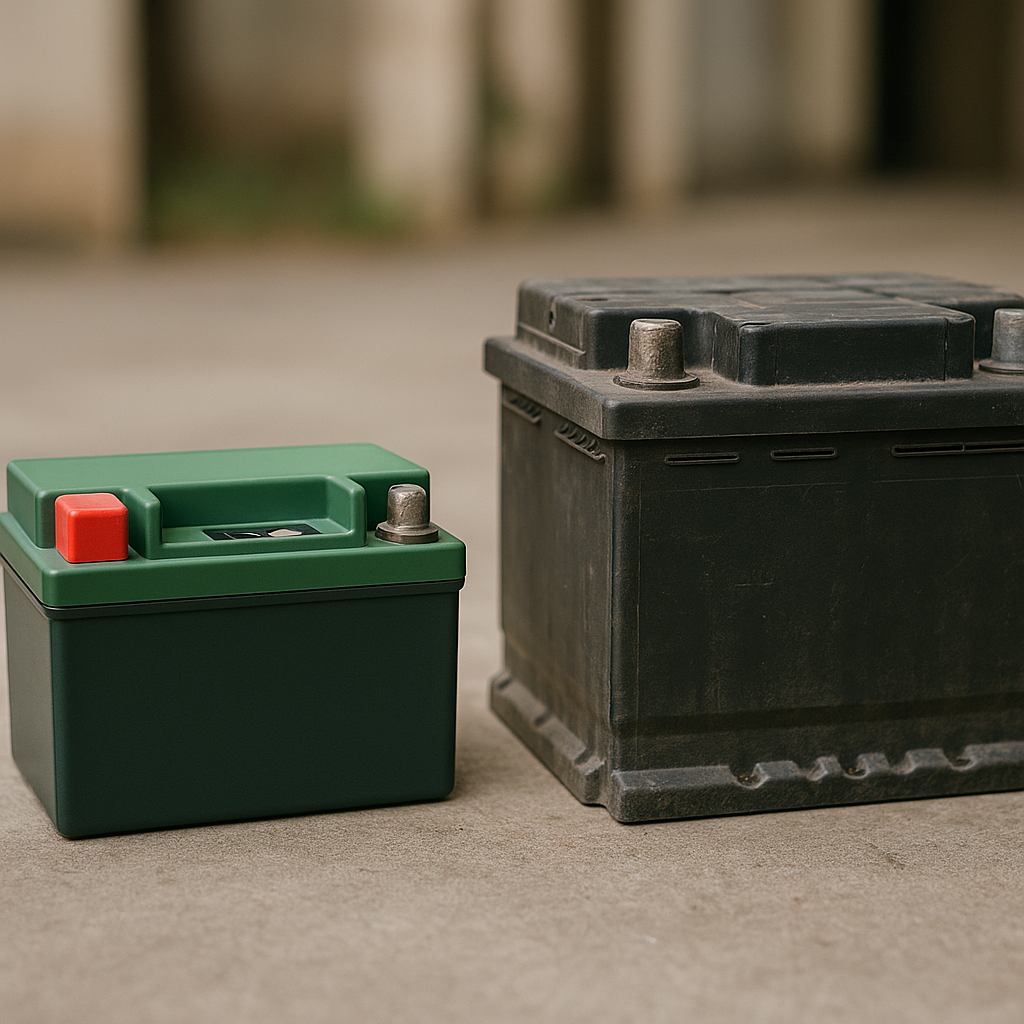
Among the family of lithium-ion technologies, Lithium Iron Phosphate, or LiFePO4, has emerged as the unequivocal standard for applications where safety, stability, and longevity are paramount. Think of it as the stoic workhorse of the lithium world. Its strength does not come from flashy, peak performance but from a deep, structural integrity that translates into unparalleled reliability.
The magic of LiFePO4 lies in its cathode, which is built upon a remarkably stable olivine crystal structure. The phosphorus-oxygen bonds in the iron phosphate material are incredibly strong, far stronger than the bonds in cobalt-based cathodes. What does this mean in a practical sense? It means the cathode is extremely resistant to breaking down, even under stress. It does not release oxygen when overcharged or overheated, which is the primary trigger for the dangerous phenomenon known as thermal runaway—a rapid, self-perpetuating heating event that can lead to fire in other lithium chemistries. This inherent chemical stability makes LiFePO4 batteries the safest lithium option available, a point emphasized by virtually all major suppliers like for demanding use cases.
This structural robustness also contributes to an extraordinary lifespan. Because the cathode material experiences very little stress during the charge and discharge cycles, a LiFePO4 batterie ion lithium 12v can endure thousands of cycles with minimal degradation. It is not uncommon for these batteries to be rated for 4,000, 6,000, or even more cycles, translating to a service life that can easily exceed a decade. This durability makes the higher initial investment a sound long-term economic decision.
To truly appreciate the virtues of LiFePO4, it is helpful to place it in context with its cousins, particularly Lithium Nickel Manganese Cobalt Oxide (NMC) and Lithium Cobalt Oxide (LCO). These chemistries have historically been favored in applications where maximizing energy in the smallest, lightest package is the absolute priority, such as in smartphones, laptops, and some electric vehicles.
NMC batteries, as their name suggests, use a cathode that blends nickel, manganese, and cobalt. This combination allows for a very high energy density, meaning you can pack more watt-hours into each kilogram of battery. This is why they are so prevalent in portable electronics. However, this high energy comes at a cost. The chemistry is less thermally stable than LiFePO4, making it more susceptible to thermal runaway if its protective Battery Management System (BMS) fails or if the battery is physically damaged. Its cycle life, while good, is typically in the range of 1,000 to 2,000 cycles—significantly less than what LiFePO4 offers.
LCO batteries are even more specialized, offering very high specific energy but trading off specific power, thermal stability, and lifespan. Their use is now largely confined to applications where size and weight are the most critical factors of all.
For a clearer picture, let's compare these chemistries side-by-side.
| Feature | Lithium Iron Phosphate (LiFePO4) | Nickel Manganese Cobalt (NMC) | Lead-Acid (for reference) |
|---|---|---|---|
| Nominal Cell Voltage | 3.2V | 3.6V - 3.7V | 2.1V |
| Cycle Life (to 80% capacity) | 3,000 - 7,000+ cycles | 1,000 - 2,000 cycles | 300 - 500 cycles |
| Thermal Runaway Temp. | ~270°C (518°F) | ~150°C (302°F) | Not applicable (different failure) |
| Safety | Excellent | Good (requires robust BMS) | Poor (acid spills, gassing) |
| Energy Density | Good (90-120 Wh/kg) | Excellent (150-250 Wh/kg) | Poor (30-50 Wh/kg) |
| Primary Advantage | Safety, Longevity, Stability | Energy Density, Lightweight | Low Initial Cost |
This table illuminates the clear trade-offs. While NMC offers more energy for its weight, LiFePO4 provides a foundation of safety and longevity that is simply unmatched, making it the superior choice for a house battery in an RV, a trolling motor on a fishing boat, or an off-grid solar energy system.
Ultimately, the choice of chemistry should be driven by the demands of your specific application. It is a question of aligning the battery's innate character with the role you need it to play.
If you are powering a trolling motor, you require a battery that can deliver steady current for long hours and withstand the vibrations and potential harshness of a marine environment. The thermal stability and physical robustness of a LiFePO4 batterie ion lithium 12v are perfectly suited for this.
For an RV, the battery bank is the heart of your home on wheels. It needs to be safe to live with in an enclosed space, provide reliable power day in and day out, and last for many years of travel. Here again, the safety profile and extreme cycle life of LiFePO4 make it the responsible and logical choice. Brands like and have built their reputation on providing these reliable LiFePO4 solutions for such applications.
Even for power tools, where weight and power density are prized, the landscape is shifting. While many professional tools have traditionally used NMC cells, the increasing demand for safety and longer-lasting packs is creating space for LiFePO4, especially as the technology becomes more compact. A compatible power tool battery built with stable cells can offer peace of mind and better long-term value.
Choosing your battery's chemistry is the first, and most critical, check. It sets the stage for every other aspect of its performance. By opting for LiFePO4, especially in 2025, you are not just buying a battery; you are investing in a foundation of safety, endurance, and peace of mind.
After settling on the appropriate chemistry for your needs, the next logical and equally vital inquiry revolves around capacity. How much energy can this battery hold? This question is most commonly answered with a number followed by the letters "Ah," which stands for Amp-hours. You will see it prominently displayed on every battery: 100Ah, 200Ah, 50Ah. It is easy to look at this number as a simple measure of size, like gallons in a fuel tank. A 100Ah battery holds twice the energy of a 50Ah battery, right? While this is true in a literal sense, the practical reality of usable energy is far more nuanced, especially when we are moving from the world of old lead-acid technology to the modern batterie ion lithium 12v. Understanding what Amp-hours truly represent, and how factors like Depth of Discharge (DoD) influence the energy you can actually access, is crucial to building a system that meets your needs without leaving you in the dark.
Let's demystify the Amp-hour. At its simplest, it is a unit of electric charge. One Amp-hour is the amount of charge transferred by a steady current of one ampere for one hour. To make this more intuitive, let's use our water tank analogy again.
Think of the Amp-hour (Ah) rating as the total volume of water the tank can hold, let's say 100 gallons. The flow of water out of the tank is the current, measured in amps (A). If you have an appliance that draws a steady 5 amps, it's like opening a tap that lets out 5 gallons of water per hour. With a 100Ah battery (our 100-gallon tank), you could theoretically run that 5-amp device for 20 hours (100Ah / 5A = 20h).
This simple calculation is the starting point for sizing your battery. It helps you translate the power consumption of your devices (in amps) into a runtime based on the battery's capacity (in Amp-hours). However, this is where the path diverges sharply between lithium and lead-acid technologies, because not all of that "water" in the tank is practically usable.
Here we arrive at one of the most compelling arguments for upgrading to a batterie ion lithium 12v. The concept is Depth of Discharge (DoD), which refers to the percentage of the battery's total capacity that has been drained. A battery discharged to 30% of its capacity has a 70% State of Charge (SoC) and a 30% DoD.
For a traditional lead-acid battery, repeatedly discharging it beyond 50% DoD causes significant harm. The internal chemical reactions that occur during deep discharge lead to the buildup of hard sulfate crystals on the battery plates, a process that permanently reduces its ability to hold a charge. To preserve its health and achieve a reasonable lifespan, you are effectively advised to only use the top half of the tank. This means a 100Ah lead-acid battery only provides you with about 50Ah of usable energy.
Lithium batteries, particularly LiFePO4, operate under a completely different set of rules. Their chemistry is not susceptible to the same sulfation damage. You can regularly discharge a LiFePO4 battery to 80%, 90%, or even 100% of its capacity without significantly impacting its long-term health. As the team at Jackery points out in their voltage charts, lithium batteries maintain a stable voltage across most of their discharge curve, only dropping off sharply at the very end. This means that a 100Ah batterie ion lithium 12v provides you with nearly the full 100Ah of usable energy.
Let's put this into a comparative table to see the stark difference.
| Battery Specification | 100Ah Lead-Acid Battery | 100Ah LiFePO4 Battery |
|---|---|---|
| Total Capacity | 100Ah | 100Ah |
| Recommended Max DoD | 50% | 100% |
| Usable Capacity | ~50Ah | ~100Ah |
| Approximate Weight | 60-70 lbs | 22-25 lbs |
| Lifespan (at recommended DoD) | 300-500 cycles | 4,000+ cycles |
As the table shows, to get 100Ah of usable energy from lead-acid batteries, you would need a 200Ah bank weighing over 120 pounds. You can achieve the same result with a single 100Ah LiFePO4 battery that weighs less than 25 pounds. This is a revolutionary improvement in energy density and practicality.
To choose the right capacity, you must first become an accountant of your own energy consumption. This process, known as creating a power budget or an energy audit, is not as intimidating as it sounds. It is a simple exercise in listing your devices and estimating their use.
Let's walk through a simplified example for a small camper:
In this scenario, a 50Ah LiFePO4 battery would be an excellent choice, providing ample power with a comfortable buffer. A 100Ah lead-acid battery would also work, but it would be heavier and bulkier.
Getting the capacity calculation right is important. Undersizing your battery is the most common mistake. If your daily need is 50Ah and you install a 50Ah lead-acid battery, you will be constantly discharging it to 100% DoD, which will destroy it in a very short time. Even with a 50Ah LiFePO4 battery, you would be running it to its absolute limit every day, which can still be stressful on the components. It is always wise to add a buffer of at least 20-25% to your calculated daily need.
Oversizing, while less catastrophic, has its own drawbacks. A larger battery costs more and takes up more space and weight. If you calculate a need for 40Ah per day and install a massive 400Ah battery bank, you have spent a significant amount of money on capacity you may never use. The goal is to find the sweet spot: enough power to meet your needs comfortably with a buffer for cloudy days or extra usage, without carrying unnecessary weight or cost. By carefully considering your true energy needs and the superior usable capacity of a batterie ion lithium 12v, you can create a power system that is efficient, right-sized, and ready for adventure.
In our exploration of the batterie ion lithium 12v, we have discussed the elegant chemistry within and the sheer capacity it can hold. Yet, there is a third, equally vital component that we have only alluded to: the Battery Management System, or BMS. This is the battery’s brain, its central nervous system, and its vigilant guardian. To purchase a lithium battery without a sophisticated BMS is akin to buying a high-performance engine without a computer to control it. It might run, but it will do so inefficiently, unsafely, and not for very long. The BMS is not an optional accessory; it is an integral, non-negotiable feature that elevates a collection of lithium cells into a safe, reliable, and long-lasting power source. Understanding its role is to understand the very mechanism of trust in modern battery technology.
At its heart, a BMS is an electronic circuit board that lives inside the battery casing, constantly monitoring and managing the health and performance of the lithium cells. Unlike lead-acid batteries, which are relatively tolerant of abuse, lithium-ion cells are more sensitive. They operate happily within a specific voltage and temperature window, but can be permanently damaged or even become unsafe if pushed beyond these limits.
Think of the BMS as a diligent supervisor overseeing a team of workers (the individual cells). The supervisor's job is to ensure every worker is performing correctly, no one is overworked or underworked, and that the entire team operates in a safe and coordinated manner. It prevents any single cell from deviating from the norm, an action that could compromise the entire battery pack. Without this supervision, small imbalances between cells could grow over time, leading to reduced capacity, a shortened lifespan, and in the worst-case scenario, a safety hazard. For this reason, every reputable batterie ion lithium 12v on the market, from brands like to smaller specialized suppliers, is equipped with a BMS. The quality and sophistication of that BMS, however, can vary significantly.
A quality BMS performs several critical protective functions, forming a multi-layered shield for the battery. These protections are essential for both the longevity of the battery and the safety of the user.
Beyond these essential protections, a high-quality BMS performs a more subtle but equally important task: cell balancing. Inside a 12v LiFePO4 battery, there are typically four cells connected in series. Even with high-quality cells, tiny variations in manufacturing and aging can cause them to charge and discharge at slightly different rates. Over time, this can lead to an imbalance, where one cell reaches full charge before the others, or one hits empty first.
When this happens, the BMS, in its duty to protect the whole pack, will stop the charge or discharge process based on that single outlier cell. This means you are no longer able to use the full capacity of the battery.
Cell balancing is the process of correcting this. There are two main types:
Many advanced BMS units also offer State of Health (SOH) monitoring, often accessible via a Bluetooth app. This allows the user to see not just the current charge level (SoC), but also real-time data on voltage, current, temperature, and the overall health and estimated remaining lifespan of the battery.
When evaluating a batterie ion lithium 12v, the specifications of its BMS are a direct indicator of its overall quality. Here are some things to look for:
The BMS is the silent hero of the lithium battery. It works tirelessly in the background, making thousands of decisions per second to protect your investment, ensure your safety, and maximize the performance and longevity of your power source. When you choose a battery, you are not just choosing cells in a box; you are choosing the intelligence that governs them.
When we acquire a significant piece of equipment, our consideration naturally extends beyond its immediate utility to its endurance over time. We ask not only "What can it do for me now?" but also "How long will it serve me well?" This question of longevity is especially poignant in the context of energy storage. A battery is an investment, and the return on that investment is measured in years of reliable service and cycles of dependable power. Here, the batterie ion lithium 12v, particularly of the LiFePO4 variety, presents a narrative of endurance so profoundly different from its predecessors that it reframes the entire economic calculation. To understand its lifespan is to appreciate the shift from viewing a battery as a consumable item to be replaced every few years, to seeing it as a durable, long-term component of your power infrastructure.
The most common metric used to quantify a battery's lifespan is its "cycle life," typically expressed as a number like "4000+ cycles." But what, precisely, is a cycle? A cycle represents one full charge followed by one full discharge. However, the story is more nuanced than that, as the depth to which you discharge the battery has a dramatic impact on its total lifespan. This is where Depth of Discharge (DoD), which we touched on earlier, comes back into play.
Battery manufacturers almost always specify the cycle life at a certain DoD. For example, a LiFePO4 battery might be rated for:
This data, commonly found in specifications from manufacturers like , reveals a crucial relationship: shallower discharges result in a much longer cycle life. If you consistently use only 60% of your battery's capacity before recharging, you could theoretically cycle it many more times than if you drain it completely every time.
This contrasts sharply with lead-acid batteries. A typical AGM deep-cycle battery might offer 500 cycles if you are careful to only discharge it to 50% DoD. If you were to regularly discharge it to 80% or 100%, its cycle life would plummet to a mere 100-200 cycles. The LiFePO4 battery, even at a full 100% DoD, outlasts its lead-acid counterpart by a factor of ten or more. This resilience to deep discharge is a cornerstone of its value proposition. It grants you the freedom to use the full capacity you paid for without the penalty of rapid degradation.
While cycle life measures wear and tear from use, another factor is at play: calendar life. This refers to the degradation of a battery over time, regardless of how many cycles it undergoes. All batteries, even when sitting on a shelf, will slowly lose capacity due to internal chemical side reactions.
Here again, the batterie ion lithium 12v demonstrates its superiority. Lead-acid batteries suffer from a process called sulfation, where sulfate crystals build up on the plates if the battery is left in a discharged state. This process can permanently damage a lead-acid battery in a matter of months. They require constant maintenance, either by being kept on a float charger or by being periodically recharged.
LiFePO4 batteries, on the other hand, have a very low self-discharge rate (typically 1-3% per month) and do not suffer from sulfation. You can store a LiFePO4 battery for six months or even a year with only a minor loss of charge and no damage to its long-term health. The primary factor in their calendar aging is the slow, inevitable decomposition of the electrolyte. Even so, a quality LiFePO4 battery has a typical calendar life of 10 to 15 years, often aligning closely with its cycle life expectancy in many applications. A lead-acid battery, even with gentle use, rarely lasts more than 3-5 years.
While remarkably robust, a LiFePO4 battery is not invincible. Understanding the factors that can accelerate its aging process allows you to maximize its already impressive lifespan. These are the primary enemies of battery health:
By being mindful of these factors—keeping the battery cool, storing it properly, and operating it within its specified limits—you can ensure your investment serves you reliably for its full expected lifespan.
The initial price tag of a batterie ion lithium 12v can seem daunting when compared to a lead-acid equivalent. A 100Ah LiFePO4 battery might cost two to three times as much as a 100Ah AGM battery. However, this initial cost is a misleading metric. The true measure of value is the total cost of ownership over the battery's life, often expressed as a cost per kilowatt-hour (kWh) delivered.
Let's do a simple economic analysis.
Scenario: You need 100Ah of usable capacity daily.
Option 1: Lead-Acid. You need a 200Ah AGM battery to get 100Ah of usable power (at 50% DoD). Let's say it costs $400 and lasts for 500 cycles.
Option 2: LiFePO4. You need a 100Ah LiFePO4 battery. Let's say it costs $800 and lasts for 4,000 cycles.
The analysis is clear. The LiFePO4 battery delivers energy at a fraction of the cost of the lead-acid battery over its lifetime. When you factor in the saved weight, the absence of maintenance, and the enhanced safety and performance, the value proposition becomes overwhelmingly compelling. Choosing a battery with a long cycle life is not about extravagance; it is about making a sound, logical, and economically prudent investment in your energy independence.
We have established the foundational chemistry, the true usable capacity, the protective intelligence of the BMS, and the profound longevity of a modern batterie ion lithium 12v. Now, we must turn our attention to the dynamics of power flow: how quickly can energy be put into the battery, and how fast can it be drawn out? This is a question of rates, and the language used to describe these rates is the "C-rating." It may seem like another piece of technical jargon, but understanding the C-rating is intensely practical. It determines whether your battery can power a high-demand appliance like a microwave, how quickly you can recharge it during a brief stopover, and how your usage patterns affect its long-term health. It is the measure of the battery's ability to both sprint and refuel.
The C-rating is a shorthand way to express the rate of charge or discharge relative to the battery's capacity. "C" simply stands for capacity. A C-rating of 1C means that the current is equal to the battery's capacity in Amp-hours.
Let's use a 100Ah battery as our example:
When you look at a battery's spec sheet, you will typically see a few different C-ratings listed:
The battery's BMS is responsible for enforcing these limits, shutting down the battery if the charge or discharge current exceeds the maximum safe rating.
The required C-rating of your batterie ion lithium 12v is dictated entirely by the loads you intend to run. You must ensure that the battery's maximum continuous discharge rating can handle the sum of your simultaneous loads, especially your most power-hungry devices.
The most common high-draw appliance in an RV or off-grid system is a power inverter, which converts 12V DC power from your battery to 120V AC power for household appliances. A 2000-watt inverter, for example, can draw a massive amount of current from a 12V battery. The calculation is Watts / Volts = Amps. So, a 2000W inverter running at full capacity will draw approximately 167 amps (2000W / 12V ≈ 167A).
If you have a single 100Ah LiFePO4 battery with a 1C (100A) continuous discharge limit, it cannot safely power this inverter at its maximum load. The BMS would trip. To run this inverter, you would need either a single battery with a higher C-rating (like a 200Ah battery with a 1C rating, providing 200A) or, more commonly, two 100Ah batteries connected in parallel. Two 100Ah batteries in parallel create a 200Ah bank with a combined continuous discharge capability of 200A.
Other high-draw applications include trolling motors, winches, and windlasses. It is crucial to check the specifications of these devices and ensure your battery's C-rating is sufficient. For most general-purpose use (lights, fans, charging electronics), the demands are low, and any quality LiFePO4 battery will suffice. It is the peak loads that require careful planning.
One of the celebrated advantages of lithium technology is its ability to be charged much faster than lead-acid. A lead-acid battery's charge acceptance rate drops dramatically as it fills up; the last 20% of the charge can take many hours. A batterie ion lithium 12v, by contrast, can accept a high rate of charge almost all the way to 100%.
This means you can recharge your batteries much more quickly from solar, your vehicle's alternator, or a shore power charger. A 100Ah LiFePO4 battery can often be safely charged at 0.5C (50A), allowing for a full recharge in just 2 hours.
However, while the battery can accept this fast charge, it's not always what's best for its long-term health. Charging generates internal heat and puts stress on the cell components. Consistently charging at the maximum rate will lead to a slightly shorter lifespan than charging at a more gentle rate. The recommended or standard charge rate (often 0.2C) is the sweet spot that balances charging speed with longevity. In practice, this means that if you are not in a hurry, using a smaller charger or dialing back your solar charge controller to a 0.2C rate is a good habit. But the ability to use a fast 0.5C or even 1C charge when you need a quick top-up is a powerful tool to have in your arsenal.
We must return to the critical issue of temperature, as it is inextricably linked to charging rates. The electrochemistry of lithium-ion cells has a hard physical limit: you cannot safely charge them when the internal cell temperature is below freezing (0°C or 32°F). Attempting to do so causes lithium ions to plate onto the surface of the anode as metallic lithium instead of intercalating (soaking in) correctly. This is a permanent and non-reversible form of damage that reduces capacity and can create an internal short circuit, posing a serious safety risk.
This is not a suggestion; it is a law of battery physics. For this reason, a quality BMS will always include a low-temperature charge protection that will block any incoming charge current if the battery is too cold. This is an absolutely essential feature for anyone who camps, boats, or lives in a region with cold winters.
Recognizing this limitation, the industry has developed innovative solutions. Many premium batteries, such as the low-temp models offered by and other leading brands, now include a self-heating function. This system uses a small amount of the battery's own energy to power a heating film or pad inside the casing. When you apply a charge source and the BMS detects that the cells are below a certain threshold (e.g., 5°C), it will divert the power to the heater first. Once the cells are warmed to a safe temperature, the BMS will then automatically switch to charging the cells. This elegant solution allows for safe and effective four-season use of your batterie ion lithium 12v, turning a critical limitation into a manageable engineering challenge. When selecting a battery for cold-weather use, the presence of a low-temperature cutoff is mandatory, and a self-heating feature is a highly desirable upgrade.
Our journey has taken us deep into the internal world of the batterie ion lithium 12v—its chemistry, its capacity, its intelligence, and its dynamics. Now, we must pull back and examine the battery as a physical object, a product that exists in the real world. Its safety and reliability are not merely the result of its internal chemistry, but are also profoundly shaped by the quality of its construction, the integrity of its components, and the rigor of the testing it has endured. A battery is a vessel of immense energy, and our trust in it must be grounded in tangible evidence of quality and safety. This involves looking at the grade of the cells, the robustness of the casing, and, critically, the alphabet soup of certifications that testify to its adherence to established safety standards.
A battery is more than just the sum of its parts, but the quality of those parts is a direct reflection of the manufacturer's commitment to performance and safety. When you look beyond the marketing, there are several physical attributes to consider.
Third-party safety certifications provide objective proof that a battery has been tested and found to meet specific safety and performance standards. These are not just logos on a label; they are your assurance that the product has been subjected to rigorous, standardized testing for things like short circuits, overcharging, impacts, and extreme temperatures. Here are some of the most important ones to look for:
When a manufacturer has invested the time and expense to obtain these certifications, they will proudly display them. The absence of these marks, especially UL and UN 38.3, should be considered a significant red flag.
In an increasingly crowded market, brand reputation and warranty serve as powerful proxies for quality. A reputable brand has a history to protect and is invested in the long-term satisfaction of its customers. They are more likely to use high-quality components, have robust quality control processes, and provide responsive customer support. The warranty they offer is a direct statement of their confidence in their own product.
In 2025, a 5-year warranty is the industry standard for a quality batterie ion lithium 12v. Many premium brands are extending this to 8 or even 10 years. A shorter warranty, or one with convoluted and restrictive terms, suggests the manufacturer does not expect the product to last. Read the warranty terms carefully. Does it cover the full battery, including the BMS? Is it prorated? Who is responsible for shipping costs for a warranty claim? A strong, clear, and long-lasting warranty is one of the best indicators of a quality investment.
Even the highest-quality battery must be handled and installed correctly to ensure safety and performance.
By scrutinizing the physical construction, verifying safety certifications, and choosing a reputable brand with a strong warranty, you ground your decision in a foundation of tangible quality. This ensures that the batterie ion lithium 12v you choose is not only powerful and intelligent, but also fundamentally safe and built to endure the rigors of the real world.
The final check on our path to selecting the perfect batterie ion lithium 12v is to consider it not as an isolated component, but as the heart of a larger electrical ecosystem. A battery does not work in a vacuum. It must communicate and cooperate with the other components in your system: the devices that charge it and the devices that draw power from it. Ensuring seamless integration is the key to unlocking the full potential of your lithium investment. Migrating from lead-acid to lithium is more than a simple swap; it often requires a thoughtful approach to ensure all parts of your system are speaking the same language. This final step ensures that your new battery's advanced capabilities are supported, not hindered, by the system around it.
This is the most common and critical point of system integration. You cannot, or at least should not, charge a LiFePO4 battery with a charger designed exclusively for lead-acid batteries. The charging requirements of the two chemistries are fundamentally different.
Lead-acid chargers typically use a multi-stage profile that includes a "float" and "equalization" stage. A float charge maintains a constant low voltage to keep a lead-acid battery topped off, which is necessary to prevent sulfation. An equalization charge involves intentionally overcharging the battery at a higher voltage to de-sulfate the plates and balance the cells. Both of these stages are unnecessary and potentially harmful to a LiFePO4 battery. A constant float charge can keep the cells at a high state of charge, which slightly accelerates calendar aging. An equalization charge, with its high voltage, would trigger the BMS's over-voltage protection and could damage the cells if the BMS were to fail.
A LiFePO4 battery requires a specific two-stage charging algorithm known as CC/CV (Constant Current / Constant Voltage).
Therefore, you must ensure your charging sources are compatible.
For applications requiring higher voltage or greater capacity, you can connect multiple batteries. However, this must be done with strict adherence to best practices.
The Golden Rule: Only connect batteries that are identical in chemistry, capacity, voltage, and age. Ideally, they should be from the same manufacturer and purchased at the same time. Never mix a new battery with an old one, or a 100Ah battery with a 200Ah battery. Doing so will cause a severe imbalance, where the BMS of one battery will constantly trip, and the batteries will never charge or discharge properly. The weakest link will define the performance of the entire chain. For a robust and reliable setup, consider a reliable 12v lithium-ion replacement battery from a trusted source.
Beyond the charging profile, your system's components need to have the correct voltage settings to play nicely with your batterie ion lithium 12v.
This brings us to one of the most user-friendly innovations in modern batteries: the smart BMS with Bluetooth connectivity. This feature, once a premium add-on, is now a standard expectation on many quality batteries. By connecting to the battery with a smartphone app, you gain direct access to the brain of your power system.
Instead of relying on external monitors, you can see the battery's true, BMS-calculated state of charge. You can monitor the real-time voltage, current draw, power output, and internal temperature. The app will often provide logs of any protection events, helping you diagnose problems in your system. Did the battery shut down? The app can tell you if it was due to an over-current event from your inverter or a low-temperature charging attempt. This level of insight transforms the user experience from one of guesswork to one of informed management. It allows you to understand your energy usage patterns, manage your power budget effectively, and have complete confidence in the status of your energy storage.
Proper system integration is the final act of commissioning your new power system. It ensures that the advanced capabilities of your batterie ion lithium 12v are fully realized, allowing it to work in harmony with its companion components to provide safe, efficient, and reliable power for years to come.
What voltage is a fully charged batterie ion lithium 12v? A fully charged 12v LiFePO4 battery will typically read between 14.2V and 14.6V immediately after the charger is removed. Its resting voltage, after settling for a few hours, will be around 13.6V. Unlike lead-acid batteries, its voltage will remain very stable, typically above 13V, for most of its discharge cycle (Jackery, 2024).
Can I use my old lead-acid battery charger? It is strongly recommended not to. Chargers designed for lead-acid batteries have different charging profiles, including float and equalization stages, that are unnecessary and potentially harmful to a lithium battery. To ensure safety and maximize a batterie ion lithium 12v's lifespan, you should use a charger specifically designed for LiFePO4 chemistry with a CC/CV profile.
Do I need a special battery for starting my engine? Yes, in most cases. The deep-cycle lithium batteries discussed here are designed for sustained energy delivery, not the massive, instantaneous cranking amps needed to start a gasoline or diesel engine. Their BMS is typically not designed for such a high, sudden load. There are specialized lithium starting batteries, but they use a different chemistry and BMS design. Your deep-cycle house battery and engine starting battery should remain separate systems.
How much lighter is a lithium battery compared to a lead-acid one? A LiFePO4 lithium battery is typically about one-third the weight of a lead-acid battery of the same usable capacity. For example, a 100Ah LiFePO4 battery, which provides nearly 100Ah of usable energy, weighs around 22-25 pounds. To get a similar 100Ah of usable energy from lead-acid (requiring a 200Ah battery), you would be looking at a weight of 120-140 pounds.
Is it safe to install a lithium battery inside my RV or boat cabin? Yes, LiFePO4 batteries are considered the safest of all lithium-ion types and are perfectly safe for installation inside a living space. They are sealed and do not release any gas during charging or discharging, unlike flooded lead-acid batteries which produce explosive hydrogen gas. Their exceptional thermal stability means they are highly resistant to overheating, especially when paired with a quality BMS.
What does the BMS do if the battery gets too cold? A quality BMS with low-temperature protection will prevent the battery from accepting a charge if its internal cell temperature is below freezing (0°C or 32°F). This is a critical safety feature, as charging below freezing causes permanent damage. The BMS will still allow you to discharge the battery in cold temperatures (often down to -20°C or -4°F). Some advanced batteries also have a self-heating feature, managed by the BMS, to warm the cells to a safe temperature before allowing charging to begin.
The decision to adopt a batterie ion lithium 12v is a decisive step toward a more efficient, reliable, and enduring power solution. As we have seen, this is not a choice to be made lightly, but one that rewards careful consideration. By moving through a methodical checklist—from the foundational safety of LiFePO4 chemistry to the precise calculation of your energy needs, the vital intelligence of the BMS, the profound longevity of its cycle life, the dynamics of its charge rates, the integrity of its physical construction, and the harmony of its system integration—you transform a complex purchase into an informed investment. You move from being a passive consumer to an active architect of your own energy independence. The result is more than just a battery; it is the confidence that comes from knowing you have a power source that is not only capable but also safe, not only potent but also principled in its design. It is the freedom to explore, to create, and to be prepared, all powered by a technology that is truly built for the long haul.
Bergeman, B. (2024, October 23). Understanding lithium battery types: A guide for portable power users. Outbound Power.
ExpertPower. (n.d.). LiFePO4 series. Retrieved December 12, 2024, from
Fleet Lithium. (2024, December 24). How to pick the right battery: A guide to choosing the best power source for your needs.
iPowerQueen. (n.d.). Products. Retrieved December 12, 2024, from
Jackery. (2024, May 22). Ultimate guide to lithium-ion battery voltage chart (12V, 24V, 48V). https://www.jackery.com/blogs/knowledge/lithium-ion-battery-voltage-chart
PowerToolCell. (n.d.). 3.0Ah 10.8V/12V max lithium-ion battery replacement for DeWalt. Retrieved December 12, 2024, from https://www.powertoolcell.com/products/3-0ah-10-8v-12v-max-lithium-ion-battery-replacement-for-dewalt-dcb120-dcb123-dcb122-dcb127-dcb124-dcb121-rechargeable-batteries
Strohm, D. (n.d.). Lithium battery overview. BatteryStuff.com. Retrieved December 12, 2024, from https://www.batterystuff.com/kb/articles/battery-articles/lithium-battery-overview.html
Tools.com. (n.d.). Power lithium. Retrieved December 12, 2024, from
Xu, K. (2014). Electrolytes and interphases in Li-ion batteries and beyond. Chemical Reviews, 114(23), 11503–11618.
Zubi, G., Dufo-López, R., Carvalho, M., & Pasaoglu, G. (2018). The lithium-ion battery: State of the art and future perspectives. Renewable and Sustainable Energy Reviews, 89, 292–308.
{"one"=>"Select 2 or 3 items to compare", "other"=>"{{ count }} of 3 items selected"}