

CONTACT
Please contact us for shipping details.
This article provides an exhaustive examination of 3 volt lithium batteries, focusing on the critical factors that inform their selection and application. It moves beyond a superficial overview to explore the nuanced interplay between battery chemistry, physical dimensions, and the specific power demands of electronic devices. The analysis begins by deconstructing the nomenclature and form factors of common types, such as CR2032 and CR123A, to establish a foundational understanding of physical compatibility. The discourse then progresses to the electrochemical principles governing their performance, including the characteristics of lithium manganese dioxide (Li-MnO2) chemistry, voltage stability under load, and operational temperature ranges. A significant portion is dedicated to the practical assessment of device requirements, differentiating between low-drain continuous use and high-drain pulse applications. The discussion also addresses the concepts of shelf life, capacity degradation, and the economic and environmental considerations of primary versus rechargeable variants. By synthesizing technical data with practical examples, the article equips readers with the cognitive tools necessary for making informed purchasing decisions that ensure optimal device performance and longevity.
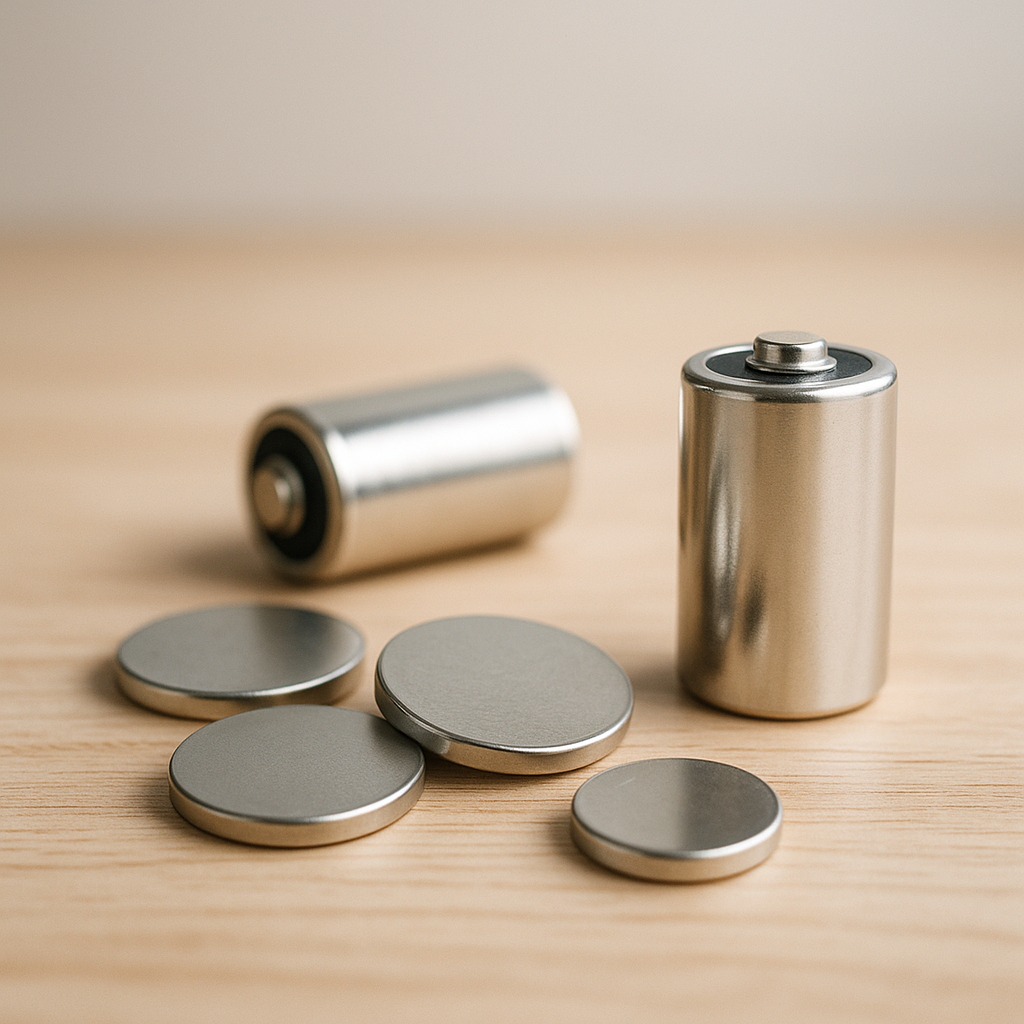
The world of small electronics is powered by an often-overlooked hero: the battery. When we contemplate the intricate circuits of a car key fob, the life-saving function of a heart rate monitor, or the simple convenience of a garage door opener, we are really contemplating the quiet, steady work of a power source. Among the most ubiquitous of these are the 3 volt lithium batteries. Their existence is so integrated into our daily lives that we seldom give them a second thought until the moment they fail. Yet, choosing a replacement is not always as simple as matching a number. The journey to select the right battery is an exercise in understanding the delicate relationship between a device's needs and the battery's capabilities. It requires a thoughtful consideration of size, chemistry, power delivery, and longevity. This guide is constructed not merely as a list of instructions, but as an educational pathway. It aims to cultivate a deeper appreciation for the technology and to empower you, the user, to make choices that are not just correct, but optimal. We will explore the language of batteries, learn to read their specifications like a blueprint, and understand the functional consequences of our selections, ensuring our devices perform as their designers intended.
The first and most fundamental step in selecting a replacement 3 volt lithium battery is ensuring it will physically fit into your device. This may seem obvious, but the world of small batteries is filled with near-identical-looking cells that are, in fact, subtly different. A mistake of a single millimeter can render a battery useless for your specific application. This is where a standardized naming convention, established by the International Electrotechnical Commission (IEC), becomes our most valuable tool.
Let's begin with the most common form factor: the coin or button cell. You have likely encountered names like CR2032, CR2025, and CR2016. This nomenclature is not arbitrary; it is a precise description of the battery's characteristics.
With this simple key, we can instantly decode the physical dimensions of the most prevalent 3 volt lithium batteries. A CR2025 is 20 mm in diameter and 2.5 mm thick, while a CR2016 is 20 mm in diameter and only 1.6 mm thick. Although they share the same diameter and voltage, their thickness is the critical difference.
Can you substitute one for another? Sometimes, but it is rarely a good idea. A device designed for a thicker CR2032 might not make a secure electrical connection with a thinner CR2025, leading to intermittent power or complete failure. Conversely, trying to force a CR2032 into a slot meant for a CR2016 could damage the device's battery compartment or the battery itself. The best practice is always to use the exact size specified by the device manufacturer.
| Feature | CR2032 | CR2025 | CR2016 |
|---|---|---|---|
| Nominal Voltage | 3.0 Volts | 3.0 Volts | 3.0 Volts |
| Diameter | 20.0 mm | 20.0 mm | 20.0 mm |
| Height (Thickness) | 3.2 mm | 2.5 mm | 1.6 mm |
| Typical Capacity | ~225 mAh | ~165 mAh | ~90 mAh |
| Common Uses | Computer motherboards, car key fobs, electronic scales, remote controls | Car key fobs, watches, calculators, medical devices | Car key fobs, calculators, small electronic toys |
Moving away from the flat profile of coin cells, we encounter the cylindrical 3 volt lithium batteries. These are often found in more demanding applications that require a higher capacity and the ability to deliver stronger bursts of power. The two most prominent types are the CR123A and the CR2.
CR123A: These are stout, powerful batteries commonly used in high-performance LED flashlights, digital cameras, and home security sensors. They offer a nominal voltage of 3 volts and a significantly higher capacity than coin cells, often in the range of 1500 mAh. Their ability to provide a high discharge rate makes them ideal for devices with a high initial power draw, like a camera flash charging up.
CR2: The CR2 battery is dimensionally smaller than the CR123A, being both shorter and slimmer. It also provides 3 volts but with a lower capacity, typically around 800 mAh. You will find them in some compact cameras, laser sights, and medical equipment where space is at a premium but a higher power output than a coin cell is still necessary.
As with coin cells, the CR123A and CR2 are not interchangeable. Their physical dimensions are distinct, and a device is built specifically for one or the other. Forcing the wrong size can lead to damage. Always confirm the battery type by checking the device itself, its manual, or the old battery you are replacing.
Having matched the physical form of the battery, our next inquiry must be into its very substance—the internal chemistry that dictates its behavior. The term "lithium battery" is broad, but for the common primary (non-rechargeable) 3 volt lithium batteries we are discussing, the chemistry is almost always Lithium Manganese Dioxide (Li-MnO2). This specific formulation is what gives these batteries their most desirable traits.
Let's consider the fundamental purpose of a battery: to provide a stable voltage over its usable life. A battery is not like a water tank that provides less pressure as it empties. An ideal battery would provide the same voltage from the first moment of use until it is completely depleted. While no real-world battery is perfect, Li-MnO2 chemistry comes remarkably close to this ideal.
As explained by experts at Battery University, a key characteristic of this chemistry is its very flat discharge curve (Buchmann, 2021). Imagine plotting the battery's voltage over time as it powers a device. For many battery types, that line would be a noticeable downward slope. For a 3 volt lithium battery, that line remains almost horizontal at or near 3 volts for the vast majority of its life, only dropping off sharply at the very end.
Why is this so important? Many modern electronic devices are designed to operate within a narrow voltage window. If the voltage from the battery sags too much, the device's performance can become erratic, or it may shut down entirely, even if the battery still has considerable energy left. The stability of Li-MnO2 chemistry ensures that your device receives the voltage it needs to function correctly for almost the entire lifespan of the battery.
Another defining characteristic of 3 volt lithium batteries is their exceptionally wide operating temperature range. Unlike alkaline batteries, which can become sluggish and lose a significant portion of their effective capacity in cold weather, Li-MnO2 cells perform reliably in both freezing and hot conditions. This makes them the superior choice for devices that may be exposed to the elements, such as outdoor security sensors, electronic door locks, or the key fob left in a car overnight during winter. The chemical reactions inside a lithium cell are simply more efficient at lower temperatures, a property that is indispensable for applications demanding reliability in any environment.
Every battery has a property known as internal resistance. You can think of it as a tiny, invisible resistor inside the battery that opposes the flow of current. A lower internal resistance is better, as it allows the battery to deliver power more efficiently, especially to devices that need a lot of current quickly.
Primary 3 volt lithium batteries are designed with a very low internal resistance. This is crucial for their performance in pulse-demand applications. When a device like a camera flash or a remote transmitter activates, it draws a large burst of current for a very short time. A battery with high internal resistance would struggle to supply this burst, causing a significant voltage drop that could lead to a device malfunction. The low internal resistance of Li-MnO2 chemistry ensures that the battery can respond to these sudden demands with minimal voltage sag, providing the crisp, immediate power required. This is a fundamental advantage over older chemistries and is a primary reason for their dominance in modern electronics. Even complex power systems, like those involving customizable rechargeable battery solutions, build upon these principles of delivering stable power under varying loads.
We have now established the physical and chemical foundations of 3 volt lithium batteries. The next intellectual step is to connect these properties to the real-world demands of our devices. Not all electronics consume power in the same way. A thoughtful consumer must become a sort of diagnostician, assessing the "appetite" of the device to ensure the chosen battery is a suitable match. This is about more than just voltage; it is about the rate and pattern of energy consumption.
We can broadly categorize the power consumption of small electronics into two patterns:
Low, Continuous Drain: These are devices that draw a very small, relatively constant amount of current over a long period. A prime example is the CMOS battery on a computer motherboard, which maintains system settings like the time and date even when the computer is unplugged. Other examples include some digital watches or simple memory backup functions. For these devices, the most important battery characteristic is a long total life and low self-discharge, which we will discuss next.
Intermittent, High-Pulse Drain: These devices spend most of their time in a standby or "sleep" state, drawing almost no power. However, when activated, they demand a large burst of current for a brief moment. A car key fob is a perfect illustration. It does nothing until you press a button, at which point its transmitter requires a strong pulse of energy to send a signal to your car. Other examples include garage door openers, camera flashes, and wireless security sensors that only transmit when they detect motion.
The Li-MnO2 chemistry of 3 volt lithium batteries makes them exceptionally well-suited for both scenarios, but their strength in pulse-drain applications is particularly noteworthy. As we touched upon with internal resistance, their ability to deliver high current on demand without a significant voltage drop is what makes them so reliable in remote controls and transmitters. An alkaline battery in the same application might struggle, resulting in a weaker signal or a complete failure to operate, especially in cold weather.
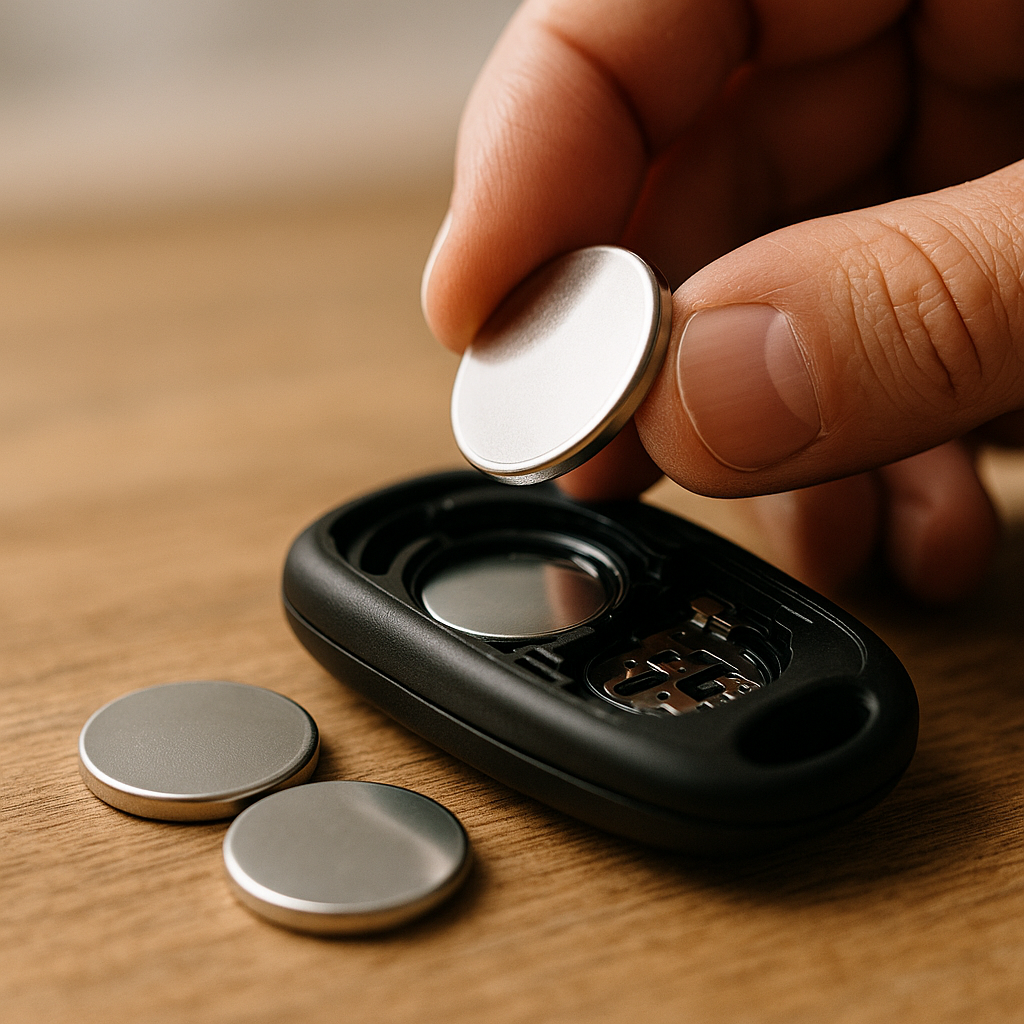
The capacity of a battery is measured in milliampere-hours (mAh). A battery rated at 225 mAh, like a typical CR2032, can theoretically supply a current of 225 milliamperes for one hour, or 1 milliampere for 225 hours. However, this is a nominal rating and can be influenced by how the power is drawn.
The concept of the C-rate helps to clarify this. As defined by Battery University, the C-rate describes the rate at which a battery is discharged relative to its maximum capacity (Buchmann, 2010). A 1C discharge rate for a 225 mAh battery would be a constant draw of 225 mA, which would deplete it in about an hour. A 0.1C rate would be a draw of 22.5 mA, lasting approximately 10 hours.
Here is the crucial insight: a battery's effective capacity changes with the C-rate. Discharging a battery at a very high rate (a high C-rate) is less efficient and will yield a lower total capacity than discharging it at a very low rate. Think of it like trying to sprint a marathon versus jogging it. The sprinter will exhaust their energy much faster and cover less total distance than the jogger who conserves energy over the long haul.
For most applications of 3 volt lithium batteries, the discharge rates are very low (far below 0.1C), which allows them to deliver their full rated capacity over many months or even years. When choosing a battery, a higher mAh rating generally means a longer lifespan in the same device. For instance, a CR2032 (around 225 mAh) will last significantly longer than a CR2016 (around 90 mAh) in the same low-drain device, provided they both fit. This is why it is vital not to substitute a smaller-capacity battery unless absolutely necessary.
| Battery Characteristic | Low-Drain Device (e.g., Watch) | High-Pulse Device (e.g., Key Fob) |
|---|---|---|
| Primary Power Demand | Small, constant current | Short, high-current bursts |
| Key Battery Attribute | High capacity (mAh), low self-discharge | Low internal resistance, stable voltage under load |
| Example 3V Lithium Cell | CR2032 (for its high capacity) | CR2032, CR123A (for their power delivery) |
| Performance Concern | Overall lifespan (years) | Signal strength, reliability of activation |
One of the most compelling, though often underappreciated, virtues of 3 volt lithium batteries is their extraordinary shelf life. This refers to the length of time a battery can be stored without losing a significant amount of its original capacity. For primary lithium cells, this period can be 10 years or even longer under optimal conditions. This makes them fundamentally different from alkaline or rechargeable batteries, which have much higher rates of self-discharge.
Imagine a battery as a bucket of water with a very slow, almost imperceptible leak. This leak is self-discharge. It is an internal chemical process that slowly consumes the battery's stored energy, even when it is not connected to a device. The rate of this "leak" is highly dependent on the battery's chemistry and the ambient temperature.
Alkaline batteries might lose 5-10% of their charge per year at room temperature. Common rechargeable batteries like Nickel-Metal Hydride (NiMH) can lose 1-3% of their charge per day. In stark contrast, a primary 3 volt lithium battery typically loses less than 1% of its charge per year.
This incredibly low self-discharge rate has profound practical implications. It means you can purchase these batteries and store them for years, confident that they will be ready to perform when needed. It is why they are the standard choice for emergency equipment, safety devices like smoke alarms (some models use lithium), and critical memory backup applications. The device's own power consumption becomes the primary factor in its lifespan, not the battery's tendency to fade on its own.
Because they are designed for long-term reliability, reputable manufacturers print a "best before" or "expiration" date on the battery's packaging. This is not a date on which the battery will suddenly cease to function, but rather a guarantee from the manufacturer that the battery will retain a very high percentage of its original capacity until that date, provided it has been stored correctly.
When you are purchasing 3 volt lithium batteries, especially if you are buying them in bulk for future use, it is a wise practice to check this date. A battery with an expiration date many years in the future is a "fresh" battery. A battery that is approaching or past its expiration date may still work, but its performance and lifespan could be compromised. You are no longer getting the full value or the long-term reliability that is the hallmark of this chemistry.
The phenomenal 10-year shelf life is contingent upon proper storage. The rate of all chemical reactions, including the ones that cause self-discharge, is accelerated by heat. Storing your 3 volt lithium batteries in a hot environment, such as a car's glove compartment in the summer or a sun-drenched drawer, will shorten their shelf life.
The ideal storage condition is a cool, dry place at normal room temperature (around 20°C or 68°F). There is no need to refrigerate or freeze them; in fact, extreme cold can cause condensation when the batteries are returned to room temperature, which could lead to corrosion or short-circuiting. The simple act of storing them correctly preserves their potential and ensures you get the longevity you paid for. It is a small act of stewardship for these small but vital components of our technological lives.
Our discussion so far has centered on primary (single-use) 3 volt lithium batteries. They are marvels of convenience, reliability, and longevity. However, the landscape of battery technology is ever-evolving, and rechargeable alternatives exist. The decision to use a primary cell or its rechargeable counterpart is a strategic one, based on an analysis of cost, convenience, and the specific application.
The primary 3 volt lithium battery, like the CR2032 or CR123A, holds several key advantages that make it the default choice for the majority of compatible devices.
Rechargeable 3 volt lithium batteries, such as the LIR2032, offer a different value proposition, one that is centered on long-term cost and environmental considerations.
However, one must be mindful of their disadvantages. Their lower capacity means more frequent recharging. Their higher self-discharge rate means they are not suitable for standby or emergency devices, as they may be depleted when you need them most. And, most importantly, the voltage difference must be respected. Never assume a rechargeable cell can be used in a device designed for a primary cell without explicit confirmation from the manufacturer.
This principle of matching battery type to usage pattern extends to all power systems. For instance, in the world of power tools, professionals rely on robust, high-capacity systems. While a small device might use a coin cell, a cordless drill or saw depends on something far more substantial, like a dedicated power tool battery pack, which is designed for high discharge and rapid recharging, embodying the principles of a secondary battery on a much larger scale. The logic remains the same: the right choice depends entirely on the job at hand.
The immense energy packed into the small footprint of a 3 volt lithium battery demands respect. While they are generally very safe when used as intended, improper handling, storage, or disposal can lead to hazards. Cultivating good habits is not just about prolonging the life of the battery, but about ensuring the safety of yourself and your home.
A short circuit occurs when a low-resistance pathway is created between the battery's positive and negative terminals. This can happen if a battery comes into contact with a metal object like keys, coins, or another battery. The result is a very rapid, uncontrolled discharge of the battery's energy, which generates a significant amount of heat. In a small coin cell, this can cause the battery to become hot enough to cause burns or damage the device it's in. In a larger cylindrical cell like a CR123A, the heat can be intense enough to rupture the cell's casing, potentially causing a small fire or leakage of corrosive materials.
To prevent this, never store loose batteries in a pocket, purse, or drawer where they can touch metal objects. Keep them in their original packaging until you are ready to use them. If you must store them loose, use plastic battery cases or tape over the terminals of cylindrical cells.
For all their utility, coin-shaped 3 volt lithium batteries pose a serious risk to small children and pets. Their small, shiny appearance can be tragically mistaken for candy or a toy. If swallowed, a coin cell can become lodged in the esophagus. Saliva acts as an electrolyte, creating a circuit between the battery's terminals. This generates a chemical reaction that can cause severe, life-threatening burns to the surrounding tissue in as little as two hours.
This is a medical emergency of the highest order. Manufacturers have taken steps to mitigate this risk, such as using child-resistant packaging and applying a bitter coating to some cells to discourage ingestion. However, the most effective prevention is vigilance. Always store spare batteries securely out of the reach and sight of children. Ensure the battery compartments on your devices are secure (some now use a screw to prevent easy access). If you suspect a child has swallowed a battery, do not induce vomiting or have the child eat or drink anything. Seek immediate emergency medical attention.
A battery is not ordinary trash. At the end of its life, it contains materials that can be harmful to the environment if sent to a landfill. Lithium batteries, in particular, can pose a fire risk in waste collection trucks and facilities if they are damaged and short-circuit.
The responsible path is recycling. Many jurisdictions have laws mandating battery recycling. Most electronics stores, home improvement centers, and municipal waste facilities have designated drop-off bins for used batteries. Organizations like Call2Recycle offer easy-to-use locators to find a recycling center near you. Before recycling, it is a good practice to tape over the terminals of the batteries to prevent any chance of a short circuit while they are in transit. Thinking about the end-of-life of a product is part of being a responsible consumer, a principle that applies whether we are discussing a tiny coin cell or a large power tool battery (BatteryStuff.com, n.d.).
Even with the correct battery, issues can arise. A device may fail to power on, or a new battery may seem to die prematurely. Often, the problem is not with the battery itself but with the interaction between the battery and the device. A systematic approach to troubleshooting can often resolve these issues quickly.
This is a common frustration. You replace a dead battery, and the device still does not work. Before concluding the device is broken, consider these possibilities:
If you find yourself replacing batteries in a device far more often than you expect, it could be a sign of a "parasitic drain." This is a fault within the device that causes it to draw more current than it should, especially when it is supposed to be in a standby or off state. This is more common in older or more complex electronics.
Identifying a parasitic drain can be difficult without specialized equipment. However, one simple test is to feel the device after it has been off for some time. If it feels warm, it is a sign that current is flowing and energy is being wasted as heat. Another sign could be a very faint buzzing or whining sound from the device when it should be silent. If you suspect a parasitic drain, the issue lies with the device's circuitry, not the battery, and may require professional repair or replacement of the device itself. This is a concept well-understood by technicians who test for such loads in automotive and marine systems (BatteryStuff.com, n.d.).
No, they are not. While they may share the same nominal voltage, they differ significantly in size, shape, and capacity. The most critical step is to match the battery's model number (e.g., CR2032, CR123A) to the one specified by your device manufacturer to ensure it fits correctly and provides the intended performance.
It is not recommended. Although both are 20 mm in diameter and 3 volts, the CR2032 is 3.2 mm thick, while the CR2025 is only 2.5 mm thick. Using the thinner CR2025 in a device designed for a CR2032 may result in a loose connection, causing the device to work intermittently or not at all. Always use the exact size specified.
The most reliable way is to use a multimeter to test its voltage. A fresh 3 volt lithium battery will typically read between 3.1 and 3.3 volts with no load. A battery is generally considered depleted when its voltage drops below 2.8 volts under a light load, though many devices will stop functioning correctly before that point. If you do not have a multimeter, the simplest test is to try it in a known-good device.
One of the major advantages of primary 3 volt lithium batteries (like the CR series) is their extremely long shelf life. When stored in a cool, dry place, they can retain over 90% of their original charge for up to 10 years. Always check the expiration date on the packaging for the best performance.
Most common 3 volt lithium batteries, such as the CR2032, are primary (non-rechargeable) cells. Attempting to recharge them is dangerous and can cause them to leak, rupture, or even explode. However, rechargeable versions do exist (often designated with an "LIR" prefix, like LIR2032). These have different voltage and capacity characteristics and require a specific charger. You should only use a rechargeable battery if the device manufacturer explicitly states it is compatible.
When a lithium coin cell is swallowed, it can get stuck in the esophagus. Saliva closes the circuit between the positive and negative terminals, and the resulting electrical current rapidly creates sodium hydroxide (a caustic substance), causing severe chemical burns to the surrounding tissue in as little as two hours. This is a medical emergency.
Store them in their original packaging in a cool, dry place, away from direct sunlight and extreme temperatures. Do not store loose batteries in a drawer or pocket with metal items like coins or keys, as this can cause a short circuit, rapidly draining the battery and creating a fire hazard.
We have journeyed through the intricate world of the 3 volt lithium battery, moving from its physical dimensions to its chemical heart, and onto the practical realities of its use. We have seen that the act of choosing a battery is not a trivial one. It is a decision that rests upon a foundation of understanding—an understanding of the language the battery speaks through its codes and numbers, and an appreciation for the needs of the devices it is destined to power. The right battery is more than just a component that fits; it is a partner to your device, selected to provide stable, reliable, and long-lasting performance. By internalizing these checks—verifying the size, comprehending the chemistry, assessing the load, valuing freshness, and weighing the primary versus rechargeable trade-offs—you elevate yourself from a simple consumer to an informed user. You ensure that the quiet, unassuming power source at the heart of your electronics is not a point of failure, but a bastion of reliability.
{"one"=>"Select 2 or 3 items to compare", "other"=>"{{ count }} of 3 items selected"}