

CONTACT
Please contact us for shipping details.
This guide provides a comprehensive analysis for selecting optimal heavy duty jumper cables with thick handles in 2025. It moves beyond simplistic recommendations to offer a deep examination of the underlying electrical and material science principles that govern cable performance. The primary factors evaluated are American Wire Gauge (AWG), cable length, insulation material, clamp construction, and amperage rating. The analysis elucidates how lower gauge numbers correspond to greater current-carrying capacity and reduced voltage drop, a critical factor for starting larger engines. It contrasts the conductivity and durability of pure copper conductors with copper-clad aluminum alternatives. Furthermore, the role of insulation in providing flexibility in extreme temperatures and ensuring user safety is detailed. The ergonomic and safety advantages of robust, thick handles and high-tension clamps are also explored. By grounding these technical specifications in practical applications, this document empowers both novice and professional users to make an informed investment in a reliable and safe automotive tool.
The click-click-click of a car that refuses to start is a sound that evokes a particular kind of helplessness. In that moment, a simple tool can become a lifeline, bridging the gap between a dead battery and a running engine. Yet, not all jumper cables are created equal. The market is saturated with options, and the difference between a successful jump-start and a frustrating failure often lies in technical details that are easy to overlook. The most fundamental of these is the wire gauge. Choosing the right set of heavy duty jumper cables with thick handles begins with a proper understanding of this single, crucial specification. It requires us to look past the marketing claims and engage with the physics that govern the flow of electrical current.
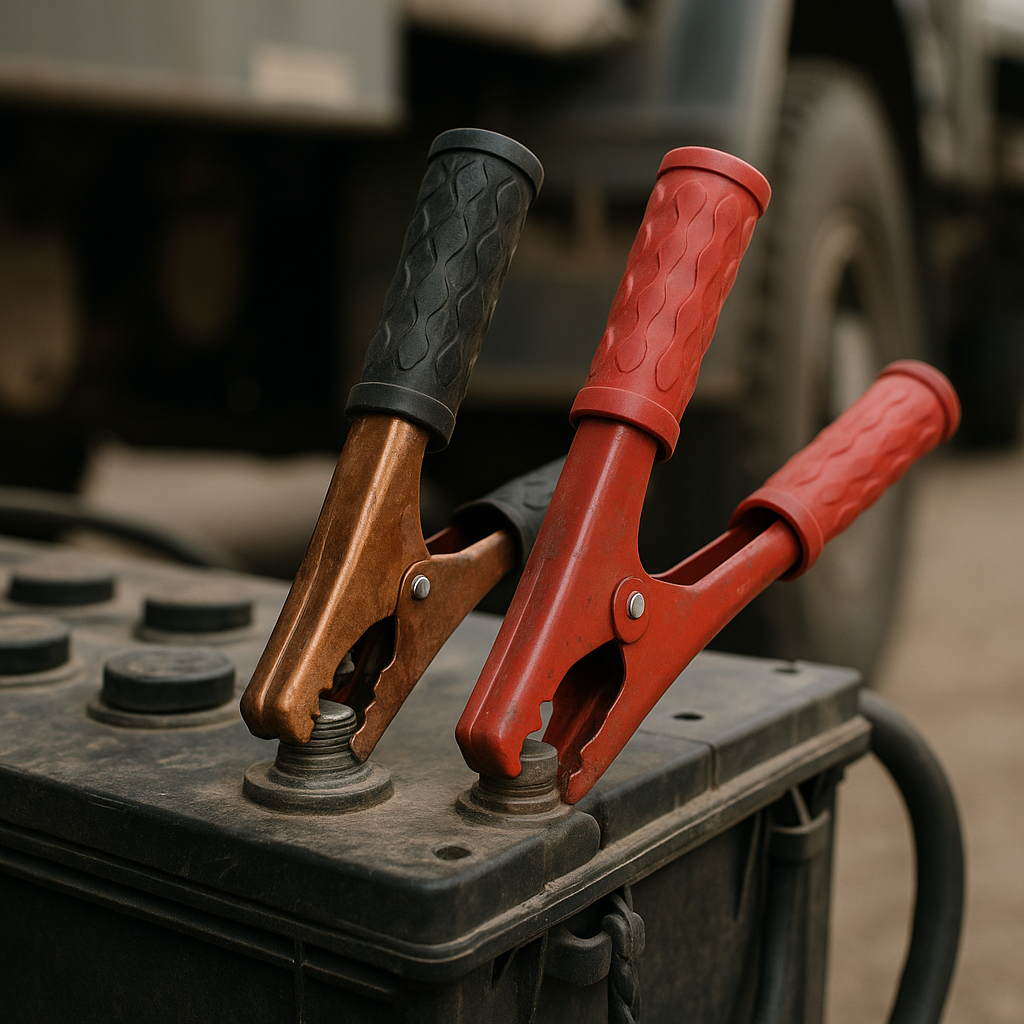
To the uninitiated, the numbers associated with wire gauge can seem counterintuitive. The American Wire Gauge (AWG) standard is a system where a smaller number indicates a thicker wire, and a larger number signifies a thinner one. Think of it like a garden hose. If you need to move a large volume of water quickly, you would choose a wide-diameter hose, not a narrow one. A narrow hose creates more resistance, slowing the flow.
Similarly, a thick electrical wire (low AWG number) presents less resistance to the flow of electrons. When you are trying to deliver the massive surge of current needed to turn over a cold engine, minimizing this resistance is paramount. A thinner wire (high AWG number) will struggle to carry the current, generating significant heat and losing precious voltage along the way, which can prevent the disabled vehicle from starting (Buchmann, 2021). The energy that should be cranking the engine is instead wasted as heat within the cable itself.
The relationship between wire gauge, resistance, and current delivery is not just a matter of preference; it is governed by Ohm's Law and the principles of electrical power. A heavy-duty application like jump-starting a large truck or a vehicle in freezing temperatures demands hundreds of amperes of current.
A set of 6-gauge cables might be adequate for a small compact car in mild weather. However, if you attempt to use those same cables on a V8 pickup truck, the high electrical resistance of the thinner wire will cause a severe voltage drop. The starter motor on the truck may not receive enough voltage to engage and turn the engine. Worse, the cables themselves can become dangerously hot, potentially melting the insulation and creating a fire hazard.
Conversely, a 1-gauge or 2-gauge cable offers a wide, low-resistance path for the current. It can handle the immense initial surge required by a large engine without significant voltage loss or dangerous heat buildup. This is why for any set advertised as "heavy duty," the gauge should be one of the first things you verify. True heavy duty jumper cables with thick handles will almost always feature a low gauge number, typically 4 AWG or lower.
Selecting the appropriate gauge is not about buying the thickest cable available, but about matching the tool to the task. Over-specifying is not dangerous, but it can be more costly and cumbersome. The key is to consider the most demanding vehicle you might need to jump-start.
| Wire Gauge (AWG) | Typical Applications | Conductor Diameter (Approx.) | Considerations |
|---|---|---|---|
| 8 Gauge | Motorcycle, lawnmower, small compact car | 0.128 in (3.26 mm) | Not recommended for most cars or any trucks. Very high voltage drop over length. |
| 6 Gauge | Compact to mid-size cars | 0.162 in (4.11 mm) | A common consumer-grade option. May struggle with larger engines or in cold weather. |
| 4 Gauge | Full-size cars, light-duty trucks, a good all-around choice | 0.204 in (5.19 mm) | The minimum for what should be considered "heavy duty." Offers a good balance of performance and cost. |
| 2 Gauge | Full-size trucks, large SUVs, commercial vans | 0.258 in (6.54 mm) | Excellent for demanding applications. Provides reliable power for large displacement engines. |
| 1/0 (0) Gauge | Diesel engines, heavy machinery, professional use | 0.325 in (8.25 mm) | The professional's choice for maximum current delivery and minimal voltage drop. |
The material of the conductor is just as important as its thickness. To reduce costs, many manufacturers use Copper-Clad Aluminum (CCA) wire. These cables have an aluminum core with a thin outer coating of copper. While they may look the part, their performance is significantly inferior to that of 100% copper cables.
Aluminum has about 61% of the conductivity of copper. This means that a 4-gauge CCA cable will have the same resistance as a much thinner 6-gauge copper cable (National Fire Protection Association, 2023). It will not be able to deliver the same amount of current and will suffer from greater voltage drop. Furthermore, aluminum is more brittle and susceptible to corrosion and breakage over time, especially at the clamp connection point. Pure copper cables, while more expensive, offer superior conductivity, durability, and a longer service life, making them a wiser long-term investment for a critical safety tool. When selecting heavy duty jumper cables with thick handles, always check the packaging to ensure they are made from 100% copper.
After determining the appropriate wire gauge and material, the next consideration is the length of the cables. This presents a classic trade-off between convenience and performance. While longer cables offer greater flexibility in positioning the two vehicles, they also introduce more electrical resistance, leading to increased voltage drop. Understanding this relationship is key to choosing a set of cables that is both practical and effective.
Imagine a scenario where the disabled vehicle is parked nose-in against a wall, making a nose-to-nose connection impossible. In this case, a longer set of cables, perhaps 20 or 25 feet, would be invaluable, allowing you to position the rescue vehicle alongside or behind the one with the dead battery. This versatility is the primary appeal of longer cables.
However, every foot of wire adds to the total electrical resistance of the circuit. As established, resistance impedes the flow of current and causes voltage to drop between the source battery and the receiving one. According to the principles of electrical engineering, voltage drop is directly proportional to both the current and the length of the wire (Kuphaldt, 2022). For a given gauge, doubling the cable length will double the voltage drop.
When trying to start an engine, this drop can be the difference between success and failure. A 12-volt battery system needs to maintain a certain voltage level under load for the starter motor to operate correctly. If a long, inadequate cable causes the voltage at the starter to fall below this threshold, the engine simply will not crank, no matter how good the source battery is.
Choosing the right length involves thinking about your most likely usage scenarios.
The practicality of storing and handling the cables should not be underestimated. A 25-foot set of 1-gauge copper cables can be heavy and unwieldy. Without proper management, they can become a tangled mess in your trunk, difficult to deploy in an emergency. Quality cables will often come with a durable storage bag or case, which is a valuable feature. When storing them, avoid tight kinks or sharp bends, which can damage the wire strands or the insulation over time. Coiling them in large, loose loops is the best practice to ensure they remain in good condition and are ready when you need them.
The bright red and black coating on a set of jumper cables is more than just color-coding; it is a critical safety component known as insulation. Its job is to contain the powerful electrical current, preventing dangerous short circuits, and to protect the internal copper wiring from damage. The quality and type of insulation material directly impact the cables' durability, flexibility, and, ultimately, their safety, especially in extreme weather conditions.
The two most common types of insulation material used for jumper cables are Polyvinyl Chloride (PVC) and Thermoplastic Elastomers (TPE) or Thermoplastic Rubber (TPR).
Polyvinyl Chloride (PVC): This is the standard, cost-effective choice for many consumer-grade cables. While PVC provides adequate insulation under normal conditions, its major drawback is its performance in the cold. As temperatures drop toward freezing and below, PVC becomes stiff and brittle. Trying to uncoil a cheap PVC cable on a frigid winter morning can be incredibly frustrating, and the insulation can even crack or split, exposing the live wires and creating a serious safety hazard.
Thermoplastic Elastomer (TPE/TPR): This is the superior material for heavy-duty, all-weather jumper cables. TPE/TPR blends the properties of plastic and rubber. It remains highly flexible even in sub-zero temperatures, making the cables easy to handle when you need them most. It also offers excellent resistance to abrasion, oil, and chemicals, contributing to a much longer service life. When you see a set of cables advertised as "tangle-free" or for "all-weather" use, they are likely insulated with a TPE/TPR material. For a reliable set of heavy duty jumper cables with thick handles, this rubber-like insulation is the preferred choice.
High-quality cables will often have a temperature rating printed on the insulation itself. This rating indicates the range of temperatures within which the material will maintain its protective properties and flexibility. For example, a rating of -40°C to 75°C (-40°F to 167°F) signifies a very high-quality cable that will not become brittle in extreme cold or degrade under the heat of an engine bay. This specification provides a tangible measure of the cable's durability and suitability for use in harsh climates.
| Insulation Material | Flexibility in Cold | Heat & Abrasion Resistance | Cost | Best Use Case |
|---|---|---|---|---|
| PVC (Polyvinyl Chloride) | Poor (becomes stiff and brittle) | Moderate | Low | Light-duty use in mild climates only. |
| TPE/TPR (Thermoplastic Elastomer/Rubber) | Excellent (remains flexible) | High | High | Heavy-duty, all-weather use. The standard for professional-grade cables. |
The finest wire and insulation are useless if the connection to the battery terminals is weak. The clamps are the crucial interface where electrical energy is transferred. Their design, material, and the ergonomics of their handles play a pivotal role in the safety and effectiveness of the jump-starting process. A poorly designed clamp can fail to make a good connection, arc dangerously, or be difficult to handle, turning a routine procedure into a hazardous one.
A well-made jumper cable clamp is more than just a simple clip. It is a system designed for a secure mechanical grip and maximum electrical conductivity.
Jaws and Teeth: The jaws of the clamp should be long and narrow enough to fit into the tight spaces of modern engine bays and grip onto both top-post and side-post battery terminals. The teeth are critical. Look for sharp, well-defined teeth that can bite through any corrosion or grime on the battery terminal to establish a solid metal-to-metal connection. Some of the best designs feature separate sets of teeth on each side of the jaw, ensuring a good grip regardless of the angle of attachment.
Spring Tension: The spring provides the clamping force. A weak spring will result in a loose connection that can easily be dislodged or create a high-resistance point, leading to arcing and heat generation. The clamp should feel substantial and require a firm squeeze to open. This strong tension ensures the clamp stays put and maintains a low-resistance connection throughout the jump-starting process.
Conductor Connection: The way the cable is attached to the clamp is also vital. In cheap cables, the wire is often simply crimped onto a small tab. In superior heavy duty jumper cables with thick handles, the copper wire is directly crimped and often soldered to the clamp body itself, ensuring the electrical path flows through the entire clamp jaw, not just one small point of contact.
This brings us to a defining feature of a premium set of cables: the handles. The handles are not just for aesthetics; they are a primary safety and usability feature.
Safety and Insulation: Thick, fully-insulated handles provide a large, non-conductive surface for you to grip. This dramatically reduces the risk of accidental contact with the metal clamp or a stray piece of metal in the engine bay, which could cause a dangerous short circuit. The handle should cover the entire back half of the clamp, leaving only the jaws exposed.
Grip and Leverage: Attempting to open a high-tension clamp with a flimsy, small handle can be difficult, especially if you are wearing gloves in cold weather. Heavy duty jumper cables with thick handles provide a substantial surface to grip, giving you the leverage needed to easily open the powerful spring and precisely place the clamp on the battery terminal. This ergonomic advantage cannot be overstated, as it contributes to a safer, more controlled, and less frustrating experience. The confidence a secure grip provides is an essential part of performing the procedure correctly and safely.
While gauge, length, and materials form the foundation of a good set of jumper cables, understanding the power they are rated to handle and the proper procedure for using them are the final pieces of the puzzle. The amperage rating provides a clear indication of the cable's capability, and adhering to strict safety protocols ensures that a simple jump-start does not turn into a costly or dangerous mistake.
The amperage (amp) rating of a set of jumper cables is a measure of the amount of electrical current they are designed to safely handle. This rating is directly related to the wire gauge and the quality of the clamps. A higher amperage rating indicates that the cables can transfer more power, which is essential for starting larger engines.
For example, a small four-cylinder engine might only require 200-300 amps to crank, whereas a large V8 or diesel engine, especially in cold weather, could demand 600 amps or more. A set of cables with a low amp rating (e.g., 400 amps) used on a large truck will overheat and fail to deliver the necessary power. A good set of heavy duty jumper cables with thick handles should have a rating of at least 800 amps to provide versatility for a wide range of vehicles, from passenger cars to heavy-duty trucks.
Owning the best equipment is only half the battle; knowing how to use it correctly is what ensures safety. The risk of battery explosion, while rare, is real. It is caused by igniting the hydrogen gas that can vent from a lead-acid battery. Following a precise connection sequence minimizes this risk.
This methodical process, combined with the use of high-quality, well-insulated heavy duty jumper cables with thick handles, provides the highest degree of safety and effectiveness.
For a V8 truck, especially a diesel model, you should use a minimum of 4-gauge cables. However, 2-gauge or 1-gauge cables are highly recommended for optimal performance, particularly in cold climates. The thicker wire ensures minimal voltage drop and can handle the high amperage required to turn over a large, cold engine.
While 25-foot cables offer great reach, they can be too long for a regular car if they are not of a sufficiently low gauge. The longer the cable, the greater the voltage drop. If you opt for 25-foot cables, ensure they are at least 4-gauge, and preferably 2-gauge, 100% copper cables to compensate for the added length. For most non-commercial use, 16 to 20 feet is a more practical length.
Yes, you can, but with extreme caution. The clamps on heavy duty jumper cables can be large and difficult to attach to a small motorcycle battery's terminals. Ensure the clamps do not touch each other or any part of the motorcycle's frame. It is critical to follow the correct connection procedure and, importantly, DO NOT start the car's engine while jumping the motorcycle. A running car's alternator can produce a current that may overwhelm and damage the motorcycle's smaller electrical system. Simply connect the cables from the car's battery (with the engine off) to the motorcycle battery.
Reputable manufacturers of 100% copper cables will clearly state this on the packaging as a key selling point. If the packaging is unclear or uses ambiguous terms like "high conductivity," be skeptical. Sometimes, scraping the end of the wire strands (if accessible) will reveal a silver-colored aluminum core beneath a thin copper plating on CCA cables. Pure copper cables will be copper-colored throughout.
Thick handles provide two main benefits: safety and usability. They offer better insulation, creating a larger non-conductive area that protects you from accidental shocks or short circuits. They also provide superior grip and leverage, making it easier to open the high-tension clamps and attach them securely to battery terminals, especially when wearing gloves in cold or wet conditions.
The decision to invest in a set of heavy duty jumper cables with thick handles is an affirmation of self-reliance. It is the understanding that preparation is the antidote to panic. By moving beyond surface-level features and engaging with the fundamental principles of wire gauge, material composition, and clamp design, you transform a simple purchase into an informed choice. A quality set of cables is not merely an accessory stored in a trunk; it is a piece of safety equipment, a robust tool engineered to deliver powerful current reliably and safely. It represents the capacity to not only rescue yourself from a moment of inconvenience but to offer aid to another in their time of need, turning a moment of mechanical failure into an opportunity for human connection.
Buchmann, I. (2021). BU-105: Battery definitions and what they mean. Battery University. batteryuniversity.com
Kuphaldt, T. R. (2022). Lessons in electric circuits, Volume I – DC. All About Circuits. allaboutcircuits.com
National Fire Protection Association. (2023). NFPA 70: National Electrical Code. nfpa.org
{"one"=>"Select 2 or 3 items to compare", "other"=>"{{ count }} of 3 items selected"}