

CONTACT
Please contact us for shipping details.
The N170RD battery, a common BCI group size for heavy-duty commercial applications, has traditionally been dominated by lead-acid chemistries. However, the maturation of Lithium Iron Phosphate (LiFePO4) technology presents a compelling alternative for 2026 and beyond. An examination of this technological transition reveals significant disparities in performance, longevity, and total cost of ownership. LiFePO4 batteries offer a substantially longer cycle life, greater usable capacity through a deeper depth of discharge, and a significant reduction in weight, which impacts fuel efficiency and handling in mobile applications like trucks and marine vessels. While the initial acquisition cost for a LiFePO4 N170RD battery is higher, a comprehensive cost-benefit analysis often demonstrates long-term financial advantages due to reduced replacement frequency and minimal maintenance. The transition also necessitates a careful evaluation of existing charging systems, including alternators and solar controllers, to ensure compatibility and optimal performance. Safety profiles also differ, with LiFePO4 providing superior thermal stability. This guide evaluates these factors to inform a rational decision-making process for users considering an upgrade.
When we approach the question of upgrading a component as fundamental as a battery, our immediate instinct is often to compare the price tags. You might look at a traditional lead-acid N170RD battery next to a modern LiFePO4 equivalent and experience a bit of sticker shock. I see it all the time with people I help. The initial outlay for lithium technology is undeniably higher, sometimes by a factor of two or three. A purely surface-level assessment based on this single data point would lead to a swift, seemingly logical conclusion: stick with the cheaper, familiar option. Yet, such a conclusion would be a profound miscalculation, overlooking the very nature of what constitutes "cost" over the functional life of an asset.
The true financial narrative of a battery is not written on its price tag; it unfolds over years of service, through cycles of charging and discharging, and in the hours spent on maintenance or, conversely, the hours saved. We must cultivate a more sophisticated economic empathy, one that projects forward and considers the full arc of the battery's life. This is the concept of Total Cost of Ownership (TCO), a framework that moves us from being mere purchasers to becoming long-term investors in our power systems. It asks us to consider not just the cost to acquire, but the cost to operate, maintain, and eventually replace. When we apply this lens to the N170RD battery, the financial story becomes far more nuanced and, for many, surprisingly inverted.
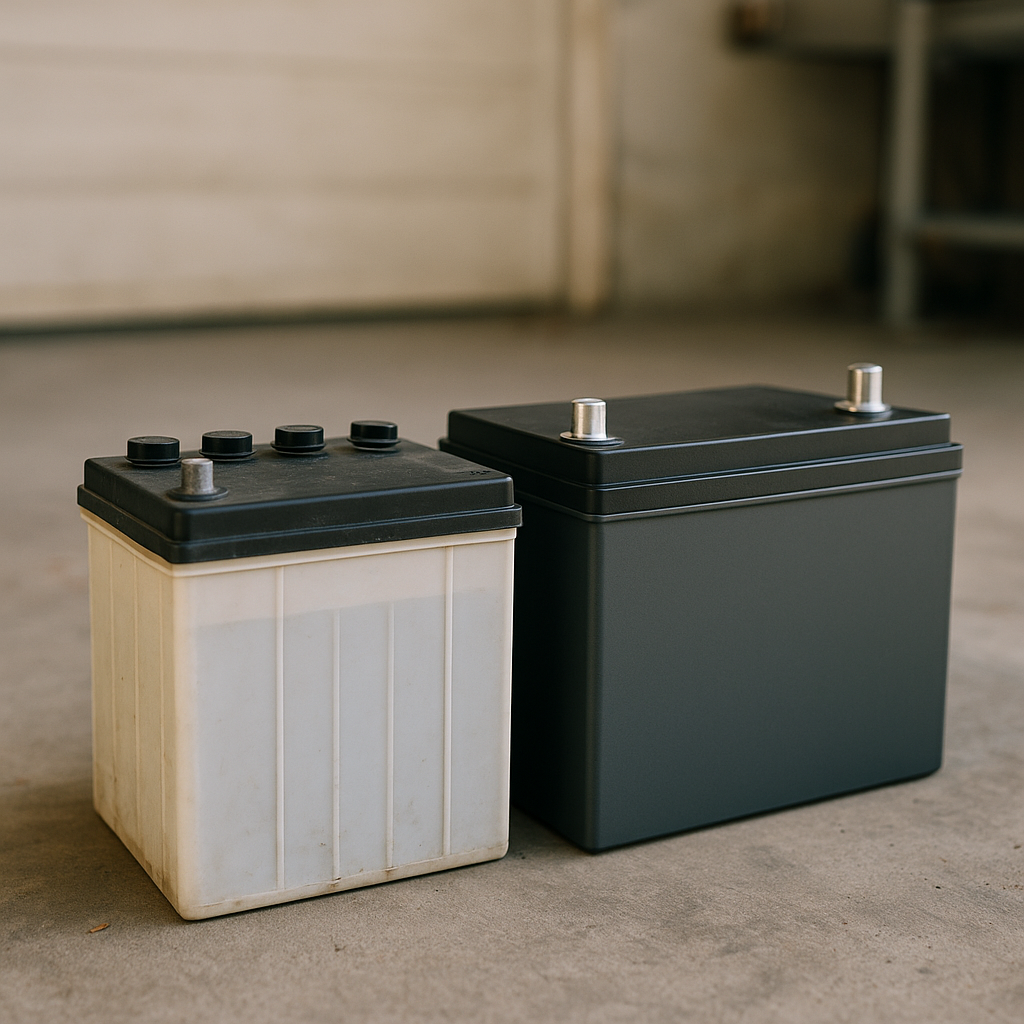
Let's begin with the most straightforward piece of the puzzle: the initial purchase price. As of 2026, a new, high-quality deep-cycle lead-acid N170RD battery, suitable for commercial trucks, RVs, or off-grid solar, might cost you somewhere in the range of $250 to $400. It is a familiar, predictable expense for anyone who has had to replace a heavy-duty battery.
In contrast, a LiFePO4 battery of the same physical BCI group size and comparable amp-hour rating will command a higher price. You could expect to see prices ranging from $800 to $1,200. This difference is not arbitrary; it reflects the costs of more complex materials, including high-purity lithium, copper, and the sophisticated electronics that constitute the Battery Management System (BMS). The manufacturing process for lithium cells is also more intricate. Looking only at these numbers, the lead-acid option appears to be the fiscally conservative choice. But this is only the first chapter of our financial story.
To help clarify the differences, let's look at a direct comparison.
| Feature | Traditional Lead-Acid N170RD | LiFePO4 N170RD Replacement |
|---|---|---|
| Nominal Voltage | 12V | 12.8V |
| Typical Capacity | 180-220 Ah | 180-220 Ah |
| Usable Capacity (DoD) | 50% (90-110 Ah) | 80-100% (144-220 Ah) |
| Average Weight | 120-140 lbs (54-63 kg) | 50-60 lbs (22-27 kg) |
| Cycle Life (@80% DoD) | 200-500 cycles | 3,000-7,000 cycles |
| Charging Efficiency | ~85% | ~99% |
| Maintenance | Regular fluid checks, terminal cleaning | None required |
| Self-Discharge Rate | 5-15% per month | 1-3% per month |
| Initial Cost | $250 - $400 | $800 - $1,200 |
| Average Lifespan | 2-4 years | 10-15+ years |
Here is where the economic narrative takes a dramatic turn. A battery's life is measured in cycles—the number of times it can be discharged and recharged before its ability to hold a charge significantly degrades. A typical deep-cycle lead-acid battery, if properly cared for and not discharged too deeply, might offer 300 to 500 cycles (MANLY Battery, 2025). If you are using your battery system daily, as in an off-grid home or a long-haul truck with auxiliary power needs, you could exhaust those cycles in just two to three years. At that point, you are back at the store, spending another $300-$400.
Now, consider the LiFePO4 N170RD battery. Its rated cycle life is not measured in the hundreds, but in the thousands. It is common for these batteries to be rated for 3,000, 5,000, or even more cycles, even when regularly discharged to 80% or more of their capacity (Outbound Power, 2024). This is a tenfold increase in longevity. The battery you purchase today could very well still be in service a decade from now.
Let's illustrate with a simple 10-year projection.
| Cost Component | Lead-Acid N170RD (Replaced every 3 years) | LiFePO4 N170RD (Single Purchase) |
|---|---|---|
| Year 1 Purchase | $350 | $1,000 |
| Year 4 Replacement | $350 | $0 |
| Year 7 Replacement | $350 | $0 |
| Year 10 Replacement | $350 | $0 |
| Total 10-Year Cost | $1,400 | $1,000 |
This simplified table does not even account for inflation or the value of your time spent procuring and replacing batteries. It becomes immediately apparent that the "cheaper" option is, in fact, the more expensive one over any reasonable timeframe. The higher upfront cost of the LiFePO4 battery is not just a purchase; it is an investment that pays dividends by eliminating the recurring expense of replacements.
The financial benefits of LiFePO4 extend beyond just cycle life. Lead-acid batteries require a degree of stewardship. They need to be periodically checked for water levels (in the case of flooded types), their terminals must be kept clean to prevent corrosion, and they are sensitive to being left in a partially discharged state, which can lead to sulfation and permanent capacity loss. Each of these tasks, while minor, represents a cost—either in your own time or in paying for maintenance.
LiFePO4 batteries, by contrast, are effectively maintenance-free. The sealed cells and the integrated BMS handle the health of the battery automatically. There is no water to top off, no corrosion to scrub, no equalization charges to run. You install it and, for the most part, you can forget about it.
Furthermore, there is the matter of charging efficiency. When you charge a lead-acid battery, a portion of the energy is lost as heat. Their efficiency is typically around 80-85%. A LiFePO4 battery is remarkably efficient, often exceeding 95% or even higher. Imagine you are charging your battery bank with a solar panel or a generator. With lead-acid, for every 100 watts of power you generate, only about 85 watts make it into the battery for storage. With LiFePO4, 95 watts or more are stored. Over thousands of cycles, this means less fuel consumed by your generator or a more effective use of your available sunlight, translating into real, measurable savings. The TCO of an N170RD battery is a far more revealing metric than its sticker price, encompassing replacements, maintenance, and efficiency.
When we select a battery, one of the primary figures we look at is its capacity, typically expressed in Amp-hours (Ah). An N170RD battery, for instance, might be advertised with a capacity of 200 Ah. This number feels solid, a definitive measure of the energy reservoir we are purchasing. The intuitive assumption is that we have 200 amp-hours of energy at our disposal. However, the lived reality of battery chemistry, particularly with traditional lead-acid technology, presents a more complex picture. The rated capacity and the usable capacity are two very different things.
This distinction is perhaps the most critical, yet frequently misunderstood, aspect of comparing battery technologies. It is the difference between owning a 10-gallon water tank that you can only safely drain halfway and owning one that you can use almost to the last drop. The concept of Depth of Discharge (DoD) is central to understanding this. It represents the percentage of the battery's total capacity that has been discharged. Grasping how DoD interacts with battery chemistry and lifespan is fundamental to correctly sizing a battery for your needs and appreciating the profound functional advantage that LiFePO4 offers.
A lead-acid N170RD battery with a 200 Ah nameplate rating does not, in practice, provide 200 Ah of usable energy. The reason lies in its chemistry. Discharging a lead-acid battery beyond about 50% of its capacity causes significant stress on the lead plates, accelerating their degradation and drastically shortening the battery's cycle life. To preserve the battery and get a reasonable number of cycles from it, the accepted best practice is to limit discharges to a 50% DoD.
What does this mean in practical terms? Your 200 Ah lead-acid battery effectively becomes a 100 Ah battery. You are carrying the weight and bulk of a 200 Ah unit but can only access half of its stored energy without incurring a severe penalty to its longevity. It is a constant compromise, a balancing act between runtime and preservation of the asset.
LiFePO4 batteries operate under a completely different set of rules. Their chemistry is far more resilient to deep discharging. You can routinely discharge a LiFePO4 battery to 80%, 90%, or even 100% of its capacity with a much smaller impact on its overall cycle life (MANLY Battery, 2025). A 200 Ah LiFePO4 battery, therefore, provides 160 to 200 Ah of genuinely usable energy.
Think about what this means for your application. To get the same 160 Ah of usable energy from lead-acid batteries, you would need a bank with a nameplate rating of at least 320 Ah. This would require two N170RD-sized batteries, doubling the weight, space, and complexity of your system. A single LiFePO4 N170RD battery can do the work of two lead-acid batteries of the same size.
The relationship between DoD and cycle life is not linear; it is exponential, especially for lead-acid. While a 50% DoD might yield 500 cycles, increasing that to an 80% DoD might drop the cycle life to a mere 200 cycles. Routinely pushing the battery for more runtime directly results in needing to replace it much sooner.
For LiFePO4, the trade-off is far less severe. A battery rated for 5,000 cycles at 80% DoD might still offer 3,000 cycles at 100% DoD. The chemistry is simply more robust. This gives the user immense flexibility. On a normal day, you might only use 50% of the capacity, but when you need that extra power—to run an appliance longer during a power outage or to get through a cloudy day on solar—you can access the full depth of the battery's reserves without feeling like you are causing irreparable harm. This provides a level of operational freedom and peace of mind that lead-acid chemistry cannot match.
Let's imagine you are outfitting an RV. You have calculated your daily energy consumption for lights, a refrigerator, a water pump, and charging your devices to be approximately 120 Ah.
If you choose a lead-acid solution, you need to size your battery bank so that your 120 Ah daily usage represents no more than a 50% DoD. This means you require a total nameplate capacity of at least 240 Ah. You might achieve this with two large batteries, perhaps even exceeding the N170RD size, with a combined weight of over 250 pounds.
Now, let's re-evaluate with LiFePO4. Your 120 Ah daily need can be comfortably met by a single 200 Ah LiFePO4 N170RD battery. This usage represents only a 60% DoD (120 Ah / 200 Ah), well within the battery's comfortable operating parameters and leaving you a substantial 80 Ah reserve. You have met your energy needs with a single battery that weighs around 55 pounds, saving nearly 200 pounds of weight and a significant amount of space. This usable capacity advantage is not just a technical specification; it has tangible, real-world consequences for system design, weight, and overall efficiency.
In our exploration of battery technology, it is easy to become absorbed by the abstract numbers—volts, amps, cycles. These are, of course, the language of electricity. We must not forget that a battery is also a physical object. It occupies space. It has mass. It must be lifted, secured, and carried by the vehicle or structure that houses it. The physical characteristics of an N170RD battery are just as consequential as its electrical properties, profoundly influencing everything from fuel economy in a truck to the stability of a boat and the ease of installation in an RV.
When we place a traditional lead-acid N170RD battery alongside its LiFePO4 counterpart, the most immediate and startling difference is not in their dimensions—the BCI group size standard ensures they are roughly interchangeable in footprint—but in their weight. Lifting a lead-acid N170RD is a serious task, often requiring two people or specialized equipment. Lifting a LiFePO4 version feels almost deceptive by comparison. This dramatic weight reduction is one of the most celebrated advantages of lithium technology, but its benefits ripple out in ways that are not always immediately obvious. Beyond weight, the way these two batteries deliver their power under load creates a distinct difference in performance that you can feel.
An N170RD lead-acid battery typically weighs between 120 and 140 pounds (about 54 to 63 kilograms). If your system requires a bank of two for adequate usable capacity, you are adding 240-280 pounds to your vehicle. In a Class 8 truck, this might seem like a small fraction of the total weight, but in the world of freight, every pound counts towards the maximum payload. Reducing vehicle weight translates directly to the ability to carry more cargo or improve fuel efficiency over millions of miles.
In an RV or a marine vessel, the impact is even more pronounced. That 250 pounds is a significant burden. It affects handling, acceleration, and braking. In a boat, it can influence how the vessel sits in the water, its stability, and its speed. By replacing that 250-pound lead-acid bank with a single 55-pound LiFePO4 N170RD battery that provides the same or better usable capacity, you have instantly shed nearly 200 pounds. This newfound lightness can lead to better fuel economy, a more responsive feel, and the freedom to carry more supplies, fresh water, or other gear. It simplifies installation, turning a strenuous, back-straining job into a manageable one-person task.
Another critical performance difference emerges the moment you start drawing power from the battery. A lead-acid battery’s voltage is directly tied to its state of charge. As you discharge it, the voltage steadily drops. This phenomenon is known as "voltage sag." When you place a heavy load on it, like starting a microwave or an air conditioner, the voltage can plummet temporarily. The result? Your lights might dim, and motors might run slower or less efficiently as the battery drains. Your inverter might even shut down on a low-voltage error, even though the battery technically has energy left.
A LiFePO4 battery exhibits a remarkably flat voltage curve. Whether it is 90% charged or 30% charged, its output voltage remains very stable, typically staying above 12.8 volts for most of its discharge cycle (Jackery, 2024). It can also handle high-current loads without the dramatic voltage sag seen in lead-acid. This means your appliances and electronics receive consistent, clean power from start to finish. Your lights will not flicker, your motors will run at their optimal speed, and your inverter will operate more efficiently. The power you get from the last 20% of the battery’s capacity is just as strong and stable as the power from the first 20%. This consistent performance is not a minor luxury; it is a fundamental improvement in the quality and reliability of your electrical system.
The Battery Council International (BCI) standardizes battery case sizes to ensure interchangeability between different manufacturers and models. The N170RD designation refers to a specific set of dimensions (length, width, and height) and terminal layout. This standardization is a great benefit when considering an upgrade. In most cases, a LiFePO4 battery designed as an N170RD replacement will fit directly into the same battery tray or box as your old lead-acid unit.
However, it is always wise to double-check the exact dimensions provided by the manufacturer before purchasing. While the footprint is generally consistent, there can be minor variations. You should also confirm the terminal type and orientation (e.g., standard posts, threaded studs) to ensure your existing cables will connect without modification. The goal is a "drop-in" replacement, and thanks to BCI standards, this is often achievable, making the physical transition from lead-acid to lithium surprisingly straightforward.
Having established the compelling advantages of LiFePO4 in terms of cost, capacity, and weight, we arrive at a crucial practical question: how do we charge it? A battery is only as good as the system that replenishes its energy. The prospect of upgrading your N170RD battery from lead-acid to LiFePO4 can feel daunting if it requires a complete overhaul of your vehicle's or off-grid system's charging infrastructure. Is it a simple "drop-in" process, or does it open a Pandora's box of complex electrical modifications?
The answer, as with many things in life, lies somewhere in the middle. While you cannot always treat a LiFePO4 battery exactly like its lead-acid predecessor, the transition is often far more manageable than you might think. The key is to understand that the two chemistries have different "appetites" for charging. Lead-acid prefers a multi-stage process, while LiFePO4 thrives on a simpler, more direct approach. The heart of a LiFePO4 battery, its Battery Management System (BMS), plays a vital role as a gatekeeper, ensuring the battery is charged safely and efficiently. Let's demystify the process of integrating a new LiFePO4 N170RD battery into your existing setup.
Most modern, high-quality battery chargers—whether a standalone shore power charger for your RV or a workshop charger—are "smart" chargers. They often come with selectable modes for different battery types, such as "Flooded," "AGM," and, increasingly, "Lithium." If your charger has a dedicated lithium (LiFePO4) setting, the process is simple: select that mode, and the charger will provide the ideal charging profile.
This profile is typically a two-stage process called CC/CV (Constant Current / Constant Voltage). The charger provides a constant current until the battery voltage reaches a specific target (usually around 14.4V - 14.6V). Then, it switches to holding a constant voltage, allowing the current to taper off as the battery becomes full (MANLY Battery, 2025).
What if your charger does not have a dedicated lithium mode? You may still be in luck. An AGM setting is often a close-enough approximation to work effectively. AGM profiles typically charge to a similar voltage and do not have the potentially problematic "equalization" phase that flooded lead-acid profiles do (which can damage a LiFePO4 battery). The main difference is that an AGM profile will eventually drop to a lower "float" voltage (e.g., 13.6V). While LiFePO4 batteries do not require a float charge, maintaining this voltage is generally not harmful. For optimal performance and longevity, a dedicated lithium charger is always the best choice, but a modern AGM charger can often serve as a perfectly functional bridge.
Charging on the go, via your vehicle's alternator or a solar power system, requires a bit more attention.
A vehicle's alternator is designed with lead-acid batteries in mind. While it will charge a LiFePO4 battery, it may not do so optimally or safely in all conditions. The low internal resistance of a LiFePO4 battery allows it to accept a very high rate of charge. A powerful alternator might try to deliver more current than it can safely sustain, potentially causing the alternator to overheat. Furthermore, the alternator's voltage regulation might not be ideal for fully charging the LiFePO4 battery or could hold it at too high a voltage for too long.
The most robust and recommended solution is to install a DC-to-DC charger. This device sits between your alternator/starter battery and your LiFePO4 house battery. It isolates the batteries, prevents the LiFePO4 battery from overwhelming the alternator by limiting the current draw, and provides a perfect, multi-stage CC/CV charge profile optimized for lithium chemistry.
For solar charging, the key component is the solar charge controller. As with AC chargers, modern MPPT (Maximum Power Point Tracking) solar controllers almost always have a user-selectable setting for LiFePO4 batteries . Selecting this profile ensures the controller uses the correct voltages for bulk, absorption, and float (or no float) stages, maximizing the energy harvest from your panels and protecting your battery investment.
It is impossible to discuss LiFePO4 charging without highlighting the role of the Battery Management System (BMS). This integrated electronic circuit is the brain of the battery. It is a non-negotiable component of any safe and reliable lithium battery pack.
The BMS constantly monitors the voltage of each individual cell within the battery pack, the overall battery voltage and temperature, and the current flowing in and out. Its primary job is protection. It will prevent:
The BMS is the silent guardian of your N170RD battery. It ensures that no matter what the charging source is, the battery's cells are always operating within their safe and healthy limits, which is the primary reason for their incredible longevity and safety.
Our discussion so far has centered on the functional and economic dimensions of the N170RD battery upgrade. We have weighed costs, measured usable power, and considered the practicalities of charging. Now, we must turn our attention to two domains of profound importance: safety and environmental responsibility. A battery is not merely an inert box of potential energy; it is an active electrochemical system. The nature of that system determines how it behaves under stress, how it performs in extreme conditions, and what legacy it leaves behind at the end of its life.
The history of energy storage is filled with cautionary tales, and the public consciousness often associates "lithium battery" with news reports of fires in consumer electronics. It is therefore essential that we approach the topic of safety with clarity and precision, distinguishing between different lithium chemistries. Likewise, in an era of increasing environmental awareness, we have a responsibility to scrutinize the entire lifecycle of our products, from the extraction of raw materials to their eventual recycling. In both these respects, LiFePO4 chemistry presents a compelling and often superior narrative compared to both traditional lead-acid and other types of lithium-ion batteries.
The primary concern with any high-energy battery is the risk of "thermal runaway"—a chain reaction where an increase in temperature causes a further increase in temperature, potentially leading to a fire or explosion. This is a valid concern for certain types of lithium-ion batteries, particularly those using cobalt in their cathodes, like Lithium Cobalt Oxide (LCO) or Nickel Manganese Cobalt (NMC). These chemistries offer very high energy density but are more volatile.
LiFePO4 (Lithium Iron Phosphate) stands apart due to its exceptionally stable chemical structure. The phosphorus-oxygen bond in the phosphate material is incredibly strong and does not easily break down and release oxygen when heated or stressed, unlike cobalt-based cathodes. Oxygen is a key ingredient for fire, and LiFePO4's reluctance to release it makes the chemistry inherently resistant to thermal runaway (Outbound Power, 2024). You can subject a LiFePO4 cell to conditions that would cause other lithium-ion types to fail catastrophically—such as overcharging, short-circuiting, or even physical puncture—and it will typically just vent or swell without igniting.
When combined with the protective oversight of a quality BMS, a LiFePO4 N170RD battery represents one of the safest energy storage solutions available today. This stands in contrast to lead-acid batteries, which, while generally stable, can produce explosive hydrogen gas during heavy charging, posing a significant risk if installed in a poorly ventilated space.
No battery chemistry is entirely immune to the effects of cold. Low temperatures slow down the electrochemical reactions inside a battery, reducing its ability to deliver power. Lead-acid batteries suffer significantly in the cold, with their available capacity potentially dropping by as much as 50% at freezing temperatures.
LiFePO4 batteries perform much better at delivering power in the cold, experiencing a less dramatic drop in capacity. However, they have one critical limitation: they cannot be charged at temperatures below freezing (approximately 0°C or 32°F). Attempting to do so can cause lithium plating on the anode, a condition that permanently damages the cell and can create an internal short circuit (MANLY Battery, 2025).
This sounds like a major drawback, but modern LiFePO4 batteries have elegant solutions. A quality BMS will automatically prevent charging when its temperature sensor detects freezing conditions. Many premium LiFePO4 batteries designed for cold climates now include built-in heating systems. These systems use a small amount of energy from the charger or the battery itself to warm the cells to a safe temperature before allowing charging to begin. For anyone operating in a four-season climate, choosing an N170RD battery with a low-temperature charging cutoff and, ideally, an integrated heating element is a wise investment.
The environmental argument is complex for all battery technologies. Lead-acid batteries contain lead, a highly toxic heavy metal. While the recycling infrastructure for lead-acid batteries is very well-established—with recovery rates exceeding 99% in many regions—the lead mining and smelting process carries a significant environmental burden.
LiFePO4 batteries avoid the use of toxic heavy metals like lead and cadmium. Their primary components—lithium, iron, and phosphate—are more benign. However, the mining of lithium itself, often from brine pools in arid regions, raises concerns about water usage and local ecological impact . The primary ethical concern in the lithium-ion world, the use of cobalt mined under poor labor conditions, is completely avoided with LiFePO4 chemistry.
Perhaps the strongest environmental argument for LiFePO4 lies in its longevity. Because a single LiFePO4 battery can replace three, four, or even five lead-acid batteries over its lifespan, it dramatically reduces the total amount of material that needs to be mined, manufactured, shipped, and eventually recycled. While the recycling infrastructure for lithium batteries is still developing, it is rapidly improving as the technology becomes more widespread. The extended lifespan of a LiFePO4 N170RD battery makes it a choice that reduces consumption and waste over the long term.
For the most part, yes. LiFePO4 batteries in the N170RD group size are designed as "drop-in" replacements, meaning they have a similar physical footprint. However, you must verify your charging system is compatible. Ideally, your AC charger and solar charge controller should have a specific "Lithium" or "LiFePO4" setting. For vehicle alternator charging, installing a DC-to-DC charger is the best practice to protect both the alternator and the new battery.
A Battery Management System is an electronic circuit built into every LiFePO4 battery pack. It acts as the battery's brain, protecting it from over-charging, over-discharging, over-current, and extreme temperatures. It also keeps the individual cells inside the pack balanced. A quality BMS is absolutely essential for the safety, performance, and long life of any lithium battery.
LiFePO4 batteries can safely discharge power in cold weather, performing much better than lead-acid. Their main limitation is that they cannot be charged below freezing (0°C or 32°F). Reputable LiFePO4 batteries include a BMS that prevents charging in these conditions. For four-season use, it is highly recommended to choose a battery with an integrated self-heating function that warms the cells before allowing a charge to begin.
For most heavy-use applications, the answer is a resounding yes. While the upfront cost is higher, the total cost of ownership is significantly lower. A LiFePO4 battery can last over ten times longer than a lead-acid battery, eliminating the cost and hassle of frequent replacements. When you also factor in its lighter weight, greater usable capacity, and maintenance-free operation, the long-term value becomes exceptionally clear.
Using a charger with a dedicated LiFePO4 profile is the best way to ensure optimal performance and longevity. These chargers use a Constant Current/Constant Voltage (CC/CV) algorithm. If your existing charger does not have a lithium setting, a setting for AGM batteries can often work as a substitute, although it is not ideal. It is critical to avoid using a charger with an automatic "equalization" mode, as this can damage the battery.
The decision to upgrade your N170RD battery from the familiar territory of lead-acid to the advanced chemistry of LiFePO4 is a significant one, touching on finances, performance, and practicality. It requires a shift in perspective, moving away from the simple metric of initial price and toward a more holistic view of value over time. Through our detailed examination, it becomes evident that while the upfront investment for LiFePO4 is greater, the long-term rewards are substantial and multifaceted.
The economic case is built on the foundation of extraordinary longevity. A battery that can endure thousands of deep cycles fundamentally alters the replacement equation, transforming a recurring expense into a long-term capital investment that often proves more affordable over a decade of use. This financial advantage is amplified by the battery's superior usable capacity, which allows a single, lighter LiFePO4 unit to do the work of a much heavier and bulkier lead-acid bank. This reduction in weight and volume is not a trivial detail; it has real-world consequences for fuel efficiency, vehicle handling, and ease of installation.
Performance is enhanced by the stable voltage profile of LiFePO4, which delivers consistent, high-quality power to your appliances and electronics without the voltage sag that plagues lead-acid chemistry. The integration of a sophisticated Battery Management System provides not only a remarkable level of safety but also a maintenance-free experience, liberating you from the routine chores of upkeep. While considerations for charging systems are necessary, modern solutions like DC-to-DC chargers and configurable solar controllers make the transition manageable and effective. The choice you make for your N170RD battery will ultimately depend on your specific application and priorities. For those seeking the lowest possible entry cost for infrequent use, lead-acid may retain a niche. For the serious user who depends on reliable, long-lasting, and powerful energy storage day in and day out, the evidence in 2026 points compellingly toward LiFePO4 as the smarter, more capable, and ultimately more economical choice for the road ahead.
ExpertPower. (n.d.). LiFePO4 series. ExpertPower. Retrieved from
Fleet Lithium. (2024, December 24). How to pick the right battery: A guide to choosing the best power source for your needs. Fleet Lithium.
Jackery. (2023, December 28). How does a lithium-ion battery work? Jackery. https://www.jackery.com/blogs/knowledge/how-does-a-lithium-ion-battery-work
Jackery. (2024, May 22). Ultimate guide to lithium-ion battery voltage chart (12V, 24V, 48V). Jackery. https://www.jackery.com/blogs/knowledge/lithium-ion-battery-voltage-chart
MANLY Battery. (2025, October 23). 2025 how to choose a deep cycle battery. MANLY Battery.
Outbound Power. (2024, October 23). Understanding lithium battery types: A guide for portable power users. Outbound Power.
SIMPOWER. (2025, May 8). 21700 Li-Ion rechargeable battery guide. SIMPOWER.
{"one"=>"Select 2 or 3 items to compare", "other"=>"{{ count }} of 3 items selected"}