

CONTACT
Please contact us for shipping details.
This guide offers a comprehensive examination of the Sealed Lead-Acid (SLA) battery, a foundational technology in modern power storage. It investigates the internal chemistry, construction, and operational principles of both Absorbent Glass Mat (AGM) and Gel variants, providing a clear delineation of their respective strengths and ideal applications. The discourse extends to a practical, five-step framework designed to assist users in selecting an appropriate SLA battery. This framework covers the assessment of power requirements, the interpretation of technical specifications such as voltage and ampere-hours, a comparative analysis against alternative chemistries like lithium-ion, and best practices for charging and maintenance to maximize service life. The objective is to equip both novice and professional users with the necessary knowledge to navigate the complexities of battery selection, ensuring optimal performance, longevity, and safety. The analysis synthesizes technical data with practical considerations, addressing the entire lifecycle of an SLA battery from initial selection and sourcing to end-of-life recycling.
Before we embark on the practical steps of choosing a power source, it is essential to build a foundational understanding of the subject itself. What exactly is this technology that quietly powers so much of our world, from the emergency lights that guide us to safety to the security systems that protect our homes? An SLA battery, or Sealed Lead-Acid battery, is a type of rechargeable battery that has been a workhorse in the industry for decades. Its name reveals its two most defining characteristics: it uses a lead-acid chemistry, and it is sealed to be maintenance-free.
Imagine a traditional car battery, the kind that might require you to top it off with distilled water periodically. Now, envision a version of that technology redesigned for reliability and convenience, one that can be placed in almost any orientation without fear of a hazardous acid spill. That is the essence of the SLA battery. This sealed design was a significant leap forward, opening up a world of applications beyond the engine bay of a vehicle. The "sealed" nature is achieved through a process of immobilizing the electrolyte, which leads us to the two primary types of SLA technology.
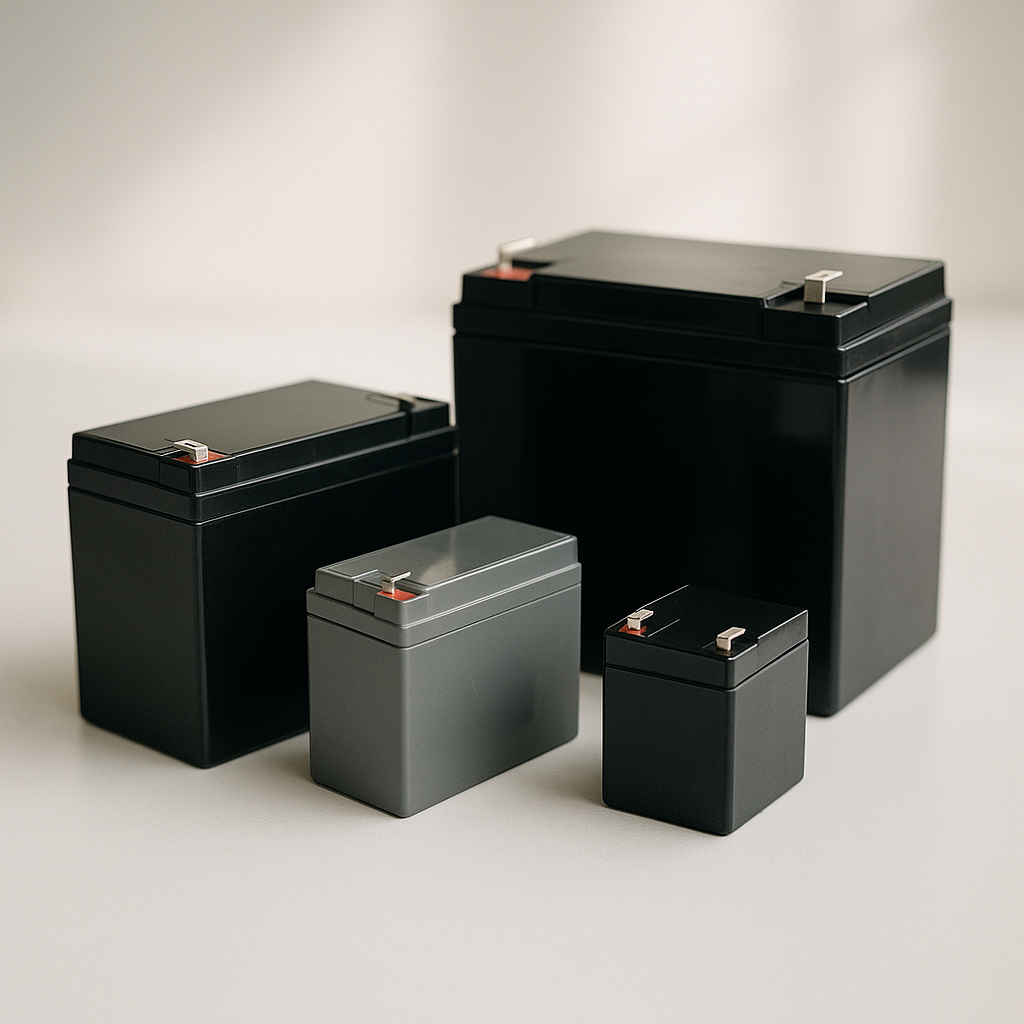
At its heart, the chemistry of an SLA battery is a beautifully simple and reversible electrochemical reaction that has been refined for over a century. Inside the case, you have two sets of plates, or electrodes. The positive plate is made of lead dioxide (PbO₂), and the negative plate is made of sponge-like pure lead (Pb). These plates are submerged in an electrolyte, which is a solution of sulfuric acid (H₂SO₄) and water (H₂O).
When you connect a device to the battery—a process called discharging—a chemical reaction begins. The sulfuric acid reacts with both the lead and the lead dioxide plates, creating lead sulfate (PbSO₄) on both. This process also produces water and, crucially, releases electrons, which flow out of the battery as electrical current to power your device.
Think of it like this: the charged state is a state of potential energy, with different materials on each plate. The discharge process is the conversion of that potential chemical energy into active electrical energy, bringing both plates to a more similar, lower-energy state (lead sulfate).
Charging the battery simply reverses this process. By applying an external electrical current from a charger, you force the lead sulfate on the plates to react with the water, converting it back into lead, lead dioxide, and sulfuric acid. The battery is restored to its high-potential-energy state, ready to deliver power again. The "sealed" part of the name refers to the fact that the hydrogen and oxygen gases produced during charging are recombined back into water within the battery, a process known as oxygen recombination. This prevents the loss of water and eliminates the need for maintenance, setting the SLA battery apart from its flooded lead-acid predecessors (Buchmann, 2023).
While all SLA batteries share the same fundamental chemistry, the method used to immobilize the electrolyte defines two distinct and important subcategories: Absorbent Glass Mat (AGM) and Gel. Understanding the difference is not merely an academic exercise; it is critical to selecting the right battery for your specific needs, as their performance characteristics differ significantly.
| Feature | Absorbent Glass Mat (AGM) Battery | Gel Battery |
|---|---|---|
| Electrolyte State | Absorbed in a fine fiberglass mat pressed between the plates. | Suspended in a thick, silica-based gel-like substance. |
| Best Use Case | Standby power (UPS, alarm systems) and high-current starting applications. | Deep-cycle applications (marine, RVs, solar storage) where the battery is regularly discharged deeply. |
| Performance | Excellent at delivering high bursts of current. Lower internal resistance. | Better performance in deep discharge cycles and wider temperature ranges. More resistant to sulfation. |
| Vibration Resistance | Good, due to the tightly packed construction. | Excellent, as the gelled electrolyte acts as a shock absorber. |
| Charging | Less sensitive to charging voltage; can be charged faster. | Very sensitive to charging voltage; requires a specific charging profile to avoid damage. |
| Cost | Generally less expensive than Gel batteries. | Typically more expensive than AGM batteries of similar capacity. |
Absorbent Glass Mat (AGM) batteries suspend the electrolyte in a very fine boron-silicate glass mat that is sandwiched between the lead plates. Imagine a sponge-like material soaking up all the acid solution. This design has a very low internal resistance, which makes AGM batteries exceptionally good at delivering high bursts of current on demand. This is why they are a favorite for uninterruptible power supply (UPS) systems, which need to switch on and deliver significant power instantaneously when the main power fails. They also perform well in starting applications for vehicles or generators.
Gel batteries, on the other hand, mix the sulfuric acid with a fumed silica agent, creating a thick, viscous substance that feels like petroleum jelly. This gel is then used to fill the space between the plates. The internal resistance of a Gel battery is higher than that of an AGM, so it is not as proficient at delivering very high starting currents. However, its true strength lies in its durability in deep-cycle applications. The gelled design is more resistant to the damage caused by being deeply discharged and recharged repeatedly. This makes it an excellent choice for off-grid solar power systems, recreational vehicles (RVs), and marine applications where the battery is the primary power source.
The practical implications of the sealed, maintenance-free design are profound. First and foremost is safety. Because the electrolyte is immobilized, an SLA battery can be operated in any orientation—sideways or even upside down—without the risk of spilling corrosive sulfuric acid. This versatility allows them to be used in a vast array of devices and tight spaces where a traditional flooded battery would be impossible to use.
Second is convenience. The oxygen recombination cycle means you never have to check electrolyte levels or add distilled water. An SLA battery is a "fit and forget" solution for the duration of its service life. This reliability is paramount in applications like emergency lighting, hospital backup power, and security systems, where the battery must be ready to perform without fail after potentially years of sitting idle. The sealed construction also minimizes gassing under normal operating conditions, making them safe for use indoors and in poorly ventilated areas. This combination of safety, versatility, and reliability is what has made the SLA battery a cornerstone of the power storage world for so many years.
The journey to selecting the perfect SLA battery begins not with the battery itself, but with a thoughtful examination of the device it will power. A battery is, in essence, a reservoir of energy, and just as you would not choose a water tank without knowing how much water you need, you should not choose a battery without understanding its power requirements. This first step is the most critical, as a mismatch here can lead to disappointing performance, a short service life for the battery, or even damage to your equipment. We must move beyond guesswork and approach this with a clear, analytical mindset.
The two most fundamental specifications you need to determine are voltage (V) and capacity, measured in ampere-hours (Ah).
Voltage (V): This is the measure of electrical potential and must match what your device is designed for. Think of voltage as the pressure in a water pipe. If the pressure is too low, the water (current) will not flow effectively. If it is too high, it could damage the fixture (your device). Most SLA batteries come in standard nominal voltages, such as 6V, 12V, and 24V. You can almost always find the required voltage printed on the device itself, on its power adapter, or in its user manual. Using a 6V battery for a 12V device will not work, and using a 12V battery for a 6V device will likely destroy it. There is no room for error here. If you are replacing an existing battery, simply match its voltage.
Ampere-Hour (Ah) Capacity: If voltage is the water pressure, capacity is the size of the water tank. The Ah rating tells you how much energy the battery can store. A 10Ah battery can theoretically deliver 1 amp of current for 10 hours, 2 amps for 5 hours, or 10 amps for 1 hour. To determine your capacity needs, you need to know two things: the current draw of your device (in amps) and how long you need it to run (in hours).
Let's walk through a simple example. Suppose you have a portable fish finder that draws 0.5 amps and you want it to last for a full 8-hour fishing trip.
So, you would start by looking for a battery with a capacity of at least 4Ah. It is always a good practice to add a safety margin of 20-25% to account for factors like battery age, temperature, and the fact that you should avoid draining an SLA battery completely. In this case, a 5Ah SLA battery would be a wise choice. For larger systems, like a home security system with multiple cameras and sensors, you would add up the current draw of all components to find the total system draw before calculating your capacity needs.
Not all current draws are created equal. The rate at which you discharge a battery affects its usable capacity, a phenomenon described by Peukert's Law. In simple terms, the faster you drain a battery, the less total energy you will get out of it. A battery rated at 10Ah might give you the full 10Ah if you drain it slowly over 20 hours, but if you drain it very quickly in just one hour, you might only get 6Ah or 7Ah of usable capacity.
This is why it is important to characterize your application as either high-drain or low-drain.
Finally, we must consider the physical world in which the battery will live. An SLA battery's performance and lifespan are significantly influenced by its environment.
Temperature: The ideal operating temperature for an SLA battery is around 25°C (77°F). Performance degrades in the cold, and you may find that a battery has only 70-80% of its rated capacity at freezing temperatures. Extreme heat is even more damaging. For every 8-10°C (15°F) increase in average operating temperature above 25°C, the battery's service life is cut in half (Buchmann, 2023). If your battery will be used in a very hot engine compartment or a cold, unheated shed, you must factor this into your expectations for performance and longevity. Gel batteries tend to handle temperature extremes slightly better than their AGM counterparts.
Vibration and Mounting: Will the battery be used in a mobile application with significant vibration, such as on a boat, RV, or off-road vehicle? The internal construction of the battery must be robust enough to handle this. Both AGM and Gel batteries are inherently more vibration-resistant than flooded batteries due to their immobilized electrolyte. The tightly packed nature of AGM batteries provides excellent durability, while the shock-absorbing nature of Gel batteries makes them even better in high-vibration environments. Also, consider the mounting orientation. Since both AGM and Gel batteries are spill-proof, they can be mounted in various positions, which can be a major advantage in custom installations or tight spaces.
By carefully considering these three aspects—calculations, drain type, and environment—you create a detailed profile of your needs. This profile becomes your compass, guiding you toward a much smaller and more appropriate selection of batteries to evaluate in the next step.
After determining the demands of your application, the next logical step is to turn our attention to the batteries themselves. The label on an SLA battery is not just for branding; it is a dense summary of its capabilities and characteristics. Learning to read this label is like learning the language of batteries. It allows you to move past the generic black box and see the specific attributes that make one battery different from another. Let's break down the most important specifications you will encounter.
As we established in the previous step, this is the most straightforward specification. It represents the battery's nominal electrical potential, typically 6V or 12V for common SLA types. It is important to understand that "nominal" means "in name only." A fully charged 12V SLA battery will actually measure around 12.6 to 12.8 volts when resting with no load (this is called the Open Circuit Voltage), and it may drop to 11.5V or lower under heavy load. The nominal voltage is a standardized classification. The only rule here is to ensure the battery's nominal voltage matches the requirement of your device.
The Ah rating is a measure of the battery's energy storage capacity. As previously discussed, it represents the theoretical current a battery can supply over a set period. However, there is a crucial nuance here: the discharge rate. Most SLA battery capacities are rated at a 20-hour discharge rate (often abbreviated as C/20). A battery rated at 100Ah (C/20) will provide 5 amps for 20 hours (5A x 20h = 100Ah). If you discharge it faster, say at 20 amps, you will not get 5 hours of runtime. Due to the Peukert effect, you might only get 3 or 4 hours.
When comparing two batteries, ensure you are comparing their capacities at the same discharge rate. A battery rated 9Ah at a 20-hour rate is not directly comparable to one rated 8Ah at a 10-hour rate without doing some math. For most standby and low-drain applications, the standard 20-hour rate is a perfectly good benchmark for comparison.
This is perhaps one of the most misunderstood yet critical aspects of an SLA battery's specification sheet. The lifespan of a battery can be measured in two very different ways, depending on how it is used.
Float Life (or Standby Life): This refers to the expected service life of a battery in a "float" or standby application, where it is constantly connected to a charger and kept at a full state of charge, ready for an emergency. UPS systems and alarm panels are classic float applications. The float life is typically expressed in years (e.g., 3-5 years, 8-10 years) at a standard temperature of 25°C (77°F). Higher quality batteries will have a longer float life. Remember, this lifespan is drastically reduced by high temperatures.
Cycle Life: This specifies how many times a battery can be discharged and recharged before its capacity drops to a certain percentage of its initial rating (usually 80%). This is the critical metric for cyclic applications like electric scooters, medical mobility devices, or solar energy storage. The cycle life is not a single number; it is heavily dependent on the Depth of Discharge (DoD). For example, a battery's spec sheet might state:
This shows a clear relationship: shallower discharges lead to a much longer cycle life. If you need a battery for a cyclic application, comparing the cycle life at a specific DoD is the best way to evaluate its durability and long-term value. A battery with a higher cycle life is built with more robust components to withstand the stress of repeated use.
This may seem obvious, but it is a common and frustrating mistake to overlook. Before purchasing an SLA battery, you must verify its physical dimensions—Length, Width, and Height. Will it fit in the battery compartment of your device? Measure the old battery or the space available and compare it directly to the specifications of the new one.
Equally important are the battery terminals, the points where you connect your device's wires. SLA batteries come with a variety of terminal types, and you need to ensure they match your existing connectors. The most common types are:
Check your old battery or your device's connectors and find the corresponding terminal type on the new battery's specification sheet. Taking a moment to verify these physical details can save you the significant headache of a return and reorder. By methodically working through these key specifications, you transform the battery label from a confusing jumble of letters and numbers into a clear statement of performance, enabling an informed and accurate comparison between different models.
In our journey to select the right power source, it is wise to lift our gaze from the immediate subject and survey the broader landscape. The SLA battery, for all its virtues, is not the only technology available. The world of rechargeable batteries is a dynamic field, with other chemistries offering different sets of advantages and disadvantages. To make a truly informed decision, especially for new projects or significant upgrades, we must engage in a comparative analysis. The most prominent contender in today's market is Lithium-ion, but older technologies like Nickel-Cadmium and Nickel-Metal Hydride also warrant a brief examination to understand the full context.
This is the primary comparison for most modern applications. Lithium-ion (and its close relative, Lithium Iron Phosphate or LiFePO4) has become dominant in consumer electronics and is making significant inroads into traditional SLA territory. The choice between them is a trade-off between cost, performance, and longevity.
Let's organize this complex relationship into a clearer format:
| Feature | Sealed Lead-Acid (SLA) | Lithium-Ion (Li-ion/LiFePO4) |
|---|---|---|
| Energy Density | Lower. A 12V 10Ah SLA battery is heavy and bulky. | Very High. A lithium battery of the same capacity can be 50-70% lighter and smaller. |
| Upfront Cost | Low. SLA offers the lowest cost per ampere-hour at the time of purchase. | High. Can be 2 to 4 times more expensive than an equivalent SLA battery. |
| Cycle Life | Moderate. Typically 200-500 cycles depending on the depth of discharge. | Very High. Li-ion can offer 2,000-5,000 cycles, especially LiFePO4 variants. |
| Voltage Stability | Voltage drops steadily during discharge. | Voltage remains very stable through most of the discharge cycle, then drops off sharply at the end. |
| Self-Discharge | Moderate. Loses about 4-6% of its charge per month. | Very Low. Loses only 1-3% of its charge per month. |
| Safety & Shipping | Very safe and mature technology. Few shipping restrictions. | Requires a Battery Management System (BMS) for safety. Subject to strict shipping regulations. |
| Environmental Impact | Lead is toxic, but the recycling infrastructure is extremely well-established (over 98% recycled in the US). | Less toxic materials, but recycling is more complex and less widespread. |
From this comparison, a clear picture emerges. The SLA battery is the champion of upfront value and reliability in stationary, weight-insensitive applications. For a UPS, an emergency light, or a home alarm system, where the battery will spend 99% of its life on a float charge and weight is irrelevant, the low cost and proven safety of an SLA battery make it the logical choice.
Lithium-ion, however, shines in applications where weight, size, and cycle life are paramount. For an electric kayak, a high-performance power tool, or an RV that is used for frequent off-grid camping, the higher upfront cost of lithium is often justified by its vastly superior cycle life and dramatic weight savings. Over the long term, the total cost of ownership for a lithium battery can actually be lower in high-cycle applications because you would need to replace an SLA battery multiple times in the same period (ToolGuyd, 2013).
Before lithium-ion became ubiquitous, nickel-based batteries were the go-to choice for many portable, rechargeable applications, particularly power tools.
Nickel-Cadmium (NiCd): These were the workhorses of the cordless tool world for many years. They are known for their ability to deliver high discharge currents and their long cycle life. They are also very rugged and can tolerate a fair amount of abuse. However, they have two major drawbacks. First, they suffer from the "memory effect," where if they are repeatedly recharged before being fully drained, they can "forget" their full capacity. Second, the cadmium they contain is extremely toxic, making their disposal an environmental concern. While still found in some older equipment, NiCd has been largely phased out in favor of better technologies (ereplacementparts.com).
Nickel-Metal Hydride (NiMH): NiMH batteries were developed as a more environmentally friendly alternative to NiCd, offering a higher energy density (more capacity for the same size) and suffering less from the memory effect. They became very popular in the late 1990s and early 2000s for consumer electronics and power tools. Their main weaknesses are a high self-discharge rate (they can lose their charge quickly when not in use) and a more sensitive nature, being more prone to damage from overcharging or heat.
For most applications where one might consider an SLA battery, neither NiCd nor NiMH are direct competitors. Their strengths lie in smaller, portable formats. The primary decision for users seeking the kind of capacity offered by SLA batteries will almost always be the choice between lead-acid and lithium technologies.
The choice of chemistry is not an emotional one; it is a rational decision based on a hierarchy of needs for your specific application. Ask yourself these questions:
By honestly answering these questions, you can confidently determine whether the tried-and-true SLA battery is the right choice or if the modern benefits of lithium justify the investment.
Owning an SLA battery is not merely a transaction; it is a long-term relationship. And like any relationship, its health and longevity depend on proper care. The single most important factor determining the lifespan of your SLA battery is how you charge it. Improper charging can permanently damage a battery, drastically reducing its capacity and cutting its life short. Conversely, understanding and implementing a correct charging regimen can help you extract the maximum value and performance from your investment. While these batteries are "maintenance-free" in the sense that they do not require water, they are not "care-free."
A modern, "smart" battery charger does not simply apply a constant voltage. It uses a sophisticated, multi-stage process to charge the battery safely and efficiently. Understanding these stages helps you appreciate what is happening inside the battery and why a quality charger is so important.
Stage 1: Bulk Charge: This is the first and primary stage of charging. The charger supplies a constant, maximum current to the battery, and the battery's voltage rises steadily. During this phase, the majority of the battery's capacity is restored. For a 12V SLA battery, the voltage might rise from 11.5V to around 14.4V. Think of this as quickly refilling an empty water tank.
Stage 2: Absorption Charge: Once the battery's voltage reaches a preset level (e.g., 14.4V), the charger switches to the absorption stage. In this phase, the charger holds the voltage constant and the current supplied to the battery gradually decreases as the battery's internal resistance increases. This stage "tops off" the final 10-20% of the battery's capacity and ensures that all the cells are fully and equally charged. This is a crucial step for battery health, akin to letting the water settle in the tank to ensure it is truly full. Rushing this stage can lead to an incomplete charge.
Stage 3: Float Charge: After the current in the absorption stage drops to a very low level, the charger switches to the final float stage. The voltage is reduced to a lower, safe level (e.g., 13.5V to 13.8V for a 12V battery). This stage provides a very small "trickle" of current that compensates for the battery's natural self-discharge, keeping it at a full 100% state of charge indefinitely without overcharging or damaging it. This is the stage a battery in a UPS or alarm system will spend most of its life in.
Not all chargers are created equal. Using the wrong type of charger is one of the fastest ways to destroy an SLA battery.
Smart Chargers (or Multi-Stage Chargers): These are the highly recommended choice. They automatically execute the three-stage charging process described above. They monitor the battery's voltage and adjust their output accordingly, ensuring a fast, complete, and safe charge. They prevent overcharging, which can cause the electrolyte to boil and the battery to swell or fail permanently.
Trickle Chargers: A simple trickle charger provides a continuous, low-current charge. While this might seem similar to the float stage, a basic trickle charger does not monitor the battery's state and will continue to supply current even when the battery is full. This can lead to overcharging over time. A trickle charger might be acceptable for very occasional use, but for regular charging or any long-term connection, a smart charger is a far superior and safer investment.
A special note on Gel batteries: Gel batteries are particularly sensitive to charging voltage. Overcharging a Gel battery can create voids or pockets in the gelled electrolyte that will never heal, permanently reducing the battery's capacity. If you have a Gel battery, it is absolutely imperative to use a charger that has a specific "Gel" setting or a charging profile that matches the manufacturer's recommendations.
How you treat your battery when it is not in use is just as important as how you charge it.
Storage: If you need to store an SLA battery for an extended period, the cardinal rule is to store it in a fully charged state. An SLA battery's enemy is being left in a discharged condition. Store it in a cool, dry place. Remember that all batteries self-discharge over time. An SLA battery might lose 4-6% of its charge per month. To maintain its health, you should top it off with a smart charger every 3 to 6 months during storage.
Sulfation: This is the primary cause of death for most SLA batteries. When a battery is left in a discharged state, the soft, amorphous lead sulfate crystals that form during normal discharge begin to harden and recrystallize into a stable, crystalline form. This hard lead sulfate is very difficult to convert back into active material during charging.
Imagine it like this: normal discharge creates a "soft" plaque on the battery's plates that is easily cleaned off by charging. Leaving it discharged allows that plaque to harden into a "permanent" scale that covers the active surface of the plates. This sulfation increases the battery's internal resistance and reduces its ability to accept and hold a charge. A severely sulfated battery may become unusable.
The prevention is simple:
By embracing these principles of charging and maintenance, you move from being a passive consumer to an active custodian of your battery's health, ensuring you get the reliable performance and full lifespan you paid for.
With a firm grasp of your application's needs, the language of battery specifications, the landscape of competing technologies, and the principles of proper care, you have arrived at the final step: making the purchase. This is where your accumulated knowledge translates into a confident decision. Sourcing your SLA battery is not just about finding the cheapest option; it is about ensuring quality, freshness, and safety.
In the world of batteries, brand reputation often correlates with quality and consistency. Established manufacturers have refined their production processes over many years and typically adhere to stricter quality control standards. While a generic, no-name battery might be tempting due to its low price, it can be a gamble. It may use lower-grade materials or have less stringent manufacturing tolerances, leading to a shorter lifespan or inconsistent performance. Brands like Ryobi, DeWalt, and Milwaukee are well-known in the power tool space, and similar tiers of quality exist for standalone SLA batteries ().
However, brand is not everything. Real-world user reviews can provide invaluable insight. Look for reviews from users with applications similar to your own. A review from someone using the battery in the same model of UPS or electric scooter you own is far more relevant than a generic "it works" comment. Pay attention to comments about longevity. Did the battery last for its expected float life? How did it perform after a year of cyclic use? A pattern of reviews indicating premature failure is a significant red flag, regardless of the brand.
An SLA battery is a perishable product. From the moment it is manufactured, it begins to slowly self-discharge and age. Buying a battery that has been sitting on a shelf for a year or more means you have already lost a significant portion of its potential service life. This is why checking the manufacturing date is so important.
Unfortunately, there is no single, universal format for date codes. They are often stamped into the battery's plastic case. Many manufacturers use a format like YYMMDD (e.g., 250115 for January 15, 2025). Others use a letter for the month (A=January, B=February, etc.) and a number for the year. For example, A5 might mean January 2025. If you cannot decipher the code, do not hesitate to ask the seller or consult the manufacturer's website. As a general rule, you should try to purchase a battery that is less than six months old. A "fresh" battery will give you the best performance and the longest possible lifespan.
Your responsibility does not end once you have purchased the battery. Safe handling and end-of-life disposal are crucial.
Handling: Even though they are sealed, SLA batteries can be heavy and contain corrosive materials. When installing or removing a battery, be careful not to short the terminals by touching them with a metal tool. A short circuit on a large SLA battery can generate a massive current, causing sparks, melting tools, and creating a fire or explosion hazard. Always connect the positive (red) terminal first, then the negative (black). When disconnecting, remove the negative first, then the positive. This minimizes the risk of an accidental short.
Recycling: Lead-acid batteries, including SLA types, should never be thrown in the trash. Lead is a toxic heavy metal that can contaminate soil and groundwater. The good news is that the lead-acid battery recycling infrastructure is one of the world's most successful recycling stories. In the United States, over 98% of lead-acid batteries are recycled.
The plastic casing is crushed and remelted, the lead plates are melted down and reformed into new plates, and even the old sulfuric acid can be processed and reused. Almost every component of an old battery can be used to make a new one. Most retailers that sell SLA batteries are required by law to accept old ones for recycling. Often, you will pay a small core charge when you buy a new battery, which is refunded when you return the old one. This creates a powerful incentive for a closed-loop system. Always take your old SLA battery to an authorized auto parts store, a battery retailer, or a local hazardous waste collection facility.
By following these final steps—choosing a reputable source, verifying the battery's freshness, and committing to safe handling and responsible recycling—you complete the cycle of informed ownership. You have not just bought a product; you have invested in a reliable power solution and managed it responsibly from beginning to end.
Yes, in most cases, you can. Using a battery with a higher ampere-hour (Ah) rating is a common upgrade to achieve longer runtime. As long as the voltage and physical dimensions are the same, a 12V 9Ah battery can replace a 12V 7Ah battery, for example. Your device will simply run longer between charges. The only consideration is that it will also take your charger longer to fully charge the higher-capacity battery.
The most common sign is a noticeable decrease in performance. For a UPS, this might mean the backup runtime during a power outage is much shorter than it used to be. For an electric scooter, it would be a significant reduction in range. In standby applications, batteries should be replaced preventively at the end of their rated float life (e.g., every 3-5 years) to ensure reliability, even if they still seem to be working.
Overcharging is very damaging. It causes the water in the electrolyte to break down into hydrogen and oxygen gas faster than it can be recombined. This builds up pressure inside the sealed case, which can cause the battery to swell, vent gas, and in extreme cases, rupture. It also generates excess heat, which drastically shortens the battery's life. Always use a quality smart charger with a float mode to prevent overcharging.
Yes, provided you are using a modern, multi-stage "smart" charger that has a float stage. These chargers are designed to be left connected indefinitely. They will keep the battery at a perfect 100% charge without causing damage. However, you should not leave a battery connected to a simple "trickle" charger for extended periods, as this can lead to overcharging.
Sometimes, but often the damage is permanent. If a battery has been left in a deeply discharged state for a long time, it will become sulfated. The internal resistance becomes so high that it may not accept a charge from a standard charger. Some advanced smart chargers have a "recondition" or "desulfation" mode that uses special voltage pulses to attempt to break down the hard sulfate crystals. This can sometimes revive a battery, but it is not guaranteed, and the battery will likely never regain its original capacity. The best strategy is prevention: always recharge your battery promptly after use.
Navigating the world of Sealed Lead-Acid batteries need not be an intimidating endeavor. By breaking down the process into a logical, five-step progression, we transform a potentially confusing choice into a series of clear, manageable decisions. It begins with a fundamental respect for the application's needs, moves through a disciplined reading of technical specifications, and involves a rational comparison with other available technologies. This foundation of knowledge is then supported by the crucial practices of proper charging and maintenance, which are the true keys to unlocking a battery's full potential and lifespan. Finally, the journey culminates in a confident and responsible purchase.
The SLA battery, with its robust design, proven reliability, and economic advantages, remains a highly relevant and effective power solution in 2025 for a vast array of stationary and standby applications. While newer technologies like lithium-ion present compelling benefits in specific contexts, the enduring value of the SLA battery is found in its straightforward, no-nonsense performance. By arming yourself with the insights from this guide, you are no longer just a buyer of batteries; you are an informed user, capable of selecting the precise tool for the job and ensuring it serves you well for years to come.
Buchmann, I. (2023). BU-804b: Sulfation and how to prevent it. Battery University. https://batteryuniversity.com/article/bu-804b-sulfation-and-how-to-prevent-it
Buchmann, I. (2023). BU-403: Charging lead acid. Battery University. https://batteryuniversity.com/article/bu-403-charging-lead-acid
eReplacementParts.com. (2025). Cordless power tool buying guide: How to choose battery type. https://www.ereplacementparts.com/repair-center/article/3084/CordlessPowerToolBuyingGuideHowtoChooseBattery_Type.html
ToolGuyd. (2013). Cordless power tool battery specs for popular brands. https://toolguyd.com/cordless-power-tool-battery-specs/
American Power Equipment. (2025). Batteries & chargers.
BatteryMall. (2025). Power tool batteries.
Complete Battery Source. (2021). Power tool batteries.
Ryobi Tools. (2025). Batteries & chargers.
{"one"=>"Select 2 or 3 items to compare", "other"=>"{{ count }} of 3 items selected"}