

CONTACT
Please contact us for shipping details.
This article presents a comprehensive diagnostic and maintenance framework for the 12 volt lead acid battery, a foundational power source in countless applications. It deconstructs the battery's electrochemical principles, architecture, and common failure modes, with a particular focus on sulfation. The central thesis is a five-step protocol designed to guide both novices and professionals through a systematic process of reviving seemingly failed batteries. This protocol encompasses initial safety and visual inspection, basic voltage testing, advanced diagnostics using hydrometers and load testers, and targeted reconditioning techniques such as equalization and pulse charging. The discussion extends to long-term preventive maintenance strategies, emphasizing the critical role of proper charging cycles and storage practices in maximizing battery lifespan. By integrating technical explanations with actionable procedures, this guide aims to empower users to extend the service life of their batteries, thereby fostering both economic and environmental sustainability.
Before we even think about connecting a charger or a tester, we must first build a solid foundation of understanding. A 12 volt lead acid battery is not a magical black box; it's a small, self-contained chemical power plant. To diagnose its ailments, we must first appreciate its inner workings and, most critically, the respect it demands in terms of safety. Think of this first step as the theoretical groundwork in a laboratory science class—without it, any subsequent experiments are not just ineffective but potentially dangerous.
At its heart, the operation of a lead-acid battery is a beautiful, reversible electrochemical reaction. Imagine a tiny, self-contained engine that can run both forwards and backwards. When you draw power from the battery (discharging), the engine runs forward, converting chemical energy into electrical energy. When you charge it, you force the engine to run in reverse, converting electrical energy back into stored chemical energy.
This process happens within a series of cells. A 12 volt lead acid battery is not a single 12-volt unit; it's a collection of six individual 2.1-volt cells connected in series. It is this series connection (6 x 2.1 volts = 12.6 volts) that gives us the familiar "12-volt" nominal rating. This is a crucial point: a fully charged, healthy 12 volt lead acid battery will actually rest at about 12.6 to 12.7 volts, not 12.0 volts. A reading of 12.0 volts often indicates a battery that is significantly discharged.
Inside each cell, you will find a set of plates. These are the core components where the chemistry happens. The plates are arranged in a stack of alternating positive and negative plates, separated by a thin, porous material to prevent them from touching and short-circuiting.
When you connect a load—say, the starter motor in your car or the trolling motor on your boat—the discharging process begins. The sulfuric acid reacts with both the lead and the lead dioxide plates. Both sets of plates gradually transform into lead sulfate (PbSO4), and the concentration of sulfuric acid in the electrolyte decreases as it is consumed, making the electrolyte more water-like.
When you connect a battery charger, this entire process is reversed. The electrical energy from the charger breaks down the lead sulfate, returning the plates to their original states of spongy lead and lead dioxide. Simultaneously, the sulfate returns to the electrolyte, increasing the concentration of sulfuric acid and restoring the battery's potential energy. This elegant cycle of discharge and recharge is what makes the lead-acid design so enduring, but it is also where things can go wrong, as we will explore.
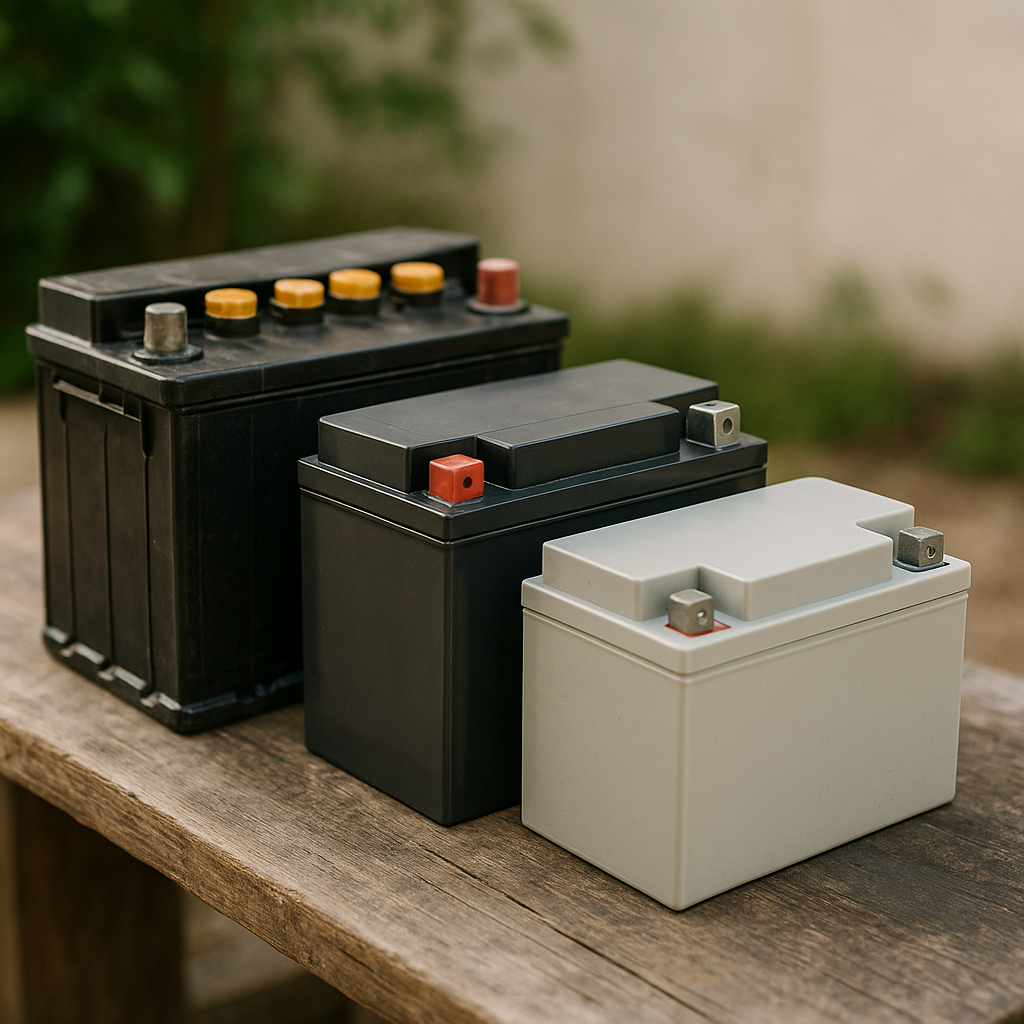
Not all 12 volt lead acid battery units are created equal. They are designed for different purposes and require different care. Broadly, they fall into two categories: starting batteries and deep-cycle batteries. Starting batteries, like those in most cars, are designed to deliver a massive burst of power for a very short time to crank an engine. They have many thin plates to maximize surface area for this purpose. A deep cycle battery, on the other hand, is designed to provide a steady amount of current over a long period. Think of it as a marathon runner versus a sprinter. You'll find a deep cycle battery in RVs, boats, and off-grid solar systems . Using the wrong type for the application is a primary cause of premature failure.
Within these categories, there are three main construction types: Flooded, AGM, and Gel.
Flooded (Wet Cell): This is the oldest and most traditional design. The plates are fully submerged in a liquid electrolyte. They feature removable caps that allow you to check the electrolyte level and top it up with distilled water as it is consumed during the charging process. They are generally the least expensive upfront but require regular maintenance. They must also be mounted upright to prevent spills.
Sealed Lead-Acid (SLA): This is a broad term for batteries that are sealed and do not require watering. They are spill-proof and can be mounted in more varied positions. The two primary types are AGM and Gel.
A clear understanding of these distinctions is not merely academic; it directly informs how you test, charge, and maintain the specific 12 volt lead acid battery you are working with. Applying a charging profile meant for a flooded battery to a Gel battery, for instance, can cause permanent damage.
| Feature | Flooded (Wet Cell) | AGM (Absorbent Glass Mat) | Gel |
|---|---|---|---|
| Maintenance | Requires regular watering | Maintenance-free | Maintenance-free |
| Upfront Cost | Lowest | Moderate | Highest |
| Spill-Proof | No (must be upright) | Yes (spill-proof) | Yes (spill-proof) |
| Vibration Resistance | Low | High | Moderate |
| Charging Profile | Standard, tolerates some overcharge | Sensitive, requires specific profile | Very sensitive, easily damaged by overcharge |
| Discharge/Recharge Rate | Moderate | Fastest | Slowest |
| Deep Cycle Life | Good | Very Good | Excellent (in low-rate discharge) |
| Common Uses | Automotive, marine, off-grid solar | High-performance auto, RV, UPS systems | Wheelchairs, telecom, very deep cycle solar |
I cannot overstate the importance of this section. A 12 volt lead acid battery, while common, contains corrosive acid and can produce explosive hydrogen gas. Treating it with casual disregard is a recipe for serious injury. Before you proceed to Step 2, you must adopt the following safety protocols without exception.
Adhering to these rules is the mark of a professional. It ensures that your diagnostic process is safe and that you can focus on the task at hand without risking personal harm.
With our foundational knowledge and safety protocols in place, we can now approach the battery itself. This step is akin to a physician's initial consultation with a patient. We will use our senses and a few simple tools to gather preliminary data, which will guide our deeper diagnostic tests in the subsequent steps. Do not be tempted to skip this phase; a careful visual inspection can often reveal the root cause of a problem before you even pick up a meter.
Before you begin, assemble the tools you will need for this and the following steps. Having everything at hand prevents interruptions and ensures a smooth workflow.
Look at the battery carefully from all angles. You are searching for physical evidence of damage or neglect.
The simplest and most immediate electrical test you can perform is to measure the battery's open-circuit voltage. This gives you a snapshot of its State of Charge (SoC).
First, a critical point about "surface charge." When a battery has just been charged or a vehicle's engine has just been running, the battery will have a temporary, artificially high voltage reading known as a surface charge. Measuring the voltage in this state will give you a misleadingly optimistic result. To get an accurate reading, you must first remove this surface charge. You can do this by either letting the battery sit for at least 6-12 hours or by applying a small load (like turning on the vehicle's headlights for one minute) and then letting it rest for 5-10 minutes before testing.
Once the surface charge is dissipated, follow these steps:
Now, you must interpret this reading. The relationship between open-circuit voltage and the state of charge is a crucial piece of data.
| Open-Circuit Voltage | Approximate State of Charge | Battery Condition |
|---|---|---|
| 12.65V or higher | 100% | Fully charged and healthy. |
| 12.45V | 75% | Good. Needs a top-up charge. |
| 12.24V | 50% | Acceptable for deep cycle, but should be recharged soon. |
| 12.06V | 25% | Heavily discharged. Sulfation may be occurring. |
| 11.9V or lower | 0-10% | Fully discharged. Potential for permanent damage. |
Note: These voltages are for a standard lead-acid battery at approximately 80°F (27°C). Voltage readings will be slightly lower in colder temperatures and higher in warmer temperatures.
A reading of 12.4V or higher on a rested battery generally indicates a battery that is at least functionally chargeable. A reading below 12.2V, and especially below 12.0V, suggests the battery is deeply discharged. If a battery is left in this state for an extended period, a process called sulfation begins to harden on the plates, which can become irreversible and is a leading cause of battery death. A voltage reading below 11.0V may indicate a dead cell or other internal damage, making recovery unlikely. This simple voltage test provides our first major clue and directs our path for the deeper diagnostics in the next step.
The static voltage test gave us a preliminary indication of the battery's state of charge, but it does not tell the whole story. A battery can show a healthy voltage at rest but collapse the moment a significant load is applied. To truly understand the battery's health and capacity, we must perform more rigorous tests. This step is like moving from a general check-up to performing an EKG or a stress test on a patient. We will explore three key diagnostic procedures: specific gravity testing, load testing, and checking for parasitic drains.
For a traditional flooded lead-acid battery, the most accurate method for determining its state of charge and overall health is by measuring the specific gravity of the electrolyte in each cell. This test is not possible on sealed AGM or Gel batteries.
Specific gravity is a measure of the density of a liquid compared to the density of pure water. As we learned in Step 1, when a battery discharges, the sulfuric acid is consumed, and the electrolyte becomes more like water. When it is charged, the sulfate returns to the electrolyte, making it denser. A hydrometer is a simple tool that measures this density. It is typically a glass or plastic tube with a rubber bulb at one end, a nozzle at the other, and a calibrated float inside.
Here is how to perform the test safely and accurately:
Interpreting the Results: A fully charged, healthy battery should have a specific gravity reading of approximately 1.265 to 1.275 in all cells. A reading of 1.225 corresponds to about a 75% charge, while 1.190 is about 50% charged.
What is even more important than the absolute reading is the consistency between the cells. All six cells should read very close to one another. A difference of more than 0.050 (often referred to as 50 "points") between the highest and lowest cell reading indicates a problem. For example, if five cells read 1.260 and one cell reads 1.190, that weak cell is likely failing. It may have an internal short or be heavily sulfated. A battery with one dead cell cannot be properly recharged and must be replaced. The specific gravity test is powerful because it gives you a detailed health report on each individual cell, something a voltage test cannot do.
The ultimate test of a battery's ability to perform is to see how it behaves under a load. A load test does exactly that—it applies a controlled, heavy electrical demand on the battery while monitoring its voltage. This simulates the real-world stress of starting an engine or running a heavy appliance. This is the most definitive test for any type of 12 volt lead acid battery, including sealed AGM and Gel types.
A common tool for this is a carbon pile load tester. It uses a stack of carbon discs to create a variable, high-current resistor. To perform a load test:
Interpreting the Load Test: A healthy 12 volt lead acid battery should maintain a voltage of 9.6 volts or higher for the entire 15-second duration of the test at a temperature of 70°F (21°C) or above.
The load test is the gold standard because it exposes a weak battery that might otherwise appear healthy in a simple voltage test. It directly measures the battery's ability to do its job.
Sometimes, a battery that tests perfectly well continues to go flat. In these cases, the problem may not be the battery itself, but a "parasitic drain" in the system it is connected to. A parasitic drain is a small but constant electrical current that draws power from the battery even when the vehicle or system is turned off. All modern vehicles have small drains to power things like the clock, radio memory, and computer modules, but this is typically very low (e.g., 20-50 milliamps). A faulty component, a stuck relay, or an incorrectly wired accessory can cause a much larger drain that will deplete the battery overnight or over a few days.
Here is how to test for a parasitic drain using your digital multimeter:
Finding and fixing a parasitic drain can save a perfectly good battery from being repeatedly discharged and ultimately ruined. It is a critical diagnostic step when faced with a battery that won't hold a charge.
After a thorough diagnosis, you may find that your battery is not internally damaged but is simply in a deeply discharged or sulfated state. In this step, we'll shift from diagnosis to intervention. We will explore the primary enemy of a lead-acid battery—sulfation—and discuss the charging and reconditioning techniques that can sometimes bring a battery back from the brink. It is important to approach this with realistic expectations; not all batteries can be saved, but many are condemned prematurely.
Sulfation is the natural and inevitable consequence of a lead-acid battery's discharge cycle. As we discussed, when the battery discharges, both the positive and negative plates are converted into lead sulfate (PbSO4). This is a normal and reversible process. The lead sulfate exists as fine, amorphous crystals. During recharging, these small crystals readily dissolve back into the electrolyte.
The problem arises when a battery is left in a discharged state for an extended period, or when it is habitually undercharged. In these conditions, the amorphous lead sulfate crystals begin to recrystallize and grow into larger, stable, and very hard crystals. This is known as hard sulfation.
Think of it like this: when you dissolve sugar in water, it's easy to do. If you let that sugar water evaporate slowly, you'll get fine sugar crystals back. This is like the normal charge/discharge cycle—"soft" sulfation. However, if you take those sugar crystals and compress them into a hard sugar cube, trying to dissolve that cube in water is much more difficult. This is analogous to hard sulfation.
These hard sulfate crystals are problematic for two main reasons:
Recognizing and addressing sulfation is the key to reviving many "dead" batteries.
Charging a 12 volt lead acid battery is not as simple as just applying a voltage. A proper, modern "smart" charger uses a multi-stage process to charge the battery safely and completely, which is crucial for its health and longevity. The three primary stages are Bulk, Absorption, and Float (Manly Battery, 2025).
Using a charger that executes these three stages correctly and is designed for your specific battery type (Flooded, AGM, or Gel) is one of the most important things you can do for battery health. Cheap, unregulated "trickle chargers" often lack this sophistication and can either undercharge or overcharge a battery, leading to premature failure.
If your diagnostic tests suggest that the battery is heavily sulfated but not otherwise damaged (e.g., no dead cells), there are a few techniques you can try to break down the hard lead sulfate crystals.
Equalization Charge (Flooded Batteries Only): An equalization charge is a controlled overcharge performed on a flooded lead-acid battery. The charger intentionally raises the voltage to a higher level (e.g., 15-16 volts) for a specific period after the battery is fully charged. This causes vigorous gassing (bubbling) in the electrolyte. This process serves two purposes: it helps to mix the electrolyte, preventing stratification (where the acid becomes more concentrated at the bottom), and the high voltage and gassing action can help to break down some of the hard sulfate crystals on the plates.
Pulse Reconditioning Chargers: Some specialized battery chargers and standalone reconditioners use high-frequency electronic pulses to attempt to break down sulfate crystals. The theory is that these pulses create a resonance that shatters the crystalline structure of the lead sulfate, allowing it to be dissolved back into the electrolyte during a normal charging cycle. The effectiveness of these devices is a topic of some debate, but many users report success in reviving moderately sulfated batteries. They are not a magic bullet for a battery that is at the end of its life or has other internal damage, but they can be a useful tool.
Chemical Additives: There are numerous products on the market that claim to revive sulfated batteries when added to the electrolyte. These are typically proprietary blends of chemicals, often containing substances like magnesium sulfate (Epsom salts) or cadmium sulfate. The scientific consensus on these additives is largely skeptical. While some may provide a temporary boost in performance by altering the electrolyte's chemistry, they do not fundamentally repair the physical damage of hard sulfation on the plates. In many cases, they can introduce contaminants that may cause more harm in the long run. Professional battery technicians rarely, if ever, use these products. The most proven methods remain proper charging and equalization.
The revival process requires patience. A deeply discharged and sulfated battery may need to be on a smart charger with a reconditioning mode for 24-48 hours or even longer. After the process, you must re-test the battery using the methods from Step 3 (specific gravity and a load test) to determine if the recovery was successful.
Having successfully diagnosed and potentially revived your 12 volt lead acid battery, the final and most crucial step is to adopt practices that prevent the same problems from recurring. A battery's lifespan is not solely determined by its manufacturing quality; it is profoundly influenced by how it is used, charged, and maintained. This step is about establishing a proactive relationship with your battery to ensure a long and reliable service life.
A simple, consistent maintenance routine can dramatically extend the life of your battery, especially for flooded types. Think of this as the equivalent of regular oil changes for your car's engine.
The charging process is a delicate balance. Both chronic undercharging and consistent overcharging are detrimental to the health of a 12 volt lead acid battery.
Undercharging: As we have discussed at length, failing to fully recharge a battery is the primary cause of hard sulfation. Each time the battery is used and not brought back to a 100% state of charge, a small amount of lead sulfate may begin to crystallize. Over many cycles, this accumulates, progressively reducing the battery's capacity until it fails. This is why using an automotive alternator, which is primarily designed to maintain a charge rather than perform a deep recharge, is often insufficient for a deep cycle battery used in an RV or boat. A dedicated, multi-stage smart charger is essential.
Overcharging: Applying too high a voltage or continuing to charge a battery after it is full causes a process called electrolysis, where the water in the electrolyte is broken down into hydrogen and oxygen gas.
This highlights the critical importance of using a modern smart charger with the correct voltage profile for your specific battery type.
How you store a battery during periods of inactivity can have a massive impact on its lifespan. This is particularly relevant for seasonal equipment like boats, RVs, motorcycles, and lawnmowers.
By embracing these simple but effective maintenance practices, you shift from a reactive approach—dealing with a dead battery—to a proactive one, ensuring you get the maximum value and reliability from your investment.
How long should a 12 volt lead acid battery last? The lifespan varies greatly depending on the type, application, and maintenance. A standard automotive starting battery typically lasts 3 to 5 years. A quality deep-cycle AGM or Gel battery used in an RV or marine application can last 4 to 8 years if properly maintained. Chronic undercharging, deep discharges, and high temperatures are the primary factors that shorten a battery's life.
Can I use a car battery for a deep cycle application? It is not recommended. A car (starting) battery is designed to deliver a high burst of current for a short time. Its thin plates are not built to withstand the stress of being deeply discharged and recharged repeatedly. Using a starting battery in a deep-cycle application, like running a trolling motor, will lead to a very short service life. Conversely, while a deep cycle battery can be used to start an engine, its lower Cold Cranking Amp (CCA) rating may not be sufficient for large engines or in cold weather.
What's the difference between Amp-Hours (Ah) and Cold Cranking Amps (CCA)? They measure two different aspects of battery performance. Amp-Hours (Ah) is a measure of capacity, typically used for deep-cycle batteries. It indicates how much current the battery can deliver over a specific period (usually 20 hours). For example, a 100Ah battery can theoretically deliver 5 amps for 20 hours. Cold Cranking Amps (CCA) is a measure of starting power, used for automotive batteries. It indicates the number of amps a battery can deliver at 0°F (-18°C) for 30 seconds while maintaining a voltage of at least 7.2 volts.
Is it safe to jump-start a frozen battery? Absolutely not. If you suspect a battery has frozen (the case may be bulged or cracked), do not attempt to jump-start or charge it. The ice inside can block the normal flow of current, and applying a charge can cause a rapid buildup of pressure from gasses, leading to a violent explosion. The battery must be brought indoors and allowed to thaw completely before any attempt is made to charge it.
How do I properly dispose of an old lead-acid battery? Lead-acid batteries are classified as hazardous waste and must never be thrown in the regular trash. The lead and sulfuric acid are highly toxic to the environment. Fortunately, they are one of the most recycled consumer products in the world. Almost any place that sells new batteries—auto parts stores, battery specialists, and many recycling centers—will accept your old battery for recycling, often for free or even with a small credit toward a new purchase.
Can I mix old and new batteries in a battery bank? This is strongly discouraged. When batteries of different ages or capacities are connected in parallel or series, they will be unbalanced. The older, weaker battery will cause the new, stronger battery to be consistently overcharged, while the older battery will be consistently undercharged. This imbalance will drastically shorten the life of the entire battery bank. Always replace all batteries in a bank at the same time with identical models.
What does AGM stand for and is it better? AGM stands for Absorbent Glass Mat. It is a type of sealed lead-acid battery where the electrolyte is absorbed into fiberglass mats, making it spill-proof and vibration-resistant. Whether it is "better" depends on the application. For high-performance vehicles, applications requiring mounting in unusual positions, or situations where maintenance-free operation is critical, AGM is often a superior choice to traditional flooded batteries. However, they are more expensive and more sensitive to improper charging (BatteryMart, n.d.).
The journey through the intricate world of the 12 volt lead acid battery reveals a technology that is both remarkably resilient and surprisingly fragile. Its continued prevalence in our modern world is a testament to its cost-effectiveness and reliability when properly cared for. We have seen that a "dead" battery is not always a lost cause. By methodically progressing through the stages of inspection, testing, and reconditioning, it is often possible to breathe new life into a unit that might otherwise be discarded. This process, however, is not merely a technical exercise; it is an act of stewardship. Understanding the electrochemical heart of the battery, respecting its inherent dangers, and committing to a routine of preventative care transforms the user from a passive consumer into an active participant in the technology's lifecycle. While not every battery can be revived, the knowledge and skills to properly diagnose and maintain them are invaluable, saving money, reducing waste, and ensuring that this venerable power source continues to serve us reliably for years to come.
BatteryMart. (n.d.). 12 Volt Sealed Lead Acid Batteries. Retrieved January 15, 2026, from https://www.batterymart.com/c-04-12-volt-sealed-lead-acid-batteries.html
Buchmann, I. (2023). Batteries in a portable world: A handbook on rechargeable batteries for non-engineers (5th ed.). Cadex Electronics.
Crompton, T. R. (2000). Battery reference book (3rd ed.). Newnes.
ExpertPower. (n.d.). LiFEPO4 Series. Retrieved January 15, 2026, from https://expertpower.com/collections/lifepo4-series
Home Depot. (n.d.). Sealed Lead Acid - 12v Batteries. Retrieved January 15, 2026, from https://www.homedepot.com/b/Electrical-Batteries-12v-Batteries/Sealed-Lead-Acid/N-5yc1vZ2fkolatZ1z0v10y
Linden, D., & Reddy, T. B. (Eds.). (2002). Handbook of batteries (3rd ed.). McGraw-Hill.
Manly Battery. (2025, October 23). 2025 How to Choose a Deep Cycle Battery. Retrieved from https://www.manlybattery.com/how-to-choose-a-deep-cycle-battery/
Prengaman, R. D. (2001). Grids for VRLA batteries. Journal of Power Sources, 95(1-2), 206-211. https://doi.org/10.1016/S0378-7753(00)00657-3
UPS Battery Center. (n.d.). High Quality 12V Sealed Lead Acid AGM Batteries. Retrieved January 15, 2026, from https://www.upsbatterycenter.com/12v-sealed-lead-acid-agm-batteries
Walmart. (n.d.). EverStart Value Lead Acid Automotive Battery, Group Size 24F 12 Volt, 585 CCA. Retrieved January 15, 2026, from https://www.walmart.com/ip/EverStart-Value-Lead-Acid-Automotive-Battery-Group-Size-24F-12-Volt-585-CCA/47308797
{"one"=>"Select 2 or 3 items to compare", "other"=>"{{ count }} of 3 items selected"}