

CONTACT
Please contact us for shipping details.
An examination of the Efest 18650 3200mAh batteries 4-pack reveals its position within the competitive landscape of high-drain power solutions for 2026. This analysis objectively evaluates the battery's key performance metrics, including its nominal versus effective capacity, continuous discharge rate (CDR), and the inherent characteristics of its IMR lithium-ion chemistry. The discussion extends to the critical domains of operational safety, charging protocols, and long-term state of health, contextualizing these factors for users of demanding applications such as power tools and high-performance electronics. By comparing its specifications and economic value against prominent alternatives, this document provides a comprehensive framework for professionals and enthusiasts. The aim is to facilitate an informed decision-making process, grounding purchasing choices not just in manufacturer claims, but in a deeper understanding of the battery's functional capabilities and limitations. This guide serves as a data-supported resource for assessing the suitability of these cells for specific, power-intensive tasks.
To hold a single 18650 cell in one's hand is to hold a small, dense cylinder of potential. It feels solid, unassuming, yet it represents one of the most significant technological catalysts of the past thirty years. Named for its dimensions—18 millimeters in diameter and 65 millimeters in length, with the '0' denoting its cylindrical shape—this form factor has powered everything from the earliest successful electric vehicles to the laptop on which these words might be read. As we navigate 2026, some might question the relevance of this legacy cell in an era where newer formats like the 21700 are gaining traction. Yet, the 18650's ubiquity has created a deeply entrenched ecosystem of devices, chargers, and user knowledge that ensures its continued importance. For countless power tools, high-intensity flashlights, and custom-built battery packs, the 18650 remains the heart of the machine.
Our focus here is a specific and popular iteration of this venerable format: the Efest 18650 3200mAh batteries 4-pack. Choosing a battery is not a simple act of matching a size and a voltage. It is an exercise in understanding the delicate interplay of chemistry, physics, and economics. It requires us to ask not just "Will this battery work?" but "How well will it work? For how long? And under what conditions can I trust it to perform safely?" The capabilities of a human being are often extended through the tools they wield, and the capabilities of those tools are, in turn, dictated by the quality of the power source within them. A poorly chosen battery can render an expensive power drill sluggish and ineffective, or worse, pose a tangible risk to the user. A well-chosen battery, conversely, allows the tool to function as its designers intended, delivering consistent power and enabling the user's skill to be fully expressed.
This guide, therefore, is constructed as a methodical inquiry into the Efest 18650 3200mAh battery. We will approach this not as a simple product review but as a pedagogical exercise. We will dissect the numbers printed on the battery's purple wrapper—3200mAh, 3.7V—and explore the deeper truths they represent. We will move from the abstract concept of "capacity" to the functional reality of "energy," and from the advertised "max discharge" to the far more meaningful "continuous discharge rate." Our goal is to empower you, the user, with the intellectual tools needed to make a truly informed decision. We will proceed through five fundamental checks, each designed to illuminate a crucial aspect of the battery's character. By the end of our shared inquiry, the Efest 18650 3200mAh cell will no longer be an opaque cylinder of stored power, but a transparent and understood component in your technological life.
The number that most readily catches the eye on the Efest battery's label is "3200mAh." This figure, representing milliampere-hours, has become the primary marketing metric for battery capacity. It feels substantial and precise. The layperson's logic is straightforward: a higher number means a longer runtime. While not entirely false, this assumption is a profound oversimplification. To truly understand the battery's endurance, one must look beyond this single number and appreciate the dynamic and conditional nature of energy storage. The question is not simply what the capacity is, but under what circumstances that capacity is achieved.
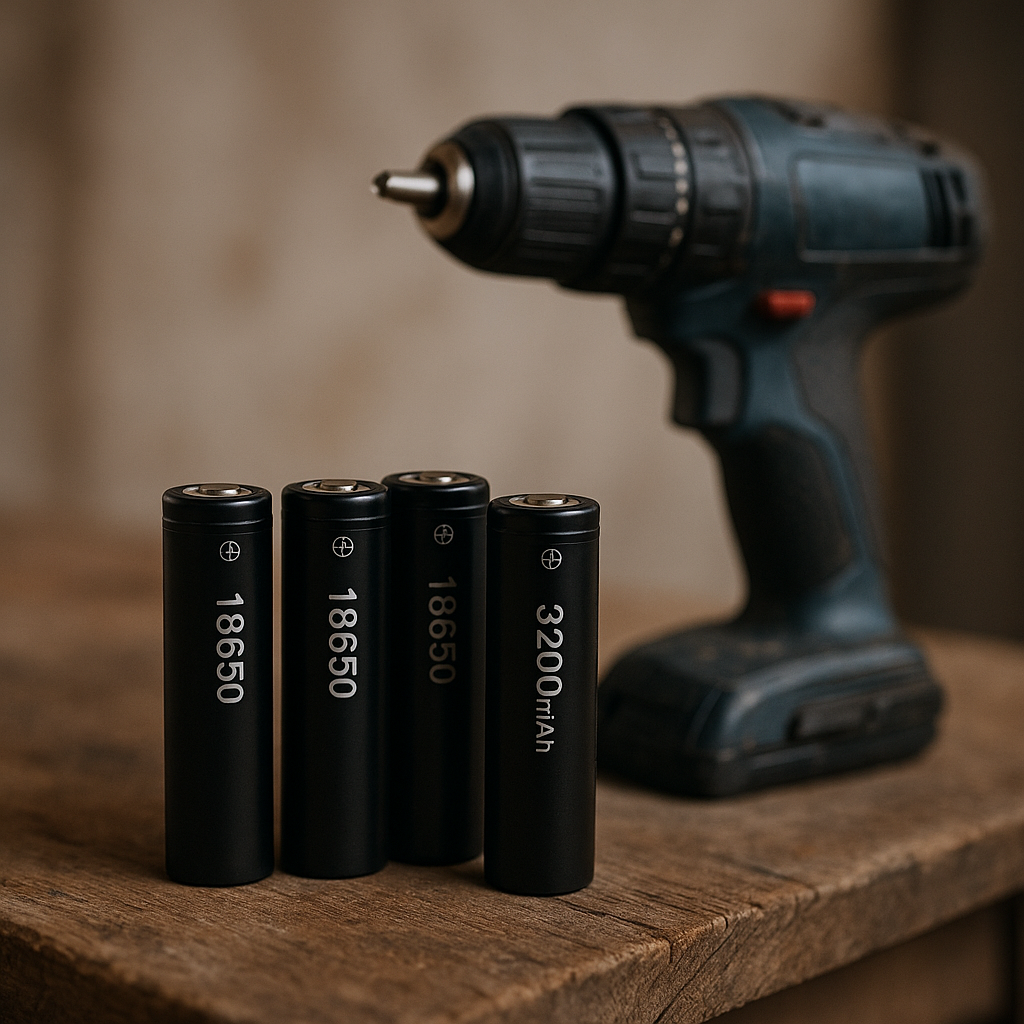
The 3200mAh rating is what is known as a "nominal" capacity. This value is typically determined by the manufacturer under very specific, and often idealized, laboratory conditions. These conditions usually involve discharging the battery at a very low, constant current—often 0.2C, which for a 3200mAh battery is a mere 640 milliamperes (0.64A)—from its fully charged voltage (around 4.2V) down to its termination voltage (around 2.5V) at a controlled ambient temperature (typically 25°C or 77°F).
Think of it like the stated fuel economy of a car. The manufacturer might claim 35 miles per gallon, a figure achieved on a flat, straight road at a steady 55 miles per hour with no wind. But what happens when you drive that same car in stop-and-go city traffic, up steep hills, with the air conditioning on full blast? Your actual mileage will be significantly lower. The same principle governs batteries. The moment you place that Efest 18650 cell into a high-drain device like a cordless circular saw, which can draw 20 amperes or more in bursts, you are no longer operating in that idealized laboratory environment. The 3200mAh figure becomes a theoretical maximum, a distant horizon that is rarely, if ever, reached in practice. The actual, usable capacity you will experience will be less. How much less depends heavily on the load you apply.
The relationship between discharge current and usable capacity is one of the most critical concepts in battery science, often described by a principle related to Peukert's Law. Without delving into complex mathematics, the law essentially states that as the rate of discharge increases, the available capacity of the battery decreases. Drawing a high current from a battery is an inefficient process. It generates more internal heat and causes a more dramatic voltage drop, leading the device's low-voltage cutoff to be triggered sooner, even though there is still chemical energy left in the cell.
Imagine your battery's capacity is a large bucket of water. If you use a narrow straw to slowly sip the water, you can drink nearly the entire bucket. This is analogous to a low-drain discharge (like powering a small LED light). You will get a runtime that comes close to the battery's nominal capacity. Now, imagine you turn that same bucket upside down to dump all the water out at once. Water will splash everywhere, and a good amount will remain stuck to the bottom and sides of the bucket. You have emptied the bucket quickly, but you have not utilized all the water it contained. This is analogous to a high-drain discharge in a power tool. The intense current draw means you cannot access the full 3200mAh before the battery's voltage sags to the point where the tool shuts off. For an Efest 18650 3200mAh battery, when discharged at a high rate of 10A or 15A, the effective capacity might drop to 2900mAh or even 2800mAh. This is not a defect; it is a fundamental property of the battery's chemistry and internal resistance (Battery University, n.d.-a).
Perhaps the most significant refinement to our understanding of a battery's potential comes from moving beyond capacity (mAh) to energy (Wh), or watt-hours. Milliampere-hours only tell us about the current delivered over time. Watt-hours, on the other hand, incorporate voltage into the equation, giving us a true measure of the total work the battery can perform. The formula is simple yet illuminating:
Energy (Wh) = [Capacity (Ah) * Nominal Voltage (V)]
Or, using the more common mAh:
Energy (Wh) = [Capacity (mAh) * Nominal Voltage (V)] / 1000
For the Efest battery with a nominal voltage of 3.7V, its nominal energy is:
(3200 mAh * 3.7 V) / 1000 = 11.84 Wh
Why does this matter? Because voltage is not constant. It "sags" or drops under load. A battery with lower internal resistance will maintain a higher voltage under load, and therefore deliver more energy (Wh) even if its capacity (mAh) is the same as a competitor's. When comparing batteries, especially for power-hungry applications, the watt-hour rating provides a more accurate picture of performance. A battery that can hold its voltage higher while delivering high current is a stronger battery, and this strength is captured by the watt-hour metric.
To put this into context, let's compare the Efest 18650 3200mAh cell with a hypothetical competitor, which we'll call Brand X.
| Metric | Efest 18650 | Brand X 18650 | Analysis |
|---|---|---|---|
| Nominal Capacity | 3200 mAh | 3200 mAh | On paper, they appear identical in terms of runtime potential. |
| Nominal Voltage | 3.7 V | 3.7 V | Standard for this type of lithium-ion cell. |
| Nominal Energy | 11.84 Wh | 11.84 Wh | The calculated energy based on nominal values is the same. |
| Voltage at 10A Load | 3.4 V | 3.2 V | Efest shows less voltage sag, indicating lower internal resistance. |
| Effective Energy (Wh) | Higher | Lower | Because Efest maintains a higher voltage, it delivers more actual work. |
This table illustrates that while two batteries might share the same headline capacity, their real-world performance can diverge. The Efest battery's ability to maintain a higher operating voltage under load would translate to a tool that feels more powerful and may even run slightly longer before hitting the low-voltage cutoff, despite both cells starting with the same nominal "3200mAh" rating.
If capacity tells us how long a battery can run, the discharge rating tells us how hard it can run. For anyone using power tools, high-intensity lighting, or any device that demands a sudden and significant surge of power, the Continuous Discharge Rate (CDR) is arguably the most important specification of a battery. It is the metric that separates batteries suitable for a TV remote from those capable of driving a half-inch impact wrench. Ignoring the CDR is not just a recipe for poor performance; it is a direct path to battery degradation and a serious safety hazard. The Efest 18650 3200mAh batteries 4-pack is marketed towards the high-drain market, making a clear understanding of its CDR non-negotiable.
The Continuous Discharge Rate, also known as the maximum continuous discharge current, is the maximum current (measured in amperes, or 'A') that can be drawn from the battery continuously without it overheating or sustaining damage. The key word here is continuously. It is a rating based on thermal limits. When a battery discharges, its internal resistance causes it to generate heat. The CDR is the current at which the battery's temperature stabilizes at a safe upper limit, typically around 80°C, without entering a state of thermal runaway (Finegan et al., 2015).
Imagine a water pipe. Capacity (mAh) is the amount of water in the reservoir behind the pipe. The CDR is the diameter of the pipe itself. A small pipe (low CDR) can deliver water for a long time, but only at a trickle. A large pipe (high CDR) can deliver a massive gush of water, emptying the reservoir much faster. A power tool is a device that needs that gush of water. A cordless drill might require 5-10A, while a circular saw starting up a cut in dense wood could momentarily demand over 30A. If you use a battery with a 5A CDR in a tool that needs 15A, you are essentially trying to force a massive amount of water through a tiny pipe. The pressure (voltage) will drop catastrophically, the pipe (battery) will get dangerously hot from the friction, and you risk a catastrophic failure. The Efest 18650 3200mAh battery is often rated with a CDR around 10A. This makes it a capable performer for many moderate-drain tools but may be insufficient for the most demanding high-power equipment.
The battery market, unfortunately, is rife with misleading specifications. One of the most common points of confusion is the distinction between a "Continuous" discharge rating and a "Pulse," "Peak," or "Max" rating. Many manufacturers will prominently display a very high number, like "35A," on their battery wraps. However, this is almost never the CDR. It is a pulse rating, which is the maximum current the battery can supposedly deliver for a very short period—often just a few seconds—before it needs to rest and cool down.
This is a critical distinction. A power tool does not just use power for one second. It may need to sustain a high current draw for 30 seconds or more to drill a deep hole or make a long cut. Relying on a pulse rating for a continuous task is dangerous. The battery will quickly exceed its thermal limit. Reputable battery testers and vendors ([18650battery.com], n.d.) are invaluable resources here, as they often perform independent tests to determine a battery's true CDR, cutting through the marketing hype. For the Efest 18650 3200mAh cell, its true, validated CDR is generally accepted to be 10A. Some specifications might list a "20A pulse" rating, but the 10A figure is the one that should guide your application choices for any sustained use. Always prioritize the CDR over any other discharge rating.
The connection between current, resistance, heat, and safety is absolute. The simple formula for power loss as heat in a circuit is P = I²R, where P is power (heat), I is current, and R is internal resistance. This equation reveals something crucial: the heat generated increases with the square of the current. Doubling the current you draw from the battery does not double the heat; it quadruples it.
Exceeding the CDR pushes the battery into a dangerous thermal state. The internal temperature rises rapidly. For lithium-ion cells, this is a perilous path. High temperatures accelerate the breakdown of the internal components, permanently reducing the battery's capacity and cycle life. More acutely, if the temperature reaches a critical point (often between 130°C and 150°C), the internal separator can melt, causing an internal short circuit. This can lead to a violent, unstoppable chemical reaction called thermal runaway, where the battery vents hot, flammable gases and can even explode (Finegan et al., 2015). The Generac PWRcell manual provides extensive warnings about battery hazards, noting that explosion is a real risk if batteries are misused or damaged ([generac.com], 2023).
The CDR is, therefore, a safety rating first and a performance rating second. It is the manufacturer's declaration of the current at which the battery can operate without turning into a small incendiary device. Respecting this limit is the single most important practice for safe battery use. The 10A CDR of the Efest 3200mAh cell is a reasonable limit that provides a good balance between capacity and power output, but it must be respected. Pushing it to 15A or 20A continuously is gambling with the health of the cell and your own safety.
Not all lithium-ion batteries are created equal. The "lithium-ion" label is a broad family name for a range of different chemical compositions, each with a unique personality defined by its own set of strengths and weaknesses. Understanding the specific chemistry inside the Efest 18650 3200mAh cell is fundamental to appreciating its performance characteristics and safety profile. These batteries are typically of the IMR chemistry, which stands for Lithium Manganese Oxide. This choice of chemistry is deliberate and directly tailored for the high-drain applications they are intended to serve.
To understand IMR, it helps to know its cousins. The positive electrode, or cathode, is the defining component of a lithium-ion cell's chemistry. Over the years, several primary formulations have dominated the market:
The following table provides a simplified comparison of these common chemistries.
| Chemistry | Primary Advantage(s) | Primary Disadvantage(s) | Typical Use Case |
|---|---|---|---|
| ICR | High Energy Density | Low CDR, Less Safe | Low-drain consumer electronics (with protection) |
| IMR | High CDR, Safer Chemistry | Lower Energy Density, Shorter Cycle Life | High-drain unprotected applications (e.g., power tools) |
| INR | Excellent balance of Capacity & CDR | More complex and costly than IMR | High-performance tools, electric vehicles |
| LFP | Extreme Safety, Very Long Cycle Life | Lower Voltage and Energy Density | Stationary storage, some EVs, mission-critical devices |
The choice of IMR chemistry for the Efest 18650 3200mAh battery is a conscious design decision prioritizing power delivery and safety over maximum possible capacity. The low internal resistance inherent in the manganese cathode structure is what allows for the respectable 10A continuous discharge rate. It means the battery can deliver the high current needed by a power tool without experiencing an immediate, debilitating voltage drop. The tool gets the power it needs to perform its work effectively.
The most compelling argument for IMR in this context is its "safer chemistry" characteristic. When you are using unprotected cells in a demanding application, you want a chemistry that is forgiving. If a tool malfunctions and draws excessive current, or if a cell is accidentally short-circuited, an IMR battery is significantly less likely to burst into flames compared to an old ICR cell. Its failure mode is less energetic. This inherent chemical stability provides a crucial layer of safety, especially for users who might be building their own battery packs or using devices that lack sophisticated electronic protections.
There is no perfect battery chemistry; every choice involves a compromise. While IMR excels in safety and current delivery, it makes sacrifices in other areas. Generally, IMR cells have a slightly lower energy density than their ICR or top-tier INR counterparts. This is why you rarely see IMR cells with capacities exceeding 3200mAh, while some other chemistries can push towards 3500mAh in the 18650 format.
Furthermore, the cycle life of IMR cells can sometimes be shorter than other chemistries. The manganese in the cathode can be prone to dissolving into the electrolyte over many charge and discharge cycles, which gradually reduces the cell's capacity. A typical IMR cell might be rated for 300-500 cycles before its capacity drops to 80% of its original value, whereas a high-quality INR or LFP cell might last for 500-1000 cycles or even more. For a professional who uses their tools daily, this difference in longevity could become a significant factor in the total cost of ownership over time. The Efest 18650 3200mAh battery, with its IMR chemistry, thus represents a well-defined point on the performance spectrum: it is a strong, safe power source for high-drain use, but it may not offer the absolute highest capacity or the longest possible service life compared to more premium (and more expensive) INR cells.
Owning and using high-drain lithium-ion batteries like the Efest 18650 3200mAh 4-pack carries a responsibility. These are not the simple alkaline cells you put in a child's toy; they are highly concentrated sources of energy that demand respect and proper handling. A conscientious user understands that safety and longevity are not accidental outcomes. They are the result of deliberate practices in charging, storage, and handling. This check moves beyond the inherent chemical properties of the battery to the external factors and user behaviors that ultimately determine its lifespan and safe operation.
Many consumer lithium-ion batteries are "protected." They include a small electronic circuit, a Battery Management System (BMS), typically at the bottom of the cell, which makes the battery slightly longer. This circuit acts as a safety supervisor, protecting the cell from common dangers like over-charging (voltage getting too high), over-discharging (voltage getting too low), and short circuits or excessive current draw.
However, the Efest 18650 3200mAh batteries, like most cells intended for high-drain applications such as power tools, are almost always "unprotected." Why? The protection circuit itself becomes a limiting factor. The components on the BMS have their own current limits, which are often too low for the high demands of a power tool. A protection circuit designed to trip at 8A would be useless in a battery meant to deliver 10A continuously. The protection circuit would constantly and annoyingly cut the power. Therefore, in high-drain contexts, the safety supervision is expected to be handled by the device (the power tool's own electronics) and the charger, not the battery cell itself.
This makes the user's choices even more critical. You are the protection circuit. You must ensure you are using a charger that will terminate the charge correctly at 4.2V. You must ensure your device has a low-voltage cutoff to prevent over-discharging the battery below its safe limit of about 2.5V. Draining a lithium-ion battery completely can cause irreversible internal damage and make it unsafe to recharge.
The longevity of your Efest batteries is directly tied to how you charge and store them. Following a few simple rules, as outlined by resources like Battery University ([batteryuniversity.com], n.d.-b) and in professional manuals ([generac.com], 2023), can dramatically extend their useful life.
Use a Quality Charger: Do not use a cheap, generic charger. Invest in a smart charger from a reputable brand (like Nitecore, Xtar, or Efest's own chargers) that is specifically designed for lithium-ion cells. A good charger accurately monitors the battery's voltage and terminates the charge precisely at 4.2V. Overcharging, even by a small amount, puts immense stress on the cell and is a primary cause of capacity loss and safety incidents.
Do Not Charge to 100% Unnecessarily: While it is tempting to always charge your batteries to the maximum, a lithium-ion cell is most stressed when it is at 100% charge (4.2V) or near 0% charge (below 3.0V). If you are not going to use the batteries immediately, it is better to charge them to only about 4.0V or 4.1V. This can nearly double the battery's cycle life. Similarly, try to recharge them when they reach about 3.0V rather than running them completely dead.
Store at the Proper Voltage and Temperature: The ideal storage condition for a lithium-ion battery is at a state of charge of about 40-50%, which corresponds to a voltage of around 3.7-3.8V. Storing a battery fully charged for weeks or months is highly detrimental. It causes a permanent loss of capacity that cannot be recovered. Temperature is also a major factor. Store your batteries in a cool, dry place. Never leave them in a hot car or in direct sunlight. Every 10°C (18°F) rise in temperature roughly doubles the rate of self-discharge and degradation.
A battery's "cycle life" is the number of full charge-to-discharge cycles it can endure before its capacity drops to a certain percentage of its original value, typically 80%. As mentioned, an IMR cell like the Efest 3200mAh might be rated for 300-500 cycles. It is important to realize that a "cycle" does not mean charging from empty to full every time. Two half-discharges (from 100% to 50%, then recharged) are equivalent to one full cycle.
State of Health (SoH) is a broader concept that reflects the overall condition of the battery compared to a new one (Battery University, n.d.-a). Capacity is the leading indicator of SoH. As your Efest battery ages and is put through cycles, its capacity will inevitably decline. The 3200mAh cell might only hold 2800mAh after a year of heavy use. This is normal aging. You will notice it as a tangible decrease in runtime. When the runtime becomes unacceptably short for your needs, the battery has reached the end of its useful life and should be responsibly recycled.
The popularity of the 18650 format has led to a dangerous counterfeit market. Unscrupulous sellers will take cheap, low-grade cells (often recycled from old laptop batteries) and put a new "wrap" or label on them, claiming they are high-quality cells from brands like Efest, Samsung, or Sony. These counterfeit cells, or "re-wraps," are a massive safety risk. They will not have the advertised capacity, and they certainly will not have the CDR needed for a power tool. Using a re-wrapped battery in a high-drain device is one of the most common causes of battery explosions and fires.
How can you protect yourself?
Your safety depends on the authenticity of your batteries. The convenience of a 4-pack is lost if one of the cells is a dangerous counterfeit.
The final stage of our inquiry brings all the technical details into the practical realm of use and value. A battery does not exist in a vacuum; its worth is determined by its suitability for a specific task and its economic sense over its lifetime. For the Efest 18650 3200mAh batteries 4-pack, we must ask: Is it the right choice for your particular power tool? And does it represent a sound investment compared to the alternatives available in 2026?
The answer depends entirely on the tool's power demands. The key specification to match is the tool's current draw against the battery's 10A CDR.
Excellent for Moderate-Drain Devices: For many common cordless tools, a 10A CDR is perfectly adequate. This includes most cordless drills, impact drivers, sanders, jigsaws, and oscillating multi-tools. These tools typically operate with a continuous current draw well below 10A, with only brief peaks that the battery can handle. For this class of tools, the Efest's high 3200mAh capacity is a significant benefit, offering extended runtime between charges. It is also an excellent choice for high-power LED flashlights that require a sustained, high-current output.
Marginal or Unsuitable for High-Drain Devices: For the most power-hungry tools, the 10A CDR of the Efest 3200mAh cell is a limiting factor. This category includes tools like cordless circular saws, angle grinders, reciprocating saws, and large hammer drills, especially when used on demanding materials. These tools can easily draw 15A, 20A, or even more continuously. Using a 10A battery in a 20A tool will lead to significant voltage sag, causing the tool to feel underpowered and sluggish. The battery will get very hot, drastically reducing its lifespan, and the tool's low-voltage protection may trigger prematurely, giving you frustratingly short bursts of work. For these applications, a battery with a higher CDR (20A, 25A, or 30A) is essential, even if it means sacrificing some capacity. A 2500mAh battery with a 25A CDR will outperform a 3200mAh battery with a 10A CDR in a high-power saw every time.
When evaluating the cost of batteries, the initial purchase price is only part of the story. A more sophisticated analysis considers the total cost of ownership, factoring in capacity, cycle life, and performance. In 2026, the Efest 18650 3200mAh batteries 4-pack sits in a competitive middle ground.
Let's compare it to two other common choices: a budget, lower-capacity cell and a premium, high-performance cell.
| Battery | Approx. Price (4-pack) | Capacity | CDR | Cycle Life | Cost per Wh | Cost per Cycle | Best Use Case |
|---|---|---|---|---|---|---|---|
| Budget 2600mAh | $18 | ~9.6 Wh | 5A | ~300 | ~$0.47 | ~$0.015 | Low-drain devices, flashlights |
| Efest 3200mAh | $28 | ~11.8 Wh | 10A | ~400 | ~$0.59 | ~$0.0175 | Moderate-drain tools, long runtime needs |
| Molicel P28A 2800mAh | $35 | ~10.4 Wh | 25A | ~500 | ~$0.84 | ~$0.0175 | High-drain tools, demanding applications |
From this analysis, the Efest 18650 3200mAh batteries 4-pack emerges as a strong value proposition for its intended use case. It offers significantly more energy (Wh) than budget cells for a modest increase in price. While it cannot match the raw power (CDR) of a premium cell like the Molicel P28A, its cost per watt-hour is lower, and its cost per cycle is competitive. For a user whose tool collection primarily consists of drills, drivers, and other moderate-drain equipment, the Efest offers the best balance of long runtime and affordable, reliable power. For professionals whose livelihood depends on high-power saws and grinders, the extra cost for a premium, high-CDR cell is a worthwhile investment in performance and longevity.
The world of battery technology is in constant motion. The 21700 cell, with its larger volume, offers a clear path to higher capacity and/or higher current ratings, and many new power tools are being designed around this format. Does this make investing in 18650 cells in 2026 a poor choice? Not at all. The immense number of 18650-compatible devices in circulation guarantees that high-quality 18650 cells will be produced and readily available for many years to come.
Furthermore, the modular nature of these cells offers a degree of flexibility that proprietary, sealed battery packs lack. When one cell in a multi-cell tool battery fails, the entire expensive pack is often rendered useless. With individual cells, you can test and replace only the faulty one. Moreover, for those using tools with proprietary batteries, exploring high-quality third-party options can be a smart economic move. For instance, a user of Worx tools might find that a well-made replacement battery for Worx 40V tools offers comparable performance to the original manufacturer's product at a lower cost, extending the life of their tool ecosystem without being locked into a single supplier. The Efest 18650 3200mAh batteries 4-pack fits perfectly into this philosophy of flexible, user-serviceable power, providing a reliable and cost-effective way to keep a vast range of devices running optimally.
No, not necessarily. You must match the battery's Continuous Discharge Rate (CDR) of 10A to the power requirements of your device. These batteries are ideal for moderate-drain devices like most drills, impact drivers, and high-power flashlights. They are not suitable for extremely high-drain devices like power saws or angle grinders that require a continuous current of 15-20A or more. Using them in such devices will lead to poor performance and can be unsafe.
This refers to the shape of the positive terminal. Flat top batteries, like these Efest cells, have a flat surface on the positive end. Button top batteries have a small, protruding nub, similar to a traditional AA battery. The choice depends on your device. Most power tools and multi-cell packs require flat top batteries to make proper contact in series. Some single-cell flashlights require a button top to make contact with the driver board. Check your device's requirements before purchasing.
The most noticeable sign is a significant reduction in runtime. A battery that used to last for an hour of work might only last for 30 minutes. This indicates that its internal capacity (its State of Health) has degraded. You might also notice the battery gets hotter than usual during charging or discharging, or that it no longer holds a charge for very long when in storage. Once the performance is no longer acceptable for your needs, it is time to replace and recycle the battery.
Efest is a reputable brand that produces reliable mid-range batteries. Generally, top-tier manufacturers like Molicel, Samsung, and Sony are considered the gold standard, especially for their high-CDR cells which often undergo more rigorous and transparent testing. However, for moderate-drain applications where maximum runtime is desired, the Efest 3200mAh cell offers excellent value and performance. It is a significant step up from generic or no-name brands but may not match the peak performance of the most premium cells.
You should use a dedicated, intelligent lithium-ion battery charger from a reputable manufacturer like Nitecore, Xtar, GYRFALCON, or Efest itself. These chargers monitor each battery individually, provide the correct CC/CV (constant current/constant voltage) charging algorithm, and automatically stop charging when the cell reaches 4.2V. Avoid using cheap, unbranded chargers, as they can overcharge the batteries, which is dangerous and drastically reduces their lifespan.
A 4-pack offers convenience and value. Many power tools and devices use multiple cells in series or parallel to achieve higher voltage or capacity. Buying a 4-pack ensures that you have a matched set of cells that are all new and have the same history. When building a multi-cell pack, it is crucial to use identical cells to ensure they charge and discharge evenly, which is vital for the pack's safety and longevity.
Throughout this guide, we have journeyed from the simple numbers on a battery's wrapper to the complex realities of its chemical and electrical behavior. We have seen that the Efest 18650 3200mAh batteries 4-pack is not a simple commodity but a carefully engineered product with a distinct set of capabilities and limitations. It offers a compelling blend of high capacity and safe, moderate power delivery, making it an intelligent choice for a wide array of applications.
To choose a battery is to engage in a dialogue with technology. It requires us to be more than passive consumers. It demands a measure of curiosity, a willingness to look beyond the surface, and a commitment to safe practice. The power held within these small steel cylinders is a tool, and like any tool, its ultimate value and safety are determined by the knowledge and respect of the person who wields it. By understanding the principles of capacity, discharge rate, chemistry, and handling, you transform a simple purchase into a considered, responsible act—one that ensures your tools will perform as they should and your work can proceed with power, confidence, and peace of mind.
Battery University. (n.d.-a). BU-105: Battery definitions and what they mean. Retrieved January 15, 2026, from https://batteryuniversity.com/article/bu-105-battery-definitions-and-what-they-mean
Battery University. (n.d.-b). BU-808: How to prolong lithium-based batteries. Retrieved January 15, 2026, from https://batteryuniversity.com/article/bu-808-how-to-prolong-lithium-based-batteries
Efest. (n.d.). Products. Retrieved January 15, 2026, from
Finegan, D. P., Scheel, M., Robinson, J. B., Tjaden, B., Hunt, I., Mason, T. J., … & Hinds, G. (2015). In-operando high-speed tomography of lithium-ion batteries during thermal runaway. Nature Communications, 6(1), 6924. https://doi.org/10.1038/ncomms7924
Generac Power Systems, Inc. (2023). Generac PWRcell® battery installation and owner's manual.
iPowerQueen. (n.d.). All products. Retrieved January 15, 2026, from
Keeppower. (n.d.). Products. Retrieved January 15, 2026, from
18650 Battery Store. (n.d.). Efest batteries. Retrieved January 15, 2026, from
18650battery.com. (n.d.). Efest 18650 batteries. Retrieved January 15, 2026, from
Liu, K., Liu, Y., Lin, D., Pei, A., & Cui, Y. (2018). Materials for lithium-ion battery safety. Science Advances, 4(6), eaas9820. https://doi.org/10.1126/sciadv.aas9820
{"one"=>"Select 2 or 3 items to compare", "other"=>"{{ count }} of 3 items selected"}