

CONTACT
Please contact us for shipping details.
An 8-volt battery system, while less common than its 12-volt counterpart, holds a critical position in specific applications, notably in vintage automobiles and the majority of modern golf carts. The longevity and performance of these deep-cycle batteries are inextricably linked to the quality of the charging process. This document provides a comprehensive examination of the modern 8v battery charger, articulating the technological advancements and essential features that define a superior charging apparatus in 2026. It explores the nuances of multi-stage smart charging, including bulk, absorption, and float stages, and their electrochemical impact on lead-acid battery health, particularly in mitigating sulfation. Furthermore, it details the indispensable safety protocols, such as reverse polarity, overcharge, and thermal compensation, that protect both the user and the battery. The discourse extends to charger compatibility across various battery chemistries like Flooded, AGM, and Gel, emphasizing the necessity of matching the charging algorithm to the battery type. Finally, it assesses the importance of physical durability, environmental resistance, and intuitive user interfaces in the overall functionality and value of an 8v battery charger.
Before we can properly appreciate the intricacies of a modern charging device, we must first develop a more nuanced understanding of the batteries it is designed to serve. The 8-volt battery occupies a peculiar and vital niche in the vast ecosystem of energy storage. While the 12-volt standard dominates the automotive and recreational vehicle markets, the 8-volt configuration has become the cornerstone for specific, power-hungry applications. Its most prominent role is within the electric golf cart industry. A typical 48-volt golf cart, for instance, achieves its system voltage by connecting six 8-volt batteries in series (6 batteries x 8 volts/battery = 48 volts). This arrangement is favored over using four 12-volt batteries because 8-volt deep-cycle batteries are generally built more robustly, with thicker plates and denser active material, allowing them to withstand the repeated, deep discharges characteristic of a day on the links.
This deep-cycle capability is the defining feature of the batteries we are discussing. Unlike a car's starter battery, which is designed to deliver a massive burst of current for a few seconds to crank an engine, a deep-cycle battery is engineered to provide a steady current over a long period. Think of it as the difference between a sprinter and a marathon runner. The sprinter (starter battery) has explosive power but no endurance, while the marathon runner (deep-cycle battery) has exceptional stamina. This fundamental design difference dictates a completely different set of needs when it comes to replenishment. Subjecting a deep-cycle battery to the wrong charging regimen is akin to forcing a marathon runner onto a sprinter's aggressive and unsustainable training schedule; it inevitably leads to premature failure and diminished performance. Therefore, the selection of an appropriate 8v battery charger is not merely a matter of convenience but a critical act of asset preservation. A high-quality set of golf cart batteries can represent a significant financial investment, and the charger is the single most important tool for protecting that investment.
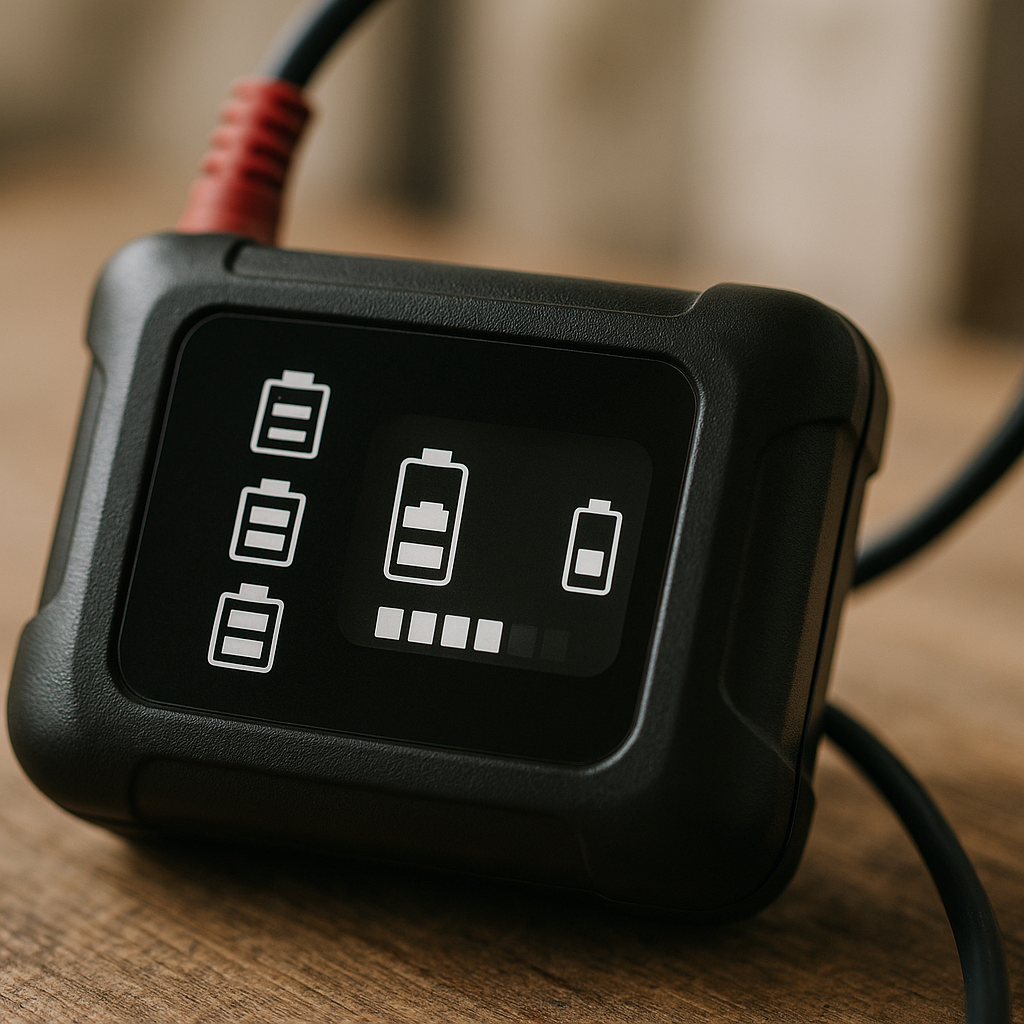
The single most consequential feature to demand from any 8v battery charger in 2026 is its intelligence—specifically, its ability to execute a multi-stage charging algorithm. The era of "dumb" chargers, which apply a constant voltage or current without regard for the battery's state, is definitively over for anyone serious about battery care. These simplistic devices are a primary cause of premature battery death, often through chronic undercharging, which leads to sulfation, or severe overcharging, which can boil away electrolyte and damage the battery's internal plates.
To grasp the superiority of smart charging, let's first consider the brute-force approach of a basic, single-stage charger. Imagine trying to fill a bucket with a fire hose. You can fill it quickly, but as you near the top, you are guaranteed to make a mess, splashing water everywhere and likely not filling it to the brim efficiently. A single-stage charger operates with similar crudeness. It pushes a high, constant current into the battery, and if it has any shut-off mechanism at all, it's usually a simple voltage switch that is imprecise and often triggers too late. This process can lead to excessive gassing—a process where the water in the battery's electrolyte is broken down into hydrogen and oxygen gas—which is not only inefficient but can be dangerous and leads to water loss in flooded lead-acid batteries. More insidiously, if the charger never fully replenishes the battery, it leaves lead sulfate crystals to harden on the plates, a condition known as sulfation, which is the leading cause of capacity loss and early battery failure (Battery University, 2021).
A modern smart 8v battery charger, by contrast, operates with the finesse of a skilled technician. It communicates with the battery, senses its needs, and adapts its output accordingly through a series of distinct stages. This process ensures a faster, safer, and more complete charge that dramatically extends the battery's service life. While specific profiles can vary, the core of most advanced chargers involves three primary stages.
| Stage | Primary Goal | Current Level | Voltage Level | Analogy |
|---|---|---|---|---|
| Bulk | Rapidly return the majority of the battery's capacity. | High and Constant | Rises to a set point (e.g., ~9.2V for an 8V battery) | Quickly pouring water into an empty bucket until it's about 80% full. |
| Absorption | "Top off" the remaining capacity safely without overcharging. | Gradually Decreasing | Held Constant at a high level | Slowing the water flow to a steady stream to fill the last 20% without splashing. |
| Float/Maintenance | Compensate for self-discharge and keep the battery at 100% indefinitely. | Very Low (trickle) | Held Constant at a lower, safe level (e.g., ~8.8V) | Using an eyedropper to replace the tiny amount of water that evaporates. |
Stage 1: Bulk Charging This is the first and most powerful stage. When the charger is connected to a significantly discharged battery, it enters the bulk stage, delivering its maximum rated current (amperage). The goal here is to replenish the bulk of the battery's energy—typically up to about 80% of its total capacity—as quickly as possible. During this phase, the battery's voltage rises steadily. For an 8-volt battery, the voltage will climb from its discharged state towards a target of around 9.2 to 9.8 volts, depending on the specific battery chemistry.
Stage 2: Absorption Charging Once the battery's voltage reaches the predetermined setpoint in the bulk stage, the charger transitions to the absorption stage. This is a critical and more delicate phase. The charger now holds the voltage constant at that higher level while the battery's internal resistance begins to increase. As a result, the current that the battery will accept starts to decrease. The charger intelligently monitors this current, and the absorption stage continues until the current drops to a very low, predefined level. This "absorption" phase ensures that the final 20% of the battery's capacity is filled completely and safely, allowing the charge to fully penetrate the battery plates without causing the excessive heat and gassing associated with a brute-force charging method.
Stage 3: Float or Maintenance Charging After the absorption stage is complete, the battery is 100% charged. If left connected, a smart 8v battery charger will then switch to the float stage. Here, the voltage is reduced to a lower, safe level (for example, around 8.8 volts for an 8V battery). The charger will now only supply a very small "trickle" of current, just enough to counteract the battery's natural self-discharge rate. This allows the charger to be left connected for extended periods—weeks or even months—without any risk of overcharging or damaging the battery. It keeps the battery topped off and ready for immediate use, which is ideal for vehicles or equipment that are stored for the off-season.
Beyond these three core stages, the most advanced chargers offer specialized modes designed to rescue and recondition batteries.
Desulfation: As mentioned, sulfation is the buildup of hard lead sulfate crystals on the battery plates, which occurs when a battery is left in a discharged state. These crystals act as an insulator, reducing the plate surface area available for the chemical reaction, which in turn reduces the battery's capacity and its ability to accept a charge. Some smart chargers feature a desulfation or "recondition" mode that uses a special voltage profile, often involving high-frequency pulses, to help break down these hardened crystals and dissolve them back into the electrolyte, thereby restoring some of the lost capacity. While not a guaranteed fix for a severely neglected battery, it can be remarkably effective at reviving a sluggish one.
Equalization: Specific to flooded (wet) lead-acid batteries, equalization is a controlled overcharge performed periodically. Over many charge-discharge cycles, the electrolyte (a mixture of sulfuric acid and water) can become stratified, with the heavier acid settling at the bottom of the battery cells. This leads to an imbalance in the specific gravity between the top and bottom of the cells, causing the upper portions of the plates to work harder and corrode faster. An equalization charge raises the battery voltage to a higher-than-normal level, which induces vigorous gassing. This bubbling action effectively stirs the electrolyte, remixing the acid and water into a homogenous solution and ensuring all cells are at an equal and optimal charge level (BatteryStuff.com, n.d.). This is a powerful maintenance tool that should only be performed on flooded batteries and as recommended by the battery manufacturer.
While charging performance is paramount for battery health, the safety of the user and the surrounding environment is of equal, if not greater, concern. Batteries, particularly the lead-acid types common in 8-volt applications, contain corrosive acid and can produce explosive hydrogen gas during charging. A modern, high-quality 8v battery charger is engineered with a suite of redundant safety features that create a protective bubble around the entire charging process, mitigating risks from both human error and electrical faults.
Even the most experienced user can have a momentary lapse in concentration. Two of the most common and potentially dangerous mistakes are connecting the charger clamps to the wrong battery terminals and allowing the clamps to touch each other while the charger is live.
Reverse Polarity Protection: Connecting the positive clamp to the negative terminal and the negative clamp to the positive terminal can have catastrophic consequences with an unprotected charger. At best, it will blow a fuse in the charger or the equipment. At worst, it can send a surge of current in the wrong direction, permanently damaging the battery's sensitive internal components and potentially destroying the charger's electronics. A charger with reverse polarity protection contains internal circuitry that detects this incorrect connection instantly. It will simply refuse to send any current and will typically illuminate an error light to alert the user to the mistake. No harm, no foul. The user can simply correct the connections, and the charger will begin its work as intended.
Spark-Proof Technology: The hydrogen gas that can be vented from a lead-acid battery during charging is highly flammable. A single spark is all it takes to cause an explosion, which can spray corrosive acid and shrapnel. Older chargers would energize their clamps as soon as they were plugged in, creating a significant spark hazard if the clamps were to touch each other or be connected to the battery terminals. Modern spark-proof technology ensures that the charger's output clamps remain completely de-energized until they are correctly connected to a battery and the charger has verified a safe connection. Only then will the charging process begin. This simple but brilliant feature virtually eliminates the risk of an accidental spark igniting hydrogen gas.
Beyond momentary user errors, a charger must also protect against sustained electrical faults that can develop over time.
Overcharge Protection: This is the foundational safety feature of any smart charger. As a battery reaches full charge, its ability to accept current diminishes. A dumb charger will continue to force current into it, causing the battery to overheat and the electrolyte to "boil" and gas away excessively. This not only depletes the water in flooded cells but can also cause sealed AGM and Gel batteries to swell, vent, and fail permanently. A smart 8v battery charger, through its multi-stage algorithm, constantly monitors the battery's voltage and the current it is accepting. When it detects the battery is full (by the current dropping in the absorption stage), it automatically transitions to the low-current float mode, preventing any possibility of overcharging.
Short-Circuit Protection: A short circuit, whether caused by the output clamps touching or an internal fault in the battery, creates a path of near-zero resistance, causing current to rush out of the charger at dangerously high levels. This can melt wires, destroy the charger's internal components, and create a serious fire hazard. All reputable chargers have internal protection, often in the form of fuses or self-resetting circuit breakers, that will instantly cut off the output current if a short circuit is detected, protecting the charger from self-destruction.
This is a more sophisticated safety and performance feature found on premium chargers, and it is exceptionally valuable. The ideal charging voltage for a lead-acid battery changes with its temperature. A cold battery requires a slightly higher charging voltage to accept a full charge, while a hot battery requires a slightly lower voltage to prevent overcharging and gassing. This concept is thoroughly explained in guides on how batteries work (Battery University, 2010).
A standard charger assumes an average ambient temperature (typically 25°C or 77°F). However, if you are charging a battery in a cold garage in the winter or a hot, unventilated space in the summer, this "one-size-fits-all" voltage will be incorrect. Charging at too high a voltage in the heat will accelerate battery aging, while charging at too low a voltage in the cold will lead to chronic undercharging and sulfation.
A charger with thermal compensation solves this problem elegantly. It includes a small temperature sensor, either built into one of the clamps or as a separate probe that is attached directly to the battery casing. This sensor provides real-time temperature feedback to the charger's microprocessor, which then continuously adjusts the charging voltage up or down to the precise optimal level for that specific temperature. This ensures a more accurate, faster, and safer charge, significantly improving both performance and the overall lifespan of your expensive 8-volt batteries.
While an 8v battery charger is by definition a specialized piece of equipment, the best models in 2026 offer a degree of flexibility that enhances their value and utility far beyond a single purpose. This versatility manifests in two key areas: the ability to correctly charge various battery chemistries and the capacity to service batteries of different sizes and even different system voltages. Choosing a compatible charger is not just about convenience; it is about applying the correct electrochemical nourishment for your specific type of battery.
The term "lead-acid battery" is not monolithic. It is a family of technologies, and while they share a basic chemistry, their internal construction and charging requirements differ significantly. Using a charger designed for one type on another can lead to suboptimal performance and a shortened lifespan. A versatile 8v battery charger will allow you to select the appropriate charging profile for your specific battery.
| Feature | Flooded Lead-Acid (FLA) | Absorbed Glass Mat (AGM) | Gel Cell |
|---|---|---|---|
| Internal Construction | Liquid electrolyte sloshes freely around lead plates. | Electrolyte is absorbed and held in fine glass fiber mats. | Electrolyte is mixed with silica to form a thick, immobile gel. |
| Maintenance | Requires regular checking and topping up with distilled water. | Maintenance-free; sealed construction. | Maintenance-free; sealed construction. |
| Charging Voltage | Tolerant of higher charging voltages; requires periodic equalization. | Sensitive to over-voltage; must be charged with a precise profile. | Very sensitive to over-voltage; requires a lower charging voltage than AGM. |
| Vibration Resistance | Poor. Plate damage can occur from heavy vibration. | Excellent. The compressed construction provides superior durability. | Good. The gel immobilizes components. |
| Primary Advantage | Lowest cost per amp-hour; very robust if maintained. | High power output, faster charging, no maintenance, spill-proof. | Best deep-cycle life and performance in extreme temperatures. |
| Primary Disadvantage | Requires regular maintenance; can leak acid if tipped. | Higher initial cost; can be damaged permanently by overcharging. | Highest cost; slowest charging rate of the three. |
Flooded Lead-Acid (FLA): This is the traditional and often most cost-effective type of deep-cycle battery. They are identifiable by the removable caps on top that allow for the addition of distilled water. Their primary charging requirement is the need for a periodic "equalization" charge to prevent acid stratification, as discussed earlier.
Absorbed Glass Mat (AGM): AGM batteries are a type of Valve Regulated Lead-Acid (VRLA) battery. The electrolyte is held in absorbent mats pressed between the plates. This construction makes them spill-proof, maintenance-free, and highly resistant to vibration. However, they are more sensitive to overcharging. The charging voltage must be carefully controlled to avoid damaging the sealed cells. They cannot be equalized in the same way as flooded batteries.
Gel Cell: Gel batteries are another type of VRLA. The electrolyte is a thick, gel-like substance. They offer excellent deep-cycle performance and are very tolerant of high temperatures, but they are the most sensitive to charging voltage. They require a lower voltage profile than either FLA or AGM batteries, and overcharging them can quickly cause permanent damage by creating voids in the gel around the plates.
A top-tier 8v battery charger will have distinct, selectable settings for these different chemistries. This ensures that whether you have a traditional set of flooded T-875 batteries or a premium bank of AGM batteries in your golf cart, the charger will deliver the precise voltage and algorithm needed for peak performance and longevity.
Beyond chemistry, a charger's versatility is also defined by its output capabilities.
Selectable Amperage: The ideal charging current for a battery is related to its capacity, which is measured in Amp-hours (Ah). A common rule of thumb for lead-acid batteries is to charge at a rate between 10% and 25% of the Ah rating. For example, a standard 8V golf cart battery might have a capacity of 170Ah. The ideal charging current would be between 17A (10%) and 42.5A (25%). Charging at too low an amperage can take an excessively long time, while charging at too high a rate can generate excessive heat and reduce battery life. Some advanced chargers offer adjustable amperage settings, allowing you to match the output to your specific battery bank size or to choose a lower, gentler "maintenance" charge rate for long-term storage.
Selectable Voltage: While our focus is the 8v battery charger, some of the most useful chargers on the market are multi-voltage units. A charger that can be switched to also handle 6-volt and 12-volt batteries is an incredibly useful tool for any garage or workshop. Many classic cars, tractors, and other vintage equipment use 6-volt systems. The ability to use the same high-quality smart charger for your 48V golf cart bank (by charging the 8V batteries individually or in pairs), your 6V classic tractor, and your 12V car or boat battery represents a significant value and reduces clutter.
The 8-volt electrical system is a fascinating piece of automotive history. While 12-volt systems became the industry standard in the mid-1950s, a number of vehicles, particularly from manufacturers like Buick, Oldsmobile, and Pontiac, used 8-volt systems for a brief period as a transitional step up from the older 6-volt standard. For restorers and owners of these classic vehicles, finding a proper 8v battery charger is absolutely essential. Using a 12-volt charger on an 8-volt system is a recipe for disaster, guaranteed to severely overcharge and destroy the battery. A high-quality, dedicated 8v battery charger or a versatile multi-voltage model is the only correct and safe way to maintain the electrical system of these historical gems batterystuff.com. The same applies to various types of older farm equipment and industrial machinery that were built on 8-volt platforms. The existence of these applications makes a versatile charger an even more powerful tool. Some modern charging accessories even add features like USB ports, turning a standard tool battery into a versatile charging adapter for phones and other electronics.
A battery charger is a tool, and like any good tool, it must be built to withstand the environment in which it is used. Garages, workshops, and storage sheds are not pristine laboratories. They are places with dust, moisture, fluctuating temperatures, and the occasional accidental drop or impact. A charger's internal intelligence is worthless if its physical housing and components cannot survive the rigors of regular use. When evaluating an 8v battery charger, paying close attention to its physical construction is a key part of making a wise long-term investment.
The first line of defense for the sensitive electronics within a charger is its outer shell. The cheapest chargers are often housed in thin, brittle plastic that can crack or shatter if dropped from a workbench. Look for chargers constructed from high-quality, impact-resistant polymers, similar to what you would find on professional power tools. A sturdy aluminum casing is even better, as it not only provides superior protection but also acts as an effective heat sink, helping to dissipate the heat generated during the charging process. This is particularly important for higher-amperage chargers. A well-designed housing will also incorporate features like non-slip rubber feet or bumpers to keep it from sliding off surfaces and to add another layer of shock absorption.
One of the most useful and objective measures of a charger's durability is its Ingress Protection (IP) rating. This is a standardized system used to classify the degree of protection an electrical enclosure provides against the intrusion of foreign objects (like dust and dirt) and moisture. An IP rating consists of two digits.
For a battery charger that will be used in a typical garage or shop environment, a rating of IP65 is an excellent benchmark.
A charger with a high IP rating is fundamentally more reliable. It signifies that the manufacturer has invested in quality seals, gaskets, and construction methods to create a product that can survive in less-than-ideal conditions, which is particularly important for marine applications or for chargers that may be mounted directly onto equipment that is washed down.
The components you interact with most directly—the cables and clamps—are often a telling indicator of a charger's overall quality. This is not an area where manufacturers should cut corners.
Cables: The AC power cord and the DC output cables should be of a heavy gauge, which reduces electrical resistance and heat buildup, especially on longer cable runs. Look for cables with thick, flexible insulation that will not become stiff and brittle in cold weather or soft and gummy in the heat. Strain reliefs, the reinforced rubber or plastic sections where the cables enter the charger body and the clamps, are also critical. They prevent the internal wires from breaking due to repeated flexing and bending. The length of the cables is also a practical consideration. Longer cables provide more flexibility in where you can place the charger relative to the equipment, which can be a major convenience.
Clamps: The battery clamps should feel substantial and robust in your hand. The jaws should have strong springs to ensure a tight, secure connection to the battery terminals, which is essential for a low-resistance electrical path. The contact surfaces inside the jaws should be made of solid copper or be heavily copper-plated for maximum conductivity. The handles should be fully insulated with a comfortable, non-slip grip. Flimsy, poorly made clamps are not only frustrating to use but can also lead to poor connections, which can interrupt the charging process or generate a dangerous amount of heat at the terminal.
In essence, assessing the physical build of an 8v battery charger is about looking for signs of quality craftsmanship that extend beyond the spec sheet. It's about choosing a product that feels like it was designed by people who understand the environments where their tools will actually be used.
The most sophisticated charging technology in the world is of limited use if the operator cannot understand what it is doing or if it has encountered a problem. A well-designed user interface bridges the gap between the charger's complex internal processes and the user's need for clear, actionable information. As chargers have become more intelligent, their interfaces have evolved from simple, often cryptic, blinking lights to rich, data-driven displays that empower the user.
Basic LED Indicators: For many years, the standard interface on a consumer-grade battery charger consisted of one or two LED lights. A red light might mean "charging," a green light might mean "charged," and a blinking light might mean "error." While functional at the most basic level, this type of interface provides very little insight. Is it in the bulk stage or the absorption stage? Is the battery accepting the charge properly? What kind of error has occurred? The user is left to guess.
Multi-LED Status Displays: A significant improvement is a charger with a series of dedicated LEDs for each charging stage (e.g., Bulk, Absorption, Float) and for various fault conditions (e.g., Reverse Polarity, Bad Battery). This allows the user to see, at a glance, exactly where the charger is in its process and provides more specific feedback if something is wrong.
Digital LCD Screens: The gold standard for user interfaces in 2026 is a backlit digital Liquid Crystal Display (LCD). An LCD screen can provide a wealth of real-time information that is simply not possible with LEDs. A good digital display might show:
This level of detail transforms the charger from a "black box" into a genuine diagnostic tool. It allows the user to monitor the health of their batteries over time and to understand the charging process more deeply.
The true power of a good interface lies in its diagnostic capabilities. When a charge cycle fails, you want to know why. A quality 8v battery charger with a clear display can help you troubleshoot common problems without needing a separate multimeter or specialized knowledge.
For example, if you connect the charger and it immediately displays a "BAD BATTERY" or "SULFATED" error, it's a strong indication that the battery's internal resistance is too high to accept a charge, and it may need to be replaced. If the voltage reading on the display immediately jumps to a very high level but the amperage stays at zero, it could indicate a severely sulfated battery that the charger is attempting to recover. If it shows a "REVERSE POLARITY" warning, the fix is simple and immediate. This feedback saves time and frustration, helping to quickly differentiate between a faulty charger, a bad connection, or a battery that has reached the end of its life. Providing users with these kinds of power solutions for modern toolkits enhances their ability to manage their equipment effectively.
Pushing the boundaries of user interaction, some of the most cutting-edge chargers now incorporate Bluetooth technology. By pairing the charger with a dedicated smartphone app, users can access an even deeper level of monitoring and control. A Bluetooth-enabled app might allow you to:
While perhaps not a necessity for every user, this technology represents the future of battery management. It provides an unprecedented level of convenience and insight, turning the once-mundane task of charging a battery into a data-rich, interactive experience. For those managing a fleet of golf carts or a collection of classic vehicles, the ability to monitor multiple chargers from a single interface can be a game-changer.
No, you should never use a 12-volt charger on an 8-volt battery. A 12-volt charger is designed to output a voltage significantly higher than what an 8-volt battery can safely handle (typically 14.4-14.8V for a 12V battery vs. 9.6-9.8V for an 8V battery). This gross over-voltage will cause the 8V battery to overheat rapidly, gas excessively (boil), and will lead to permanent, catastrophic damage to the battery's internal plates. Always use a charger that is specifically designed for, or has a selectable mode for, 8-volt batteries.
The charging time depends on three main factors: the battery's capacity (in Amp-hours, Ah), its depth of discharge (how "empty" it is), and the charger's amperage output. As a rough estimate, you can divide the battery's Ah rating by the charger's amperage to get a baseline time. For example, a 170Ah battery charged with a 20-amp charger would theoretically take 8.5 hours (170 Ah / 20 A = 8.5 h). However, this is for the bulk phase only. The absorption phase, which tops off the final 20%, adds to the total time. A full charge from 50% depth of discharge can take anywhere from 6 to 12 hours with a properly sized charger.
A battery charger is designed to take a discharged battery and return it to a full state of charge, typically using higher amperage in its bulk phase. A battery maintainer (or "trickle charger") is a lower-amperage device designed primarily to keep a fully charged battery from discharging over long periods of storage. However, most modern smart chargers integrate both functions. After they fully charge the battery, they automatically switch to a "float" or "maintenance" mode, where they function as a perfect battery maintainer.
There are several signs of a failing battery. It may not hold a charge for as long as it used to, resulting in reduced runtime for your golf cart or equipment. The battery may also have a low voltage even after a full charge cycle (a healthy, fully charged 8V battery should read around 8.4-8.5 volts after resting for a few hours). You can use a hydrometer to test the specific gravity of the electrolyte in each cell of a flooded battery; significant variations between cells indicate a problem. Finally, many smart chargers have a "bad battery" diagnostic light that will illuminate if the battery's internal resistance is too high to accept a charge properly.
Yes, it is perfectly safe to leave a modern, high-quality smart battery charger connected indefinitely. These chargers are designed with a float/maintenance stage that reduces the voltage and current to a very low level once the battery is full. This "trickle" charge is just enough to offset the battery's natural self-discharge rate, keeping it at 100% without the risk of overcharging or damage. This is the ideal way to store batteries for the off-season to ensure they are healthy and ready to go when you need them.
Choosing the right 8v battery charger is an act of foresight. It is an acknowledgment that the batteries powering your golf cart, classic car, or specialty equipment are a significant investment, and that their lifespan and day-to-day performance are directly in your control. Moving beyond the outdated, brute-force approach of simplistic chargers and embracing the nuanced intelligence of a multi-stage smart charger is the single most effective step you can take to protect that investment.
When you prioritize features like precise, chemistry-specific charging algorithms, comprehensive safety protections, and robust, real-world durability, you are not just buying a piece of hardware. You are acquiring a sophisticated maintenance tool. A great charger works to prevent the insidious creep of sulfation, ensures every charge is complete and efficient, and stands guard against both accidental user error and hidden electrical faults. It provides clarity through diagnostic feedback and adapts to changing environmental conditions, ensuring your batteries receive the optimal care possible. In 2026, the technology is available to make battery care more effective and foolproof than ever before. By selecting a charger equipped with these critical features, you ensure that your 8-volt batteries will deliver reliable power and a long, productive service life.
BatteryStuff.com. (n.d.). Make the bad sulfation go away! Retrieved from
Battery University. (2010, September 6). BU-105: Battery definitions and what they mean. https://batteryuniversity.com/article/bu-105-battery-definitions-and-what-they-mean
Battery University. (2021, October 21). BU-403: Charging lead acid. https://batteryuniversity.com/article/bu-403-charging-lead-acid
Battery Tender. (n.d.). Battery Tender® 8V, 1.25 AMP battery charger. Retrieved from
OutBack Power. (n.d.). EnergyCell™ TT. Retrieved from
Power Queen. (n.d.). Products. Retrieved from
Redway, D. (2022). The complete battery book: A comprehensive guide to theory, operation, and maintenance. McGraw-Hill.
Prendergast, D. P., & Du, L. (2017). The future of energy storage. Proceedings of the IEEE, 105(11), 2096-2099.
{"one"=>"Select 2 or 3 items to compare", "other"=>"{{ count }} of 3 items selected"}