

CONTACT
Please contact us for shipping details.
The selection of appropriate C-size batteries has evolved into a nuanced decision, influenced by advancements in electrochemical storage and the diverse power requirements of modern electronics. This analysis examines the technical and practical considerations involved in choosing between the two dominant chemistries for rechargeable C cells: Nickel-Metal Hydride (NiMH) and Lithium-ion (Li-ion). It explores the fundamental differences in nominal voltage—1.2V for NiMH versus a consistent 1.5V for Li-ion—and the profound impact of this variance on the performance and compatibility of high-drain and voltage-sensitive devices. The discourse extends to a comparative evaluation of energy capacity, where the distinction between milliampere-hours (mAh) and milliwatt-hours (mWh) is clarified as a more accurate measure of a battery's total energy output. Further consideration is given to long-term economic and environmental viability, weighing factors such as cycle life, self-discharge rates, and the ecological footprint of each chemistry. The emergence of integrated USB-C charging in Li-ion cells is contrasted with traditional external charging systems, providing a framework for evaluating convenience against advanced battery management capabilities. This comprehensive overview furnishes a deep understanding of the subject, empowering users to make informed decisions for their specific applications.
The act of choosing a battery, once a simple matter of matching a size—AA, C, D—to a corresponding slot in a device, has become an exercise in discernment. To select a power source wisely in 2026 is to engage with the inner life of our electronics, to understand their needs not as monolithic demands for "power," but as specific appetites for electrical pressure and flow. The C-size battery, a stalwart of medium-drain devices from large flashlights to baby swings and musical toys, sits at a fascinating intersection of old and new technologies. To navigate this landscape, one must first grasp the foundational concepts of voltage and drain rate, as these two parameters dictate the very possibility of a harmonious relationship between a battery and the device it is meant to serve. A failure to appreciate this dynamic can lead not just to poor performance but to the perplexing behavior of a device that seems to fail even with "fresh" batteries.
Voltage, measured in volts (V), is best understood as the electrical equivalent of pressure. Imagine water flowing through a pipe. Voltage is the force pushing that water along. For decades, the standard for disposable alkaline C batteries has been a nominal 1.5 volts. Consequently, engineers designed countless devices with the expectation of receiving this level of electrical pressure. When the first generations of rechargeable batteries, primarily Nickel-Cadmium (NiCd) and later Nickel-Metal Hydride (NiMH), entered the market, they presented a significant challenge: their fundamental chemistry produced a nominal voltage of only 1.2V per cell.
For many simple devices, this 0.3V difference was negligible. A simple flashlight bulb would glow, perhaps just a little less brightly. A motor in a toy would spin, maybe a fraction slower. The device worked, and the economic and environmental benefits of recharging were compelling enough to overlook the slight dip in performance. However, as electronics grew more sophisticated, they also became more particular about their diet. Many modern devices with microcontrollers, sensors, or digital displays are designed with a low-voltage cutoff—a threshold below which they assume the battery is depleted and shut down to prevent operational errors or data corruption.
This is where the 1.2V nominal voltage of NiMH rechargeable batteries C batteries can become a point of friction. An alkaline battery starts at around 1.5V (or slightly higher) and its voltage steadily declines over its discharge curve. A NiMH battery, in contrast, delivers its 1.2V quite consistently for most of its discharge cycle before dropping off sharply at the end. The problem arises when a device's low-voltage cutoff is set too high, for example, at 1.1V or 1.2V per cell. The device might interpret a fully charged NiMH battery as being already partially or fully depleted, leading to premature shutdowns or "low battery" warnings on a freshly charged set.
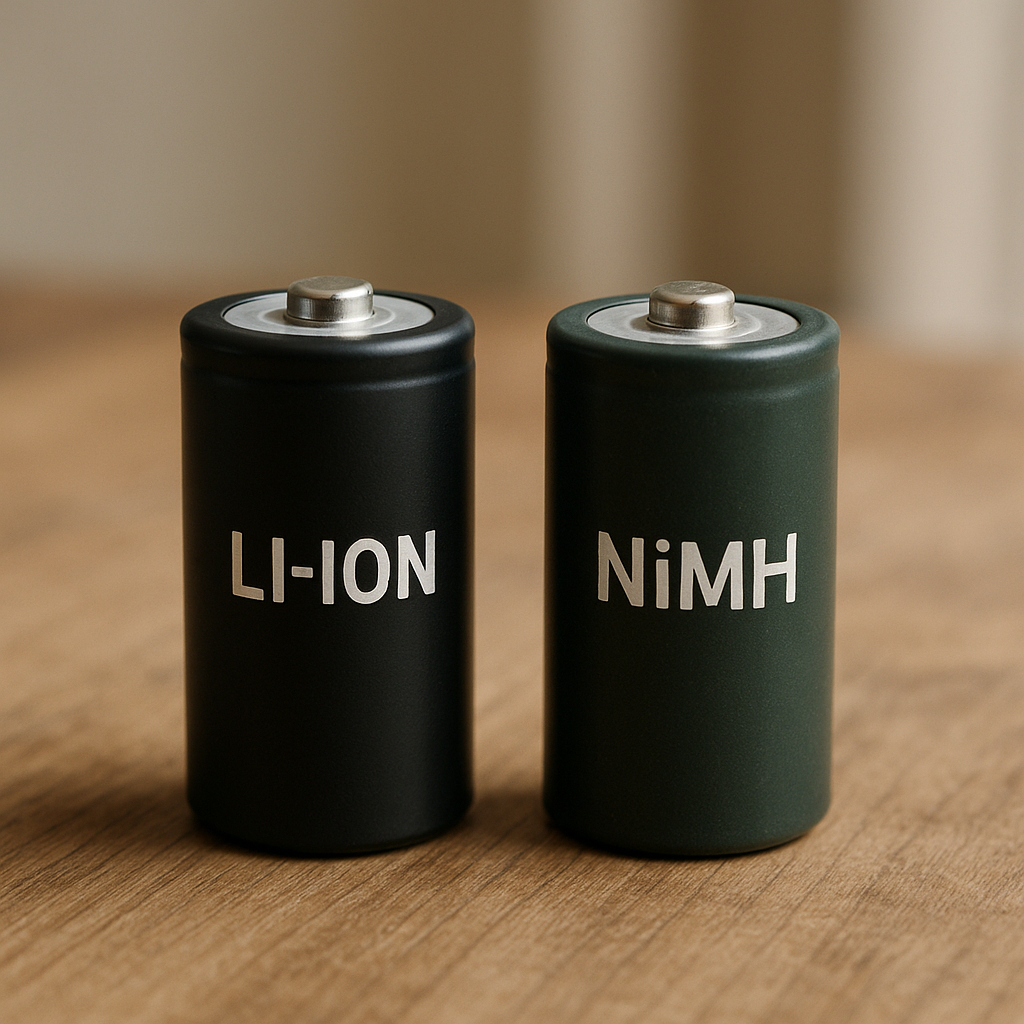
This has paved the way for the rise of Lithium-ion (Li-ion) rechargeable C batteries. Through the inclusion of a tiny internal voltage-regulating circuit, these advanced batteries deliver a constant, unwavering 1.5V throughout nearly their entire discharge cycle. For a device designed around the 1.5V alkaline standard, a Li-ion rechargeable is indistinguishable from a disposable cell in terms of voltage. It provides the exact electrical "pressure" the device expects, ensuring that digital circuits operate correctly, motors run at their intended speed, and low-voltage cutoffs are not triggered prematurely. The choice between 1.2V NiMH and 1.5V Li-ion, therefore, is not merely a matter of preference but a fundamental question of compatibility with the intended application.
The concept of "drain" refers to the rate at which a device draws current, measured in amperes (A) or milliamperes (mA). It is the electrical equivalent of the width of the pipe in our water analogy; a wider pipe allows more water to flow per second. A high-drain device is one that demands a large amount of current to function, especially in bursts. Think of a powerful LED flashlight at its brightest setting, a motorized toy, or a portable radio. A low-drain device, such as a wall clock or a simple remote control, sips current very slowly over a long period.
This distinction is central to selecting the right battery chemistry. NiMH batteries have traditionally excelled in high-drain applications. They possess a low internal resistance, which allows them to deliver large amounts of current on demand without a significant drop in their operating voltage (a phenomenon known as voltage sag). This makes them feel "punchy" and powerful in devices that need a lot of current quickly. You press the button on a high-lumen flashlight, and a NiMH battery willingly unleashes the energy needed for that brilliant beam.
Alkaline batteries, by contrast, struggle under high-drain conditions. Their internal resistance is higher, and asking them for a lot of current at once causes their voltage to sag significantly. This is why a digital camera might take one picture with flash using alkaline batteries and then immediately report that the batteries are dead. The batteries are not empty, but they cannot supply the next burst of current without their voltage dropping below the camera's operational threshold.
Lithium-ion rechargeable C batteries combine the best of both worlds. Like NiMH, they have low internal resistance and can handle high-drain demands with ease. However, their integrated circuitry ensures that the voltage does not just resist sagging but is actively held at a constant 1.5V. This provides the most stable and predictable performance in high-drain devices, ensuring that a motor receives consistent torque and a digital device receives a steady supply of power for its sensitive components.
For low-drain devices, the calculation changes. A wall clock that runs for a year on a single alkaline battery does not benefit from the high-drain capabilities of NiMH or Li-ion. Here, another factor becomes dominant: self-discharge. This is the tendency of a battery to lose charge over time even when not in use. We will explore this phenomenon in greater depth later, but it is a critical consideration that can make a high-tech rechargeable battery a poor choice for a low-tech, long-term application. The key is to diagnose the nature of your device's thirst for power and prescribe a battery that can quench it effectively.
The consequences of mismatching a battery to a device extend beyond mere inconvenience. In the realm of sensitive electronics, an unstable or incorrect voltage supply can lead to a cascade of perplexing and frustrating failures. Consider a modern digital audio recorder or a scientific sensor that uses C batteries. These devices rely on precise reference voltages for their analog-to-digital converters and processing units. A fluctuating voltage supply, as might be seen from a battery straining under a load it cannot handle, can introduce noise, inaccuracy, and errors into the device's operation. The data it records may be subtly corrupted, or its readings may drift without any apparent cause.
The issue is one of trust. We expect our tools to be reliable extensions of our will, to perform their functions predictably. When a device powered by 1.2V NiMH batteries shuts down unexpectedly, despite the batteries holding a substantial charge, this trust is broken. The user is left wondering if the device is faulty or if the batteries are of poor quality. The true culprit, the incompatibility between the battery's voltage profile and the device's expectations, remains hidden.
The advent of 1.5V Li-ion rechargeable batteries C batteries represents a philosophical shift in rechargeable power: a move from expecting the device to accommodate the battery to designing the battery to perfectly accommodate the device. By emulating the voltage characteristic of the disposable standard that shaped decades of electronic design, these batteries remove a significant variable from the equation. They provide a stable foundation upon which the complex functions of a modern device can be reliably executed.
Think of it as a conversation between the power source and the powered object. A NiMH battery speaks a slightly different dialect of the language of electricity. For simple devices, the message gets through. For complex ones, there can be misunderstandings. A 1.5V Li-ion battery speaks the lingua franca of consumer electronics, ensuring the message is always received with perfect clarity. This is why, for anything with a screen, a processor, or a need for consistent high performance, the stability offered by a regulated 1.5V output is not a luxury but a prerequisite for dependable operation. It ensures that the device can live up to its full potential, unhindered by the ambiguities of its power source.
After settling the question of voltage, the next logical inquiry in the pursuit of the ideal battery concerns its longevity. How long will it last on a single charge? This question brings us to the concept of capacity. For years, the standard metric emblazoned on the side of every rechargeable battery has been the milliampere-hour (mAh). We have been conditioned to believe that a higher mAh number invariably means a better, longer-lasting battery. While this is not entirely untrue, it is an oversimplification that can be misleading, especially when comparing batteries of different chemistries and voltages. To truly understand a battery's endurance, we must look beyond mAh and embrace a more holistic measure of its potential: the milliwatt-hour (mWh). This shift in perspective is essential for making a genuinely informed comparison between 1.2V NiMH and 1.5V Li-ion rechargeable batteries C batteries.
The milliampere-hour is a unit of electric charge. It represents the amount of current (in milliamperes) a battery can deliver over a period of time (in hours). For instance, a battery rated at 5000 mAh should, in theory, be able to supply a current of 5000 milliamperes for one hour, or 500 milliamperes for ten hours. It is a measure of the total number of electrons the battery can push through a circuit before it is depleted.
This metric works perfectly well when comparing two batteries of the same voltage. If you have two NiMH C batteries, both with a nominal voltage of 1.2V, the one with the higher mAh rating will indeed store more charge and, all else being equal, will last longer in a given device. The problem arises when we try to use mAh to compare a 1.2V NiMH battery to a 1.5V Li-ion battery. Because mAh only measures the quantity of charge (the number of electrons), it completely ignores the pressure (voltage) at which that charge is delivered. This is a critical omission. It is like comparing two water tanks based only on the number of gallons they hold, without considering that one is on the ground floor and the other is on the roof of a ten-story building. The water from the higher tank has far more potential energy.
This is where the milliwatt-hour (mWh) comes in. The milliwatt-hour is a unit of energy. It accounts for both the charge (amperage) and the pressure (voltage) at which that charge is delivered. The relationship is simple and elegant, as noted by technical resources like BatterySpace: Energy (Wh) = Charge (Ah) × Voltage (V) (BatterySpace.com, n.d.). To get milliwatt-hours, you simply use milliampere-hours and volts: Energy (mWh) = Charge (mAh) × Voltage (V).
This formula reveals why mWh is the superior metric for comparing batteries of different voltages. Let us consider a hypothetical example. We have a high-capacity NiMH C battery rated at 5000 mAh. Its total energy is 5000 mAh × 1.2 V = 6000 mWh. Now, let us look at a Li-ion C battery. Its mAh rating might be lower, say 3500 mAh. At first glance, it seems inferior. But when we account for its voltage, the picture changes dramatically: 3500 mAh × 1.5 V = 5250 mWh.
While in this specific example the NiMH battery still has more total energy, the gap is much smaller than the mAh ratings would suggest. In some cases, a Li-ion battery with a significantly lower mAh rating can have nearly the same or even more total energy than a NiMH competitor. For example, some Li-ion C batteries are marketed with their energy rating, such as 5000mWh, which is a direct and honest representation of their capability . Using mWh allows for an apples-to-apples comparison of the actual work the battery can perform. It shifts the focus from the raw quantity of charge to the useful energy delivered to your device, which is, after all, what truly matters for runtime.
To make this distinction tangible, let us consider how these batteries perform in a real device. A device does not consume charge (mAh); it consumes power (watts), which is a product of voltage and current. If a device needs 600 milliwatts (mW) of power to operate, a 1.2V NiMH battery must supply 500 mA of current (600 mW / 1.2 V = 500 mA). A 1.5V Li-ion battery, however, only needs to supply 400 mA of current to provide the same amount of power (600 mW / 1.5 V = 400 mA).
Because the Li-ion battery delivers its power at a higher voltage, it can do so with less current. This often leads to more efficient operation, as lower currents can mean less energy lost as heat within the device's circuitry and the battery itself. Furthermore, the Li-ion battery's voltage remains stable at 1.5V, while the NiMH battery's voltage will gradually decline from its starting point. This means that as the NiMH battery discharges, it must supply an ever-increasing amount of current to maintain the same power output for the device, which can accelerate its depletion.
The following table provides a structured comparison to help clarify these differences.
| Feature | NiMH Rechargeable C Battery | 1.5V Li-ion Rechargeable C Battery |
|---|---|---|
| Nominal Voltage | 1.2V | 1.5V (regulated) |
| Typical Capacity (mAh) | 4000 - 6000 mAh | 3000 - 4000 mAh |
| Typical Energy (mWh) | 4800 - 7200 mWh | 4500 - 6000 mWh |
| Voltage Profile | Starts slightly above 1.2V, holds steady, then drops sharply. | Constant 1.5V until nearly depleted, then shuts off. |
| Best Suited For | High-drain devices not sensitive to voltage (e.g., older toys, some flashlights). | High-drain and voltage-sensitive devices (e.g., digital cameras, medical devices, modern electronics). |
| Primary Metric | mAh can be used for comparison against other NiMH batteries. | mWh is the most accurate measure of total available energy. |
Ultimately, the choice depends on a synthesis of these factors. For a device that is perfectly happy with 1.2V, a high-capacity NiMH battery like those from EBL may offer the longest possible runtime due to its sheer energy density eblofficial.com. However, for a device that demands the steady pressure of 1.5V to function correctly, a Li-ion battery will deliver superior and more reliable performance, even if its mWh rating is slightly lower. The era of judging a battery by its mAh rating alone is over. A more sophisticated understanding, one that embraces the concept of total energy (mWh), is required to power our increasingly sophisticated world.
A battery is not a single purchase but an investment in a stream of future energy. To evaluate this investment properly requires looking beyond the initial price tag and the performance on the first day of use. It demands a long-term perspective, one that considers the battery's durability, its ability to hold a charge when idle, and the total economic outlay over its entire useful life. This is the domain of cycle life, self-discharge, and the total cost of ownership. Engaging with these concepts allows us to move from being mere consumers of batteries to becoming strategic managers of our personal power grids. It is in this long-term view that the true value proposition of rechargeable batteries C batteries is revealed, and where the differences between NiMH and Li-ion chemistries take on new significance.
"Cycle life" is the number of times a rechargeable battery can be charged and discharged before its capacity drops to a certain percentage of its original rating, typically 80%. A battery with a cycle life of 1000 means you can effectively "use it up" and "refill it" a thousand times before it is considered worn out. This is a powerful concept. A single set of rechargeable batteries can replace hundreds or even thousands of single-use alkaline cells. The economic implications are profound.
Let us construct a simple model. Suppose a pack of two high-quality disposable C batteries costs $6. A set of two high-capacity NiMH rechargeable C batteries with a charger might cost $40 upfront. Let's say these NiMH batteries are rated for 500 cycles. That initial $40 investment provides the equivalent energy of 500 pairs of disposable batteries. The cost of those 500 disposable pairs would be 500 × $6 = $3000. Even factoring in the small cost of electricity for charging, the savings are staggering.
Both NiMH and Li-ion technologies offer impressive cycle lives. It is common to see NiMH batteries from brands like EBL advertised with up to 1200 cycles, a testament to modern manufacturing refinements (EBL Official Site, n.d.). Similarly, many Li-ion C batteries also boast ratings in the 1000-1500 cycle range . For most users, the cycle life of either premium chemistry is so high that the battery is more likely to be lost or retired with the device it powers than to be worn out from cycling.
However, the way a battery is treated can dramatically affect its realized cycle life. Consistently draining a battery completely, exposing it to extreme temperatures, or using a low-quality charger can all reduce its lifespan. Li-ion batteries, in particular, benefit from being kept in a partial state of charge; they are less stressed when kept between 20% and 80% capacity rather than being subjected to full charge-discharge cycles. NiMH batteries, on the other hand, are more resilient to deep discharging but can suffer from a "memory effect" if they are repeatedly recharged after only being partially used, although this is much less of a problem in modern NiMH cells than in their older NiCd predecessors. The takeaway is that the advertised cycle life is a potential, a promise that can only be fulfilled through mindful use and proper care.
Perhaps the single greatest practical weakness of traditional NiMH chemistry is self-discharge. A standard NiMH battery can lose 15-30% of its charge in the first month of storage, with a continuing loss of several percent each month thereafter. This is the "leaky bucket" problem. You can fill the battery to the brim, but if you leave it on a shelf, you will return to find a significant portion of its energy has simply vanished. This makes standard NiMH batteries a poor choice for emergency equipment, like a flashlight in a car's glove box or a weather radio that sits unused for months. When you need it, it may be disappointingly weak or completely dead.
In response to this flaw, manufacturers developed Low Self-Discharge (LSD) NiMH batteries. These batteries use improved materials and manufacturing processes to dramatically slow the rate of internal leakage. An LSD NiMH battery might retain up to 85% of its charge after a full year on the shelf. This innovation made NiMH a much more viable option for intermittent-use and emergency-preparedness applications. When shopping for NiMH rechargeable batteries C batteries, it is absolutely vital to check if they are the LSD type if you plan to use them in anything other than a high-frequency-use device.
Lithium-ion batteries, by their very nature, have a much lower self-discharge rate than even the best LSD NiMH cells. A Li-ion C battery might lose only 2-5% of its charge per month. This inherent stability makes them exceptionally well-suited for devices that are used infrequently or must be ready at a moment's notice. The energy you put into them stays there, waiting patiently until it is called upon. This attribute of Li-ion chemistry is a significant advantage in terms of reliability and peace of mind. You can charge them, put them in a device, and have confidence that they will be ready to perform weeks or even months later.
The total cost of ownership (TCO) is a framework for calculating the full lifetime cost of a product, not just its initial purchase price. When we apply this to batteries, the economic case for rechargeables becomes undeniable.
Let us revisit our earlier example.
System 1: Disposable. Device: A baby swing that uses two C batteries and requires a new pair every week.
System 2: Rechargeable. Device: The same baby swing.
In this scenario, the TCO for the rechargeable system over three years is just over 7% of the cost of using disposables. The upfront investment is paid back in less than two months. This analysis does not even account for the environmental cost of manufacturing and disposing of nearly 300 alkaline batteries. While the numbers will vary based on device usage and battery prices, the fundamental principle holds: rechargeability transforms a continuous, draining expense into a single, manageable capital investment with a very high rate of return. This is a powerful application of economic reasoning to an everyday problem, demonstrating that the most sustainable choice is also, in the long run, the most frugal one.
The act of replenishing a battery's energy—the charge cycle—is as important as the discharge cycle that powers our devices. The method and quality of this process have a direct bearing on a battery's lifespan, safety, and overall convenience. In the world of rechargeable batteries C batteries, a significant divergence in charging philosophy has emerged. On one side, we have the sleek, integrated convenience of modern Li-ion cells that feature built-in USB-C ports. On the other, we have the time-tested and feature-rich ecosystem of external smart chargers, which are the standard for NiMH batteries and an option for some Li-ion cells. Choosing between these two approaches is not just a matter of picking a cable or a box; it is a decision about the kind of relationship you want to have with your power source—one of minimalist simplicity or one of detailed control.
The arrival of C batteries with integrated USB-C charging ports represents a paradigm shift in user experience. The appeal is immediate and obvious. It eliminates the need for a separate, often bulky, proprietary charging station. The USB-C standard is, as of 2026, nearly ubiquitous. The same cable and power adapter that charge your phone, laptop, and tablet can now be used to charge your C batteries amazon.com. This is the dream of a unified charging ecosystem made manifest.
This approach is ideal for travel, for decluttering, and for users who value simplicity above all else. There is no need to learn the functions of a complex external charger with multiple buttons and display modes. You simply plug the cable directly into the battery. Most of these batteries have a small LED indicator that glows red while charging and turns green or blue when full. The charging circuitry is built directly into the battery itself, managing the flow of power to the Li-ion cell within.
This integration, however, comes with trade-offs. The space inside the battery shell required for the USB port and the charging/protection circuit means less space is available for the actual energy-storing materials. This is one reason why USB-rechargeable Li-ion C batteries may have a slightly lower mWh rating than their externally charged counterparts. Furthermore, the charging speed is often fixed and may not be as fast as what a powerful external charger can provide. The simplicity that is its greatest strength is also its primary limitation: you get no information about the battery's health, its actual capacity, or the amount of energy put into it during the charge. You plug it in, and you trust the tiny internal circuit to do its job correctly.
External chargers, the standard for NiMH and many non-USB Li-ion batteries, offer a starkly different proposition. They are the command centers of a personal battery management system. A quality smart charger, such as those offered by Tenergy or EBL, does far more than simply pump electricity into a cell . It analyzes each battery individually.
These chargers offer several key functions that are impossible with integrated USB charging:
The following table contrasts the two charging philosophies:
| Aspect | Integrated USB-C Charging (Li-ion) | External Smart Charger (NiMH/Li-ion) |
|---|---|---|
| Convenience | Extremely high; uses standard cables, no extra gear required. | Lower; requires a dedicated, often bulky charger. |
| Control & Information | Minimal; typically just a "charging/full" indicator light. | High; displays voltage, current, time, and tested capacity. |
| Advanced Features | None; limited to basic charging and protection. | Capacity testing, cell conditioning, variable charge rates. |
| Charging Speed | Fixed and often moderate. | Can be user-selected for a balance of speed and battery health. |
| System Cost | Included in the price of the battery. | Separate purchase, can be a significant initial investment. |
| Ideal User | Travelers, minimalists, users seeking maximum simplicity. | Hobbyists, professionals, and anyone wanting to maximize battery life and performance. |
The choice, then, is a personal one. The integrated USB-C approach prioritizes convenience and interoperability, absorbing the complexity of charging into the battery itself. The external charger method externalizes that complexity, placing it in the hands of the user and offering in return a wealth of data and control. For those who simply want their devices to work with minimal fuss, the USB-C battery is a marvel of modern engineering. For those who derive satisfaction from maintaining their equipment at peak performance and understanding the tools they rely on, the smart charger remains an indispensable ally.
Regardless of the method, safety is a paramount concern in battery charging. Storing a large amount of energy in a small chemical package is an inherently risky process that must be managed with precision. Overcharging a battery can cause it to overheat, vent electrolyte, and in the worst cases, catch fire.
Both modern charging systems incorporate sophisticated safety features. The internal circuits of USB-C Li-ion batteries are designed to stop the flow of current once the cell reaches its target voltage, preventing overcharging. They also typically include protection against over-discharge (which can permanently damage the cell), short circuits, and excessive temperatures. These batteries are self-contained safety systems.
External smart chargers employ similar logic. They use a method called negative delta-V (-ΔV) detection to determine when a NiMH battery is full. As a NiMH cell reaches full charge, its voltage peaks and then drops very slightly; the charger detects this dip and terminates the charge. For Li-ion cells, they use a CC/CV (constant current/constant voltage) algorithm, charging at a steady current until the battery reaches its peak voltage, then holding that voltage while the current tapers off. Additionally, quality chargers include temperature sensors to halt charging if a battery gets too hot, along with timers and other redundant safety cutoffs.
The critical lesson is that one should never compromise on the quality of a charging system. Whether it is the circuit inside a USB-C battery or an external smart charger, these components are the guardians of your safety and the longevity of your batteries. Using a cheap, poorly designed charger is a false economy that puts your equipment, your property, and yourself at risk. Investing in reputable brands known for their quality control and safety engineering—brands like Energizer, Rayovac, Duracell, or specialized companies like EBL and Tenergy—is an essential part of responsibly using rechargeable power .
Our inquiry into the world of rechargeable batteries C batteries would be incomplete if it remained confined to the technical and economic realms. The choice between NiMH and Li-ion is also a choice with ethical and environmental dimensions. These objects are not born in a vacuum; they are the products of global supply chains that begin in mines and end, eventually, in a waste stream. To choose a battery responsibly is to acknowledge this entire lifecycle. It involves an awareness of the materials inside the battery's metal shell, a consideration of their environmental impact, and a commitment to handling these portable power sources with the respect their stored energy demands. This final layer of analysis elevates the decision from a simple consumer choice to an act of informed conscience.
At the heart of every battery is an electrochemical reaction. The specific materials that facilitate this reaction define the battery's character—its voltage, capacity, and temperament.
A Nickel-Metal Hydride (NiMH) battery is a study in aqueous chemistry. Its negative electrode is a hydrogen-absorbing metal alloy—a "metal hydride"—which acts like a metallic sponge for hydrogen atoms. Its positive electrode is made of nickel oxyhydroxide. The two electrodes are separated by a porous sheet soaked in an alkaline electrolyte, typically potassium hydroxide. During discharge, hydrogen moves from the metal hydride to the nickel oxyhydroxide, and electrons flow through the external circuit to power your device. The process is reversed during charging. The components are relatively stable and the chemistry is robust, which contributes to the battery's resilience to over-discharging and its general safety profile.
A Lithium-ion (Li-ion) battery operates on a different principle, known as intercalation. It has no aqueous electrolyte. Instead, it uses an organic solvent containing lithium salts. The negative electrode is typically made of graphite, and the positive electrode is a metal oxide, such as lithium cobalt oxide or lithium manganese oxide. When the battery discharges, lithium ions travel from the graphite anode through the electrolyte and embed themselves within the crystal structure of the cathode. The name "lithium-ion" is a direct description of this process: it is the movement of ions that makes the battery work. This chemistry allows for a higher cell voltage (typically 3.7V for the internal cell, which is then regulated down to 1.5V in a C-size battery) and a greater energy density by weight compared to NiMH. However, the organic electrolyte is flammable, and the chemistry is more sensitive to abuse like overcharging or physical damage, necessitating the complex protection circuits that are an integral part of every Li-ion battery.
The materials for these batteries must come from somewhere. The nickel used in NiMH batteries is mined in countries like Indonesia, the Philippines, and Russia. The "metal hydride" part often contains rare-earth elements like lanthanum, which have their own complex and sometimes environmentally taxing supply chains. While nickel itself is relatively abundant, the mining and refining processes are energy-intensive and can produce significant pollution if not managed properly.
The environmental story of lithium-ion is perhaps more widely discussed. Lithium is primarily extracted from two sources: hard-rock mining (spodumene) in places like Australia and brine evaporation ponds in the high-altitude salt flats of South America's "Lithium Triangle" (Argentina, Bolivia, and Chile). Brine extraction is particularly controversial, as it uses vast quantities of water in arid regions, potentially impacting local ecosystems and indigenous communities (Babbar-Sebens et al., 2023). Cobalt, another critical component in many Li-ion cathodes, is notoriously linked to artisanal mining in the Democratic Republic of Congo, where issues of child labor and unsafe working conditions are rampant. While manufacturers are increasingly working to secure more ethical supply chains and develop cobalt-free chemistries, the issue remains a significant ethical concern for the industry.
At the end of their life, both battery types are considered hazardous waste and must not be thrown in the trash. The heavy metals in NiMH and the reactive components in Li-ion can leach into groundwater from landfills. The good news is that robust recycling programs exist for both chemistries. Organizations like Call2Recycle offer free drop-off locations for used rechargeable batteries across the United States. When recycled, valuable materials like nickel, cobalt, and lithium can be recovered and used to make new batteries, closing the loop and reducing the need for new mining. The responsibility falls on the consumer to ensure their depleted rechargeable batteries make it into these recycling streams. Choosing rechargeable batteries over disposables is the first and most impactful step, but seeing that choice through to a responsible end-of-life disposal is the final, crucial act of environmental stewardship.
The energy stored in a C battery is significant. If released improperly, it can pose a real hazard. Adhering to safe handling practices is not just about protecting the battery's lifespan; it is about protecting yourself and your property.
For both NiMH and Li-ion batteries, a few universal rules apply:
The principles of safe power management are universal, applying to small consumer cells as well as larger, more powerful systems. For professionals and hobbyists who rely on high-performance tools, the integrity of the power source is non-negotiable. A dependable power source, like a rechargeable battery for Worx tools, is built with these same considerations of chemistry, safety, and reliability at its core.
The choice of a rechargeable C battery, therefore, is a microcosm of our broader relationship with technology. It asks us to balance convenience with control, initial cost with long-term value, and personal benefit with collective responsibility. By engaging with these questions thoughtfully, we do more than just power our devices; we participate in a more sustainable and conscious technological culture.
1. Can I use 1.2V NiMH batteries in a device that recommends 1.5V?
In many cases, yes, especially for simpler devices like toys with motors or older flashlights. However, for modern, sensitive electronics with digital displays or microprocessors, the lower voltage of a NiMH battery may trigger the device's low-battery warning prematurely or cause it to shut down, even when the battery is fully charged. For these devices, a 1.5V Lithium-ion rechargeable battery is a much more reliable choice as it mimics the voltage of a standard alkaline cell.
2. Are Lithium-ion C batteries safe?
Yes, when purchased from a reputable manufacturer and used correctly, they are very safe. Reputable brands build multiple layers of protection directly into the battery cell and its circuitry. These include safeguards against overcharging, over-discharging, short circuits, and overheating. The key is to avoid unbranded, cheap batteries and to always follow proper handling, charging, and storage procedures. Never use a battery that appears swollen, damaged, or is leaking.
3. What is better: a battery with a higher mAh or a higher mWh rating?
The milliwatt-hour (mWh) rating is a more accurate measure of a battery's total energy, especially when comparing batteries with different voltages (like a 1.2V NiMH and a 1.5V Li-ion). The milliampere-hour (mAh) rating only tells you about the charge capacity, not the energy. Always prioritize the mWh rating for the most accurate comparison of how long a battery will last. Energy (mWh) = Charge (mAh) × Voltage (V).
4. How should I store my rechargeable C batteries when not in use?
For long-term storage, it is best to store rechargeable batteries in a cool, dry place. For Li-ion batteries, the ideal state of charge for storage is around 40-50%. Storing them fully charged or fully depleted for long periods can degrade their health. For NiMH batteries, they can be stored at a full charge, but be mindful of their self-discharge rate; Low Self-Discharge (LSD) types are best for storage. Always use plastic battery cases to prevent the terminals from shorting.
5. Do I need a special charger for rechargeable batteries C batteries?
It depends on the battery type. NiMH C batteries require an external charger that is specifically designed for NiMH chemistry. Many modern Li-ion C batteries come with a built-in USB-C port, allowing you to charge them with a standard USB-C cable and power adapter. Some Li-ion C batteries do not have a USB port and require a dedicated external charger that supports Li-ion chemistry. Never attempt to charge a battery with a charger not designed for its specific chemistry.
The journey through the landscape of rechargeable batteries C batteries reveals a world of surprising complexity and profound consequence. What begins as a simple need—to power a flashlight, a toy, or a piece of medical equipment—unfolds into a series of interconnected decisions that touch upon physics, economics, and environmental ethics. We have seen that the choice is no longer a simple one of size, but a nuanced evaluation of voltage, energy capacity, longevity, and convenience.
The steady, regulated 1.5V output of modern Lithium-ion cells offers a compelling solution for the demands of sophisticated electronics, ensuring compatibility and peak performance where the 1.2V of traditional NiMH may fall short. We have learned to look beyond the simplistic metric of mAh to the more revealing truth of mWh, understanding that true endurance is a product of both charge and pressure. The long-term economic calculus speaks for itself, framing the adoption of rechargeables not as an expense, but as a high-yield investment in sustainability and frugality. The convenience of integrated USB-C charging presents a new paradigm of simplicity, while the detailed control offered by external smart chargers continues to serve the enthusiast and the professional who demand the utmost in performance and insight.
Ultimately, the selection of a battery is a statement of priorities. It reflects an understanding that our technological lives are built upon a foundation of stored energy, and the responsible management of that energy is a critical skill. By choosing the right chemistry for the task, committing to proper care and charging, and ensuring a responsible end-of-life through recycling, we elevate an everyday object into a tool for a more efficient, reliable, and sustainable future. The power is, quite literally, in our hands.
Babbar-Sebens, M., Gbewonyo, W. S., & Uddin, M. A. (2023). A review of the environmental and social impacts of lithium brine extraction in the salt flats of thelithium triangle. Science of The Total Environment, 857, 159339.
BatterySpace.com. (n.d.). Material safety data sheet. Retrieved January 21, 2026, from
EBL Official Site. (n.d.). EBL C Ni-MH rechargeable battery 1.2V 5000mAh. Retrieved January 21, 2026, from https://www.eblofficial.com/products/c-batteries-5000mah?srsltid=AfmBOooCe5_djLOSXrNmyt1qR3Q91bO6EPDTK4SsZ22XqFDVFKSYuUre
Keeppower. (n.d.). High discharge batteries. Retrieved January 21, 2026, from
Linden, D., & Reddy, T. B. (Eds.). (2011). Linden's handbook of batteries (4th ed.). McGraw-Hill Education.
Pistoia, G. (Ed.). (2010). Lithium-ion batteries: Advances and applications. Elsevier.
U.S. Environmental Protection Agency. (2024). Used household batteries. https://www.epa.gov/recycle/used-household-batteries
Yoshio, M., Brodd, R. J., & Kozawa, A. (Eds.). (2009). Lithium-ion batteries: Science and technologies. Springer.
{"one"=>"Select 2 or 3 items to compare", "other"=>"{{ count }} of 3 items selected"}