

CONTACT
Please contact us for shipping details.
This article offers a comprehensive examination of the 6 volt rechargeable battery, a foundational component in a wide array of low-voltage applications. It navigates the principal chemical compositions available in 2026, including Sealed Lead-Acid (SLA), Absorbent Glass Mat (AGM), Gel, and the increasingly prevalent Lithium-ion (Li-ion) and Lithium Iron Phosphate (LiFePO4) variants. The analysis extends to the critical performance metrics of Amp-hour (Ah) capacity, discharge rates (C-rate), and their direct implications for device runtime in contexts such as children's ride-on toys, wildlife feeders, and emergency lighting. Further inquiry addresses the physical dimensions, terminal configurations, and weight as determinants of compatibility. The discourse also explores the concepts of cycle life and Depth of Discharge (DoD), elucidating their connection to a battery's operational lifespan. Finally, the selection of appropriate charging hardware and maintenance strategies is discussed, providing a holistic framework for users to make informed purchasing and operational decisions that optimize both performance and longevity.
The selection of a 6 volt rechargeable battery is an exercise in applied chemistry, where the internal composition of the battery dictates its performance, lifespan, and suitability for a given task. To choose wisely is to look beyond the plastic casing and understand the fundamental reactions occurring within. Each chemistry presents a unique profile of strengths and weaknesses, a set of compromises between cost, energy density, durability, and maintenance requirements. The decision is not merely about finding a power source; it is about aligning the electrochemical properties of a battery with the functional demands of a device, whether it be the steady, low-current draw of a deer feeder or the high-surge demand of a child's ride-on toy.
The world of 6-volt batteries is dominated by a few key technologies. The oldest and most established is the lead-acid family, which has evolved into several distinct forms: the standard Sealed Lead-Acid (SLA), the more robust Absorbent Glass Mat (AGM), and the temperature-resilient Gel battery. These technologies, while related, are not interchangeable in all scenarios. More recently, lithium-based chemistries, particularly Lithium Iron Phosphate (LiFePO4), have entered the 6-volt space, offering a radically different value proposition centered on light weight, long cycle life, and high efficiency. Examining these four types provides a necessary foundation for any intelligent purchasing decision.
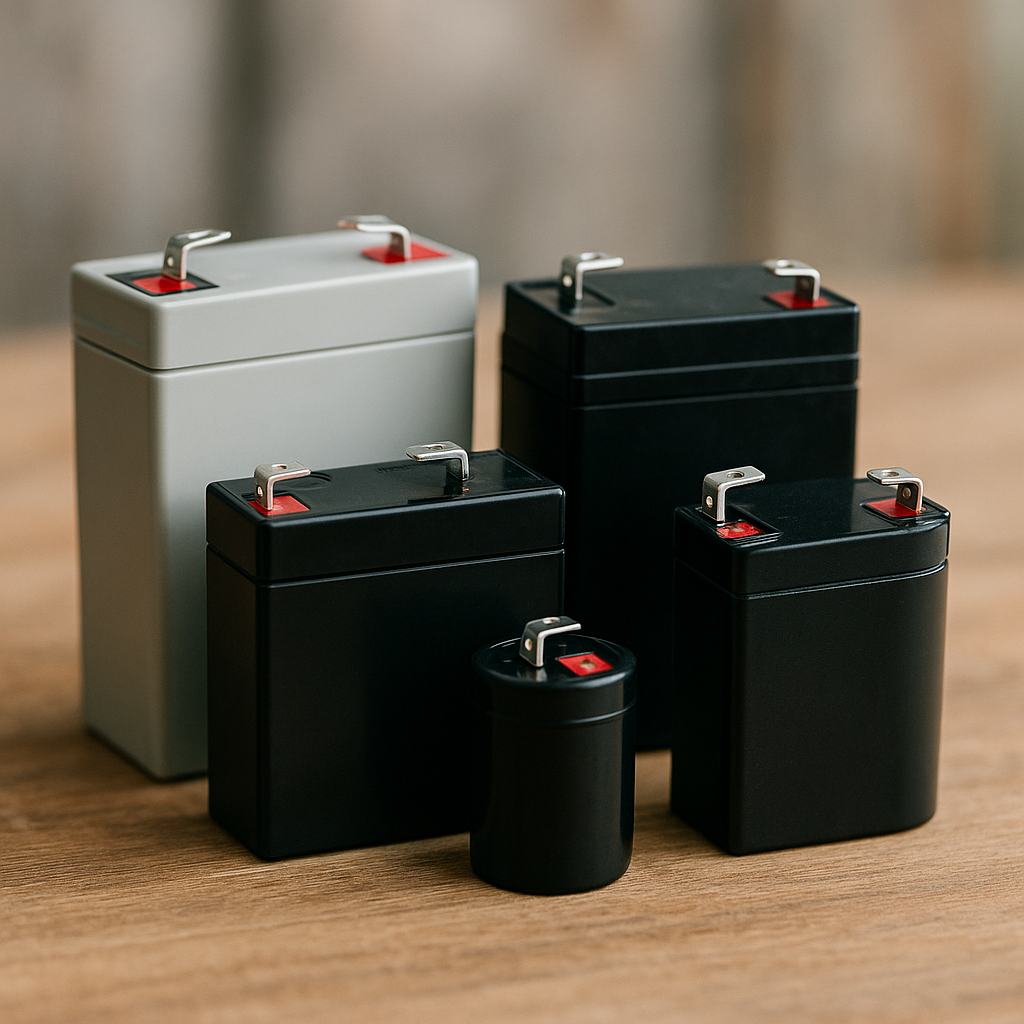
The Sealed Lead-Acid (SLA) battery is the quintessential 6 volt rechargeable battery for a vast range of applications. Its ubiquity stems from a long history of reliability and an exceptionally favorable cost-to-performance ratio. At its core, an SLA battery operates on the same lead-sulfuric acid principle that has powered vehicles for over a century, but with a critical distinction: the electrolyte, a solution of sulfuric acid and water, is immobilized. This is not a "wet" cell that can spill. Instead, the electrolyte is either absorbed into a mat or turned into a gel, and the battery is sealed with pressure relief valves that only open under fault conditions. This design makes it position-insensitive and maintenance-free, a significant practical advantage over traditional flooded lead-acid types.
SLA batteries are particularly well-suited for standby or low-drain applications. Think of emergency lighting systems that remain on float charge for years, or home alarm systems that only draw significant power during an outage. In these roles, their low self-discharge rate and cost-effectiveness make them an ideal choice. They also perform admirably in cyclical applications that do not involve extremely deep discharges, such as in some smaller ride-on toys or game feeders .
However, the SLA chemistry is not without its limitations. These batteries are comparatively heavy for the amount of energy they store, a concept known as specific energy. A typical 6V, 12Ah SLA battery can weigh around 4 pounds, which might be a non-issue in a stationary application but can be a factor in portable devices . Their performance can also degrade in very high-drain situations, where the voltage may sag under load. Furthermore, their cycle life is highly dependent on how deeply they are discharged. Consistently draining an SLA battery to below 50% of its capacity will significantly shorten its operational lifespan, a topic we will explore in greater depth later.
Within the family of sealed lead-acid batteries, Absorbent Glass Mat (AGM) technology represents a significant evolutionary step. While often marketed alongside and sometimes used interchangeably with standard SLA, AGM batteries possess a distinct internal construction that yields superior performance characteristics. The name itself describes the core innovation: the electrolyte is held captive within a micro-porous fiberglass mat, which is sandwiched tightly between the battery's lead plates. This construction is more than just a different way to hold the acid; it fundamentally changes the battery's internal resistance and its ability to handle demanding conditions.
The primary advantage of an AGM battery is its lower internal resistance compared to a standard or gel-type SLA. What does this mean in practical terms? It means the battery can deliver high bursts of current on demand with less voltage drop. This makes AGM an excellent choice for applications that require a strong initial surge of power, such as starting a small engine or powering the motor in a child's electric vehicle. The tight packing of the plates and mat also makes AGM batteries exceptionally resistant to vibration and shock, a quality that makes them a favorite in powersports and off-road vehicles.
Moreover, AGM batteries generally accept a charge faster than their gel counterparts. Their efficient charge acceptance makes them more compatible with a wider range of charging systems and better suited for applications where rapid replenishment of energy is necessary. While they share the maintenance-free and position-insensitive benefits of all sealed batteries, their robust nature often translates into a longer service life, especially in demanding cyclical use. The trade-off for these benefits is typically a higher initial cost than a standard SLA battery. The decision to invest in AGM technology hinges on whether the application's demands for high current delivery, vibration resistance, and faster charging justify the added expense. For many users, the enhanced reliability and durability provide a clear return on that investment.
| Feature | Sealed Lead-Acid (SLA) | Absorbent Glass Mat (AGM) | Gel Cell | Lithium Iron Phosphate (LiFePO4) |
|---|---|---|---|---|
| Primary Advantage | Low Cost, Widely Available | High Current Output, Vibration Resistant | Wide Temperature Range, Deep Cycle | Extremely Long Cycle Life, Lightweight |
| Best For | Standby Power, Low-Drain Devices | Ride-on Toys, High-Surge Demands | Off-Grid Solar, Extreme Temps | High-Frequency Use, Weight-Sensitive |
| Average Cycle Life | 200 - 500 Cycles | 300 - 700 Cycles | 500 - 1200 Cycles | 2000 - 5000+ Cycles |
| Weight | Heavy | Heavy | Heaviest | Very Light (approx. 50% of SLA) |
| Upfront Cost | Low | Moderate | High | Very High |
| Maintenance | None | None | None | None (BMS Required) |
| Self-Discharge | Low (~5%/month) | Low (~3%/month) | Very Low (~2%/month) | Very Low (~2%/month) |
Gel cell batteries are another variant in the sealed lead-acid category, but they take a different approach to immobilizing the electrolyte. Instead of using a glass mat, a gelling agent, typically fumed silica, is added to the sulfuric acid, transforming the liquid into a thick, viscous, pudding-like substance. This gelled electrolyte completely fills the space between the plates, creating a battery with unique properties that set it apart from both standard SLA and AGM types.
The most celebrated characteristic of a gel battery is its superior performance in deep-cycle applications and its resilience to a wide range of temperatures. The gel structure is inherently resistant to stratification, a phenomenon in liquid-electrolyte batteries where the heavier acid can settle at the bottom, leading to uneven plate usage and reduced capacity. This makes gel batteries exceptionally durable when subjected to repeated deep discharges. They can often endure more charge-discharge cycles than their AGM counterparts, especially when regularly taken to a low state of charge. This quality makes them a premium choice for serious off-grid energy storage, such as in small solar power systems or marine applications, where reliability over thousands of cycles is paramount.
However, the gel chemistry has a significant Achilles' heel: it is highly sensitive to charging voltage. Overcharging a gel battery can cause irreversible damage by creating voids or pockets in the gelled electrolyte that reduce the plate surface area in contact with the electrolyte. Consequently, they require chargers with a very specific, lower-voltage charging profile. Using a standard automotive or AGM-optimized charger can quickly destroy a gel battery. Their internal resistance is also higher than that of an AGM battery, meaning they are less capable of providing the high-crank amperage needed for engine starting. Their strengths lie in slow, steady, deep discharges, not high-surge output. The combination of high cost and charging sensitivity makes them a specialized product, best reserved for applications that can truly leverage their exceptional deep-cycle lifespan and temperature tolerance.
The arrival of lithium-based chemistries has been a transformative event in the world of rechargeable batteries, and the 6-volt format is no exception. While "lithium-ion" is a broad term encompassing many specific chemistries, the most relevant for 6-volt applications is Lithium Iron Phosphate (LiFePO4). This particular chemistry offers a compelling package of safety, longevity, and performance that directly challenges the dominance of lead-acid technologies.
The most immediate and striking difference is weight. A LiFePO4 battery can be less than half the weight of an SLA battery with the same capacity, a dramatic reduction that can revolutionize portable applications amazon.com. But the advantages go far beyond simple weight savings. The cornerstone of the LiFePO4 value proposition is its extraordinary cycle life. While a good lead-acid battery might offer a few hundred to perhaps a thousand cycles, a LiFePO4 battery can often deliver several thousand cycles, even when subjected to deep discharges of 80% or more. This means that over its lifetime, a single lithium battery could replace multiple lead-acid batteries, potentially making it more cost-effective in the long run despite a much higher initial purchase price.
LiFePO4 batteries also maintain a more stable voltage throughout their discharge curve. A lead-acid battery's voltage will steadily drop as it is used, causing a noticeable decline in device performance—think of a ride-on toy slowing down as the battery drains. A LiFePO4 battery, in contrast, will provide near-constant voltage until it is almost completely depleted, resulting in consistent performance. They also have a very low self-discharge rate and can be charged much more quickly than lead-acid batteries.
These benefits come with two primary considerations. The first is cost; LiFePO4 batteries carry a significant price premium. The second is the absolute necessity of a Battery Management System (BMS). This is an integrated electronic circuit that protects the battery from overcharging, over-discharging, over-current, and extreme temperatures. Unlike lead-acid batteries, which are relatively robust, lithium cells can be permanently damaged or become unsafe if operated outside their specific voltage and temperature windows. The BMS is not an optional accessory; it is an essential safety and longevity feature. The choice for LiFePO4 is a choice for cutting-edge performance, longevity, and light weight, with the understanding that it requires a higher upfront investment and reliance on its integrated protective electronics.
After navigating the chemical landscape of batteries, the next critical parameter to understand is capacity. Capacity is the measure of the total amount of energy a battery can store and deliver. It is the single most important factor in determining a device's runtime. Choosing a battery with insufficient capacity leads to frustration and frequent recharging, while over-specifying capacity can result in unnecessary expense and weight. The primary unit for expressing the capacity of a 6 volt rechargeable battery is the Amp-hour (Ah). A deep and intuitive grasp of what this unit represents is fundamental to making a correct selection.
Imagine the battery as a small water reservoir. The voltage (6V in this case) is analogous to the water pressure. The current, measured in Amperes (Amps), is like the rate of flow—how quickly water is leaving the reservoir. The Amp-hour (Ah) rating, then, is the total size of the reservoir. A 12Ah battery can, in theory, supply a current of 1 Amp for 12 hours, or 2 Amps for 6 hours, or 12 Amps for 1 hour. This simple relationship is the starting point for estimating runtime and matching a battery to the energy demands of a specific device.
An Amp-hour is a unit of electric charge, representing the amount of charge transferred by a steady current of one Ampere for one hour. For the end-user, it is a direct, if slightly simplified, proxy for runtime. When you see a 6V battery advertised with a 4.5Ah rating and another with a 20Ah rating, the latter holds more than four times the energy and will, all else being equal, power the same device for more than four times as long homedepot.com.
The "all else being equal" caveat is important. The usable capacity of a battery is not a perfectly fixed number; it is influenced by factors like the rate of discharge, the ambient temperature, and the age of the battery. A battery's stated Ah rating is typically determined under specific, standardized test conditions—often a slow, steady discharge over a 20-hour period. If you discharge the battery much faster, the effective capacity you get will be lower. This phenomenon, known as Peukert's Law, is particularly pronounced in lead-acid batteries. A 12Ah battery might deliver its full capacity if drained over 20 hours, but if you try to pull a very high current from it, you might only get 8 or 9 Amp-hours of usable energy before the voltage drops too low.
Despite this complexity, the Ah rating remains the most useful starting point for comparison. It allows you to make a direct, quantitative assessment of a battery's energy storage potential. When replacing a battery, the safest approach is to match the Ah rating of the original. If you desire longer runtime, selecting a battery with a higher Ah rating is a viable option, provided it physically fits in the device's battery compartment. This is a common upgrade for devices like children's ride-on toys, where doubling the Ah capacity can mean doubling the playtime.
| Application | Common Voltage | Typical Amp-Hour (Ah) Range | Recommended Chemistry | Key Considerations |
|---|---|---|---|---|
| Children's Ride-on Toys | 6V (or 12V) | 4Ah - 12Ah | AGM, LiFePO4 | High current draw on startup; benefits from AGM's low internal resistance or LiFePO4's stable voltage. |
| Wildlife/Deer Feeders | 6V | 4.5Ah - 9Ah | SLA, AGM | Long periods of low drain with intermittent motor activation. Reliability and low self-discharge are key. |
| Emergency Lighting | 6V | 4Ah - 7Ah | SLA, Gel | Standby application; must hold a charge for long periods. Low self-discharge is critical. |
| Lanterns & Flashlights | 6V | 4.5Ah - 5Ah | SLA, LiFePO4 | Weight can be a factor. LiFePO4 offers significant weight savings for portability. |
| Small Solar Systems | 6V (in series/parallel) | 12Ah - 200Ah+ | Gel, LiFePO4 | Deep cycling capability is paramount. Gel and LiFePO4 excel in this role. |
| Home Alarm Systems | 6V (or 12V) | 4Ah - 7Ah | SLA | Backup power source. Must be reliable and maintenance-free. |
The theoretical understanding of Amp-hours comes to life when applied to real-world devices. The energy needs of these devices vary dramatically, and selecting the right capacity is a balancing act.
For a child's ride-on toy, the motor creates a significant load, especially during acceleration. A battery with too low an Ah rating will not only provide a disappointingly short runtime but may also struggle to deliver the necessary current, resulting in sluggish performance. These toys are often originally equipped with batteries in the 4Ah to 12Ah range . Upgrading from a 7Ah to a 12Ah battery is a popular and effective way to extend fun, as long as the larger battery fits in the compartment. Here, an AGM battery is often preferred over a standard SLA due to its better ability to handle the motor's current surges.
A deer feeder presents a completely different usage profile. For most of the day, it draws a minuscule current to power its timer. Then, for a few seconds once or twice a day, it runs a small motor to dispense feed. For this application, total capacity (Ah) is important for determining how many weeks or months the feeder can operate between battery swaps or recharges. However, the current draw is low. A standard 6V 4.5Ah to 7Ah SLA battery is perfectly adequate and cost-effective. The key factors here are reliability and a low self-discharge rate, ensuring the battery doesn't drain itself while waiting for the next feeding cycle.
lanterns and large portable flashlights using a 6 volt rechargeable battery are a case where capacity must be balanced against weight and size. A traditional lantern might use a 4.5Ah SLA battery. This provides a reasonable runtime, but the battery itself contributes significantly to the lantern's bulk. This is where a LiFePO4 battery becomes an attractive, albeit expensive, alternative. A 6V 5Ah LiFePO4 battery could offer similar or better runtime at roughly half the weight, making the lantern much more pleasant to carry on a camping trip. The choice depends on the user's priority: the low cost of SLA versus the lightweight portability of lithium.
While Amp-hours are the most common measure of capacity for a 6 volt rechargeable battery, another unit, the Watt-hour (Wh), provides a more universal measure of total energy. Watt-hours account for both the capacity (Ah) and the voltage (V) of the battery. The calculation is straightforward, as noted in Jackery's guide on the topic (2023):
Watt-hours (Wh) = Amp-hours (Ah) × Voltage (V)
This formula is incredibly useful for comparing batteries of different voltages. For instance, how does a 6V, 20Ah battery compare to a 12V, 10Ah battery? Looking only at the Amp-hours, one might think the 6V battery has double the capacity. But calculating the Watt-hours reveals the truth:
Both batteries store the exact same amount of total energy. The 6V battery delivers that energy at a lower pressure (voltage) but with a higher potential flow rate (amperage capacity), while the 12V battery delivers it at a higher pressure but with a lower flow capacity. This concept is crucial when designing or evaluating systems, as it provides a true apples-to-apples comparison of energy content. When you see a battery capacity listed in Watt-hours, it is simply a more complete description of its energy storage potential.
The concept of C-rate adds a layer of sophistication to our understanding of battery capacity and performance. The C-rate describes how quickly a battery is discharged or charged relative to its maximum capacity. It is expressed as a multiplier of the battery's capacity.
A 1C rate means that the discharge current will deplete the entire battery in 1 hour. For a 10Ah battery, a 1C discharge rate is 10 Amps. A 2C rate would be 20 Amps, theoretically discharging the battery in 30 minutes. Conversely, a 0.1C (or C/10) rate would be 1 Amp, discharging the battery over 10 hours.
Why is this important? Because, as mentioned earlier, a battery's effective capacity is dependent on its discharge rate. Battery manufacturers use the C-rate to specify performance. A lead-acid battery's capacity might be rated at 20Ah at a C/20 rate (a 1 Amp discharge). If you discharge that same battery at a 1C rate (20 Amps), you will not get a full hour of runtime. The high current draw causes internal energy losses (mostly as heat) and voltage sag, and you might only get 12 or 13 Amp-hours of usable energy.
In contrast, lithium batteries, especially high-discharge cells like those from Keeppower, perform much better at high C-rates . A LiFePO4 battery rated at 20Ah can often deliver nearly its full capacity even at a 1C discharge rate. This is one of their key performance advantages. When you are selecting a 6 volt rechargeable battery for a high-drain application (like a powerful motor), looking at the manufacturer's specifications for capacity at different C-rates can give you a much more accurate picture of its real-world performance than the single Ah number alone. It helps you understand not just how much energy is in the tank, but how quickly you can draw it out without penalty.
In the practical world of battery replacement, theoretical knowledge of chemistry and capacity is rendered useless if the battery does not physically connect to the device. Compatibility is a matter of three-dimensional space and electrical connection. An otherwise perfect 6 volt rechargeable battery is nothing more than a paperweight if it is too large for the battery compartment or if its terminals cannot mate with the device's wires. This aspect of battery selection is often overlooked by first-time buyers, leading to frustrating returns and project delays. A methodical approach to measuring dimensions and identifying terminal types is a non-negotiable step in the purchasing process.
This is a domain where precision matters. A difference of a few millimeters can be the difference between a successful installation and a failed one. It requires a moment of due diligence: taking out a ruler or a set of calipers and comparing the old battery to the specifications of the potential replacement. Likewise, observing the small metal tabs or posts where the wires connect—the terminals—is equally vital. They come in several standardized forms, and choosing the wrong one will, at best, require an inconvenient adapter and, at worst, make connection impossible without modification.
Before you even begin to browse for a new battery, your first action should be to measure the old one. Use a ruler or calipers to get precise measurements for its length, width, and height. Write these numbers down. When you look at the specifications for a new battery, these three dimensions will be listed, often in both inches and millimeters. Your new battery must be equal to or, in some cases, slightly smaller than these dimensions to ensure it will fit into the designated compartment.
Pay close attention to height. Sometimes a battery compartment has very little overhead clearance. A replacement battery that is just a quarter of an inch (about 6mm) too tall will prevent the cover from closing, which can be a safety issue or simply an impossibility.
The Amp-hour (Ah) rating of a battery is often directly correlated with its physical size. Within a given chemistry like SLA, a battery with a higher Ah rating contains more lead plates and electrolyte and will therefore be larger and heavier. This is the practical constraint when considering a capacity upgrade. You might want to double the runtime of a ride-on toy by upgrading from a 6V 7Ah battery to a 6V 14Ah battery, but you must first confirm that the larger physical dimensions of the 14Ah battery will be accommodated by the toy's design. Some devices have standardized battery compartments that will only accept a specific size (or "form factor"), while others may have extra space that allows for a larger battery. Measure twice, purchase once.
The terminals are the electrical contact points of the battery. The wires from your device connect here to draw power. Using a battery with the wrong terminal type can be a major headache. While adapters exist for some conversions, they add another point of potential failure and resistance. It is always best to purchase a battery with the correct terminals from the start.
Here are the most common types you will encounter on a 6 volt rechargeable battery:
F1 Terminals: These are small, tab-like terminals, also known as T1 or Faston 187 terminals. They are 0.187 inches (4.75mm) wide. They are designed for quick-disconnect female spade connectors, which simply slide on. F1 terminals are very common on smaller capacity SLA batteries, such as those used in home alarm systems, emergency lights, and some electronic test equipment.
F2 Terminals: These are visually similar to F1 terminals but are wider. They are also known as T2 or Faston 250 terminals and measure 0.250 inches (6.35mm) wide. They are found on higher-capacity SLA and AGM batteries that are expected to handle more current. It is critical not to confuse F1 and F2. A female spade connector designed for an F1 terminal will be too small to fit on an F2 terminal. Conversely, an F2 connector will be loose and create a poor, high-resistance connection on an F1 terminal, which can lead to heat generation and failure.
Spring Terminals: These are common on lantern-style batteries. They consist of two coiled springs on top of the battery. The positive terminal is typically larger in diameter than the negative. Connection is made by simply pressing the bare end of a wire or a small contact plate against the spring. They are designed for low-current applications and are valued for their simplicity and ease of connection without tools. Many deer feeders and game cameras use this style of battery .
Screw Terminals (or Bolt-down Terminals): Found on very high-capacity batteries, these terminals consist of a threaded post or a lead block with a threaded hole. Connection is made using a ring terminal that is placed over the post and secured with a nut, or placed on the block and secured with a bolt. This type of connection is the most secure and provides the lowest electrical resistance, making it ideal for high-current applications like large inverters or industrial equipment.
Identifying your terminal type is usually as simple as looking at the top of your old battery. The difference between F1 and F2 is just a matter of width, easily checked with a ruler. Spring and screw terminals are visually unmistakable.
The weight of a battery is a direct consequence of its chemistry and capacity. For stationary applications like a backup power system, weight is largely irrelevant. But for any device that is meant to be moved, carried, or worn, weight becomes a primary ergonomic and practical concern.
As discussed, lead-acid batteries (SLA, AGM, Gel) are inherently heavy. A small 6V 4.5Ah SLA battery weighs around 1.6 lbs (0.7 kg), while a larger 6V 12Ah model can easily exceed 4 lbs (1.8 kg). This might not sound like much, but it can be significant in a portable lantern, a piece of medical equipment, or a child's toy that needs to be carried up and down stairs.
This is where the stark contrast with LiFePO4 technology becomes a major decision point. A 6V 12Ah LiFePO4 battery might weigh only 2 lbs (0.9 kg), offering a 50% weight reduction for the same capacity. This is a game-changing difference for applications where portability is paramount. The decision to invest in a lithium battery is often driven as much by its low weight as by its long cycle life.
Weight can also be a factor during installation. Lifting and positioning a 200Ah 6V lead-acid battery, which can weigh over 60 lbs (27 kg), into a tight compartment in an RV or boat requires careful planning and physical effort. The much lighter equivalent in lithium chemistry makes the installation process significantly easier and safer.
Let's consider two common scenarios where attention to physical detail is crucial.
Scenario 1: The Ride-On Toy Upgrade. A parent wants to extend the runtime of their child's 6V ride-on car, which came with a 6V 7Ah AGM battery with F2 terminals. They see a 6V 12Ah battery available for a reasonable price. The temptation is to simply buy the higher-capacity battery. The correct process, however, is to first measure the existing 7Ah battery and the battery compartment. Let's say the 7Ah battery is 5.9" L x 1.3" W x 3.7" H. They then check the specs for the 12Ah battery and find it is 5.9" L x 2.0" W x 3.7" H. The length and height are the same, but the width is 0.7 inches greater. They must now measure the width of the battery compartment to see if it can accommodate the extra width. If it can, the upgrade is viable. They also confirm the 12Ah battery has F2 terminals, ensuring a direct plug-and-play connection.
Scenario 2: The Vintage Lantern Restoration. An enthusiast is restoring a vintage 6V lantern that originally used a non-rechargeable battery with spring terminals. They want to convert it to use a 6 volt rechargeable battery. They find a 6V 4.5Ah SLA battery, which is a common choice for this. However, this SLA battery has F1 terminals. The purchase is made, but upon arrival, they realize the lantern's contacts will not connect to the small spade terminals. They now face a choice: return the battery and find one with spring terminals (which are less common in rechargeable SLA form), or modify the lantern. This could involve soldering wires with female spade connectors onto the lantern's contacts. A better initial step would have been to search specifically for a "6V rechargeable spring terminal battery" or plan for the necessary modification from the outset. This foresight saves time, money, and frustration.
A battery is a consumable item. From the moment it is manufactured, it begins a slow process of degradation. The central question for any user is how to maximize its useful life, getting the most value from the investment. The lifespan of a 6 volt rechargeable battery is not measured in years, but in cycles. Understanding what a "cycle" is and how your usage patterns affect the total number of cycles you can expect is the key to battery longevity.
The single most influential factor you have control over is the Depth of Discharge (DoD)—how much energy you take out of the battery before recharging it. This concept has a profound and non-linear relationship with cycle life. Along with proper charging and storage, managing the DoD is the most powerful tool you have for extending the operational life of your battery. It's the difference between replacing a battery every year versus having it serve you reliably for five years or more.
In the context of batteries, a "cycle" refers to one complete process of discharging and then fully recharging. If you use your device until the battery is 50% depleted and then recharge it back to 100%, you have completed half a cycle. If you do this again the next day, you have completed one full equivalent cycle.
Battery manufacturers provide a "cycle life" rating for their products. This number represents how many of these charge/discharge cycles the battery can endure before its capacity drops to a certain percentage of its original rating, typically 80%. A battery with an initial capacity of 10Ah is often considered to be at the end of its useful life when it can only hold an 8Ah charge.
This cycle life rating is not a single number; it's a curve. It changes dramatically based on the Depth of Discharge. A manufacturer might state that their SLA battery is rated for 250 cycles. This rating is almost always specified at a 100% DoD, meaning you completely drain the battery each time. However, if you look at the detailed datasheet, you might find that the same battery is rated for 500 cycles at a 50% DoD, and over 1,200 cycles at a 30% DoD. This reveals a critical truth: shallow discharges are far less stressful on a battery than deep ones.
Depth of Discharge is the inverse of the State of Charge (SoC). If a battery is 100% full, its SoC is 100% and its DoD is 0%. If you use half its energy, its SoC is 50% and its DoD is 50%.
The relationship between DoD and cycle life is the most important concept in battery maintenance. As demonstrated above, consistently discharging a lead-acid battery to only 50% of its capacity can more than double its total lifespan compared to running it flat every time. Why does this happen? In a lead-acid battery, deep discharging causes more significant chemical and physical changes to the lead plates. Hard, crystalline lead sulfate can form, which is difficult to convert back into active material during charging (a process called sulfation). This reduces the battery's effective capacity. Deeper discharges create more stress, accelerate this degradation, and wear the battery out faster.
For lead-acid batteries (SLA, AGM, Gel), a general rule of thumb for maximizing lifespan is to try to keep the average DoD at 50% or less. This means recharging your ride-on toy after a moderate amount of use rather than waiting for it to slow to a crawl. It means putting your deer feeder battery on a charger periodically rather than waiting for it to fail in the field.
Lithium Iron Phosphate (LiFePO4) batteries are much more resilient to deep discharge. They can regularly be discharged to 80% or even 90% DoD while still delivering thousands of cycles. This is one of their major advantages. While even a LiFePO4 battery will last longer with shallower cycles, the penalty for deep discharge is far, far lower than it is for lead-acid chemistries. This makes them ideal for applications where you need to use as much of the stored energy as possible in each cycle.
Proper charging is the other half of the longevity equation. Using the wrong charger or improper charging techniques can damage a battery even faster than improper discharging. The goal is to replenish the battery's energy efficiently without overcharging, overheating, or causing other chemical stresses.
The best tool for this job is a modern, multi-stage "smart" charger. Unlike a simple, "dumb" power supply, a smart charger communicates with the battery (by monitoring its voltage and current acceptance) and adjusts its output accordingly. A typical smart charging profile for a lead-acid battery involves three main stages:
Using a charger that is not designed for your battery's chemistry can be disastrous. A charger designed for a standard car battery (flooded lead-acid) might have too high a voltage for an AGM or Gel battery, causing them to overheat and vent. As mentioned earlier, Gel batteries are particularly sensitive and require a specific, lower-voltage profile. Always use a charger that explicitly states it is compatible with your battery's chemistry (SLA, AGM, Gel, or Lithium).
The "memory effect" is a phenomenon primarily associated with older Nickel-Cadmium (NiCd) batteries. In these batteries, if they were repeatedly discharged to the exact same level (e.g., 75%) and then recharged, the battery would "remember" this point and its voltage would drop suddenly when it reached that 75% discharge level on subsequent uses, making the remaining 25% of the capacity unusable.
It is important to understand that the memory effect does not apply to lead-acid (SLA, AGM, Gel) or Lithium-ion (including LiFePO4) batteries. In fact, for lead-acid batteries, the opposite is true: they prefer to be fully recharged as soon as possible after use. Leaving a lead-acid battery in a partially discharged state is the fastest way to cause permanent damage through sulfation.
Therefore, you should never intentionally "deep cycle" your 6 volt lead-acid battery to "erase" a supposed memory effect. This will only shorten its life. The best practice is to recharge it after each significant use, regardless of its state of charge. For lithium batteries, while they do not suffer from sulfation, it is still generally good practice to keep them charged, though they are much more tolerant of being left at a partial state of charge than their lead-acid counterparts.
When a lead-acid battery is left in a discharged state, or simply through normal aging, the soft, amorphous lead sulfate on the plates can convert into a hard, stable crystalline form. This is sulfation. These crystals do not dissolve back into the electrolyte easily during normal charging, and they act as an insulator, reducing the active surface area of the plates. The result is a loss of capacity and an increase in internal resistance. A heavily sulfated battery may seem "dead" and refuse to take a charge.
In some cases, this condition can be partially reversed through a process called desulfation or reconditioning. This involves using a special charger that applies a series of controlled high-frequency, low-current pulses to the battery. The theory is that these pulses can help to break down the hard sulfate crystals and return them to the electrolyte, thereby restoring some of the lost capacity.
Several companies manufacture chargers with a desulfation or "recondition" mode. These modes are not a magic bullet. They cannot revive a battery with a shorted cell or physically damaged plates. However, for a battery that has simply been neglected and has become sulfated, they can often be surprisingly effective. A battery that was thought to be useless might be restored to 70-80% of its original capacity. This can be a very cost-effective way to extend the life of a battery that would otherwise be discarded. It is a tool worth considering, especially for more expensive, high-capacity batteries.
The battery is only one half of the power equation. The charger is its life-support system. The interaction between the battery and the charger is a delicate dance of voltage and current that determines not only how quickly the battery is replenished but also how long it will ultimately last. Selecting an appropriate charger is just as important as selecting the battery itself. Furthermore, in many modern applications, a 6 volt rechargeable battery is not an isolated component but part of a larger power system that might include converters, inverters, or other power sources. Understanding how the battery integrates into this system is the final piece of the puzzle for ensuring reliable and efficient operation.
A mismatched charger can, at best, fail to fully charge your battery, and at worst, permanently damage it. The rise of "smart" electronics has been a boon for battery health, moving us from simple, constant-voltage power supplies to sophisticated multi-stage devices that cater to the specific needs of different battery chemistries. This section explores how to select the right charger and think about the battery as a component in a broader system.
The most fundamental rule of battery charging is that the charger's algorithm must match the battery's chemistry. As we have seen, SLA, AGM, Gel, and LiFePO4 batteries all have different ideal charging voltages and behaviors.
SLA/AGM Chargers: These are the most common. They typically use a three-stage profile (Bulk, Absorption, Float). A good quality charger will have temperature compensation, meaning it adjusts its charging voltage slightly based on the ambient temperature. This is important because a lead-acid battery's acceptance of charge changes with temperature.
Gel Chargers: These require a lower peak charging voltage than SLA or AGM batteries. Using an AGM charger on a Gel battery will almost certainly cause permanent damage by drying out the electrolyte. You must use a charger that has a specific "Gel" setting or is designed exclusively for gel chemistry.
Lithium (LiFePO4) Chargers: These use a different charging algorithm, typically called CC/CV (Constant Current/Constant Voltage). The charger provides a constant current until the battery reaches its peak voltage, then holds that voltage constant while the current tapers off. Crucially, LiFePO4 chargers do not have a "float" or "trickle" charge stage. Once a lithium battery is full, the charger should shut off completely. Attempting to float charge a lithium battery can damage it. The battery's own internal BMS provides the primary protection, but the charger must operate correctly as well.
Using a 12V charger on a 6V battery is extremely dangerous and should never be attempted. It will cause a massive over-voltage condition, leading to rapid overheating, gas venting, and a high risk of fire or explosion. Always match the charger's nominal voltage to the battery's nominal voltage.
The term "smart charger" has become ubiquitous, but what does it actually mean? It refers to a charger with a microprocessor that actively monitors the battery's state and adjusts the charging process in real-time. This is in contrast to old "taper" chargers or simple power adapters, which provided a relatively constant voltage and allowed the current to diminish as the battery filled up. This older method was inefficient and carried a high risk of overcharging.
The multi-stage charging process (Bulk, Absorption, Float) used by modern smart chargers is designed to return energy to the battery as quickly and safely as possible. The float stage is particularly valuable for standby applications. If you have a 6 volt rechargeable battery in an emergency lighting system, you can leave it connected to a smart charger indefinitely. The charger will keep it perfectly topped off and ready for an outage without the risk of damage from continuous overcharging.
Many advanced chargers, like those offered by Tenergy or other specialty brands, can handle multiple chemistries and voltages . They will have buttons or switches to select "6V" or "12V" and "SLA," "Gel," or "Lithium." This versatility can be a great investment if you work with a variety of different batteries.
In many scenarios, a 6V battery is part of a system that does more than just power a single 6V device. For example, you might use a large 6V battery bank as part of a small off-grid cabin system. To power standard household items, you would need an inverter, which is a device that converts the 6V DC power from the battery into 120V AC power.
Conversely, you might want to use a battery from a different system to power a 6V device. This is where a converter comes in. A DC-to-DC converter can take power from a 12V or 24V source (like a car battery) and "step it down" to a regulated 6V output to safely power your 6V equipment.
This systems-level thinking highlights the flexibility of DC power. While a 6 volt rechargeable battery is designed for a specific voltage, it can be integrated into a multi-voltage system with the right power electronics. This is common in the world of DIY electronics, RVs, and custom vehicle builds.
The concept of a dedicated power ecosystem is well-established in the professional trades. A carpenter, for instance, doesn't just buy a drill; they invest in a platform, like DeWalt's 20V MAX or Milwaukee's M18. All the tools in that platform use the same interchangeable batteries and chargers. This level of integration provides enormous convenience and efficiency.
While the 6V battery world is generally more universal, with standardized sizes and terminals, it's useful to contrast it with these dedicated systems. For example, the ecosystem for high-performance power tools often involves very specific battery and charger pairings. A robust system built around something like replacement batteries for Makita's 14.4V platform demonstrates this principle. These batteries are designed for extremely high discharge rates and rapid charging, and their proprietary connectors and communication with the charger are optimized for that specific task.
This comparison serves to illuminate the design philosophy of the 6V standard. It is built for universality and compatibility across many different manufacturers and low-voltage devices, from toys to feeders to alarms. The trade-off for this universality is that it may not be as highly optimized for a single, high-performance task as a dedicated, proprietary system. When choosing your 6V battery and charger, you are participating in this open ecosystem, which offers tremendous flexibility but also places the responsibility on you to ensure the components you select are compatible and appropriate for your application.
Can I use a 12V charger on a 6V battery? No, you must never use a 12V charger on a 6V battery. This will create a severe over-voltage condition that will rapidly overheat the battery, causing it to vent dangerous gases and potentially leading to a fire or explosion. Always match the charger's nominal voltage to the battery's nominal voltage.
How long does a 6 volt rechargeable battery last? The lifespan is measured in "cycles" (a discharge and recharge), not years. A typical lead-acid battery might last 200-500 cycles, while a LiFePO4 battery can last 2,000-5,000+ cycles. The actual calendar life depends on usage, depth of discharge, and storage conditions, but can range from 2-3 years for a heavily used lead-acid battery to over 10 years for a well-maintained lithium battery.
What does "SLA" mean on a battery? SLA stands for Sealed Lead-Acid. It's a general term for a maintenance-free lead-acid battery where the electrolyte is immobilized (either in a glass mat like AGM or as a gel) and the case is sealed to prevent spills. They are position-insensitive and do not require adding water.
Can I replace a 6V 4.5Ah battery with a 6V 12Ah battery? Yes, you can, provided the larger 12Ah battery physically fits in the device's battery compartment. The voltage (6V) is the same, so it is electrically compatible. The higher Amp-hour (Ah) rating means the battery has more capacity and will provide a significantly longer runtime for your device.
How do I know when my 6V battery is fully charged? The best way is to use a smart charger, which will automatically switch to a "float" or "full" indicator light when the charging process is complete. If you are using a voltmeter, a fully charged 6V lead-acid battery will typically read between 6.4V and 6.9V (when resting, not on the charger). A reading below 6.0V indicates it is significantly discharged.
Are 6V lithium batteries better than lead-acid? In terms of performance, yes. Lithium Iron Phosphate (LiFePO4) batteries are significantly lighter, offer a much longer cycle life (10x in some cases), maintain a more stable voltage, and can be charged faster. However, they have a much higher upfront cost. The "better" choice depends on your budget and application needs.
What are 6V rechargeable batteries used for? They are used in a huge variety of low-voltage DC applications, including children's ride-on toys, deer and wildlife feeders, emergency lighting, home security systems, portable lanterns, small solar power systems, and various types of medical and scientific equipment.
The journey through the world of the 6 volt rechargeable battery reveals a landscape rich with chemical diversity and technical nuance. The selection process, far from being a simple matter of matching a part number, is an exercise in aligning the fundamental properties of a power source with the demands of a specific application. It requires a thoughtful consideration of chemistry, from the cost-effective reliability of Sealed Lead-Acid to the lightweight longevity of Lithium Iron Phosphate. It demands a practical understanding of capacity, where Amp-hours translate directly into runtime and user satisfaction.
Success is also found in the details: the precise measurement of physical dimensions, the correct identification of a terminal type, and the acknowledgment that a battery's true lifespan is written not in calendar years but in the cycles of its use, profoundly influenced by the depth of its discharge. Finally, the battery does not exist in isolation. Its health and performance are inextricably linked to the charger that replenishes it and the system in which it operates. By embracing these interconnected factors, the user moves from being a mere consumer to an informed custodian of their devices, capable of making choices that enhance performance, extend longevity, and ultimately deliver greater value and reliability.
Buchmann, I. (n.d.). How to charge and when to charge? Battery University.
Jackery. (2023, August 12). Battery charge time calculator: How to calculate battery charging time. https://www.jackery.com/blogs/knowledge/how-to-calculate-battery-charging-time
Keeppower. (n.d.). High discharge cells.
Mighty Max Battery. (n.d.). 6 Volt 200 Ah rechargeable sealed lead acid (SLA) battery. The Home Depot. https://www.homedepot.com/p/MIGHTY-MAX-BATTERY-6-Volt-200-Ah-Rechargeable-Sealed-Lead-Acid-SLA-Battery-ML200-6/309322137
Pilon, L., Wang, H., & d'Arci, C. (2011). Charging and discharging of a sealed lead-acid battery. Journal of Power Sources, 196(15), 6432–6442.
PulseTech Products Corporation. (n.d.). Battery chargers.
Schumacher Electric. (n.d.). Charge 'n ride 6V rechargeable battery for ride-on toys.
Tenergy. (n.d.). Tenergy products. Tenergy Power.
Vetter, J., Novák, P., Wagner, M. R., Veit, C., Möller, K. C., Besenhard, J. O., Winter, M., Wohlfahrt-Mehrens, M., Vogler, C., & Hammouche, A. (2005). Ageing mechanisms in lithium-ion batteries. Journal of Power Sources, 147(1-2), 269–281.
Wildgame Innovations. (n.d.). 6V spring style rechargeable battery.
{"one"=>"Select 2 or 3 items to compare", "other"=>"{{ count }} of 3 items selected"}