

CONTACT
Please contact us for shipping details.
The operational reliability of professional video equipment, such as the JVC GY-HM700 series camcorder, is contingent upon the performance of its power source. Selecting an appropriate battery extends beyond simple compatibility, involving a nuanced understanding of capacity, chemical composition, integrated features, and long-term lifecycle management. An incorrect choice can lead to unforeseen downtime, lost footage, and professional repercussions. This analysis examines the multifaceted considerations for choosing a replacement JVC camcorder 700 series battery in the contemporary 2026 media production landscape. It deconstructs the technical specifications, including Watt-hours (Wh) and internal cell composition, while evaluating the practical implications of features like D-Tap outputs and intelligent battery management systems (BMS). The objective is to provide a comprehensive framework that empowers videographers to make informed decisions, ensuring sustained power, protecting their equipment, and securing the integrity of their work against the risk of power failure.
The journey to securing a reliable power source for your professional equipment begins with a foundational step that is often tragically overlooked: confirming absolute, unequivocal compatibility. In the world of video production, where every second counts, a moment of power loss is a moment of creative and financial loss. Many users, in their haste, might search for a "JVC 700 series battery" and assume any result will suffice. This assumption is a perilous one. The term "700 series" has been used by JVC across vastly different product lines over the years, from consumer MiniDV camcorders to the professional ProHD shoulder-mount cameras we are focused on. The needs, and therefore the batteries, for these devices are worlds apart.
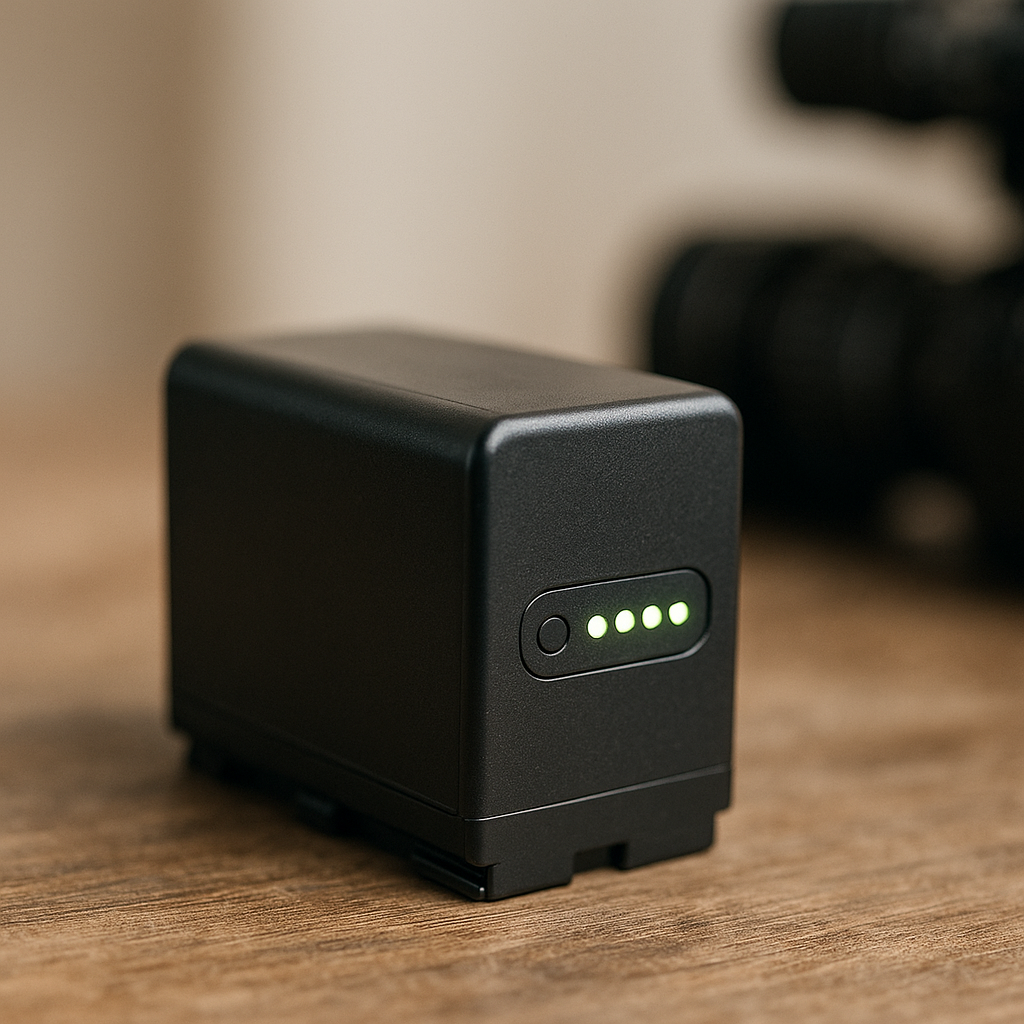
Let us consider the source of this confusion. A quick search might reveal batteries for models like the JVC GR-DV700 or the JVC VX700 . These are typically small, low-voltage, proprietary-mount batteries designed for handheld consumer cameras from a different era. For instance, a replacement for a JVC VX700 might be a mere 3.7-volt, 1200mAh battery, as seen on some retail sites . To put that in perspective, attempting to power a professional JVC GY-HM700 series camera with such a battery would be like trying to start a freight train with the battery from a wristwatch. It is not merely a matter of insufficient power; the physical connection, voltage, and communication protocols are entirely different.
The professional JVC GY-HM700, GY-HM750, and GY-HM790 are robust, shoulder-mounted cameras designed for broadcast, event, and field production. They require substantial, high-capacity batteries that utilize industry-standard mounting systems. Confusing these with consumer-grade "700 series" models like the GR-D750 or GR-D790, which might use a much smaller 7.4V battery pack amazon.com, is a recipe for purchasing a useless piece of plastic. The first rule, therefore, is to ignore the generic series number and focus on the precise model number of your camera: GY-HM700.
Professional cameras like the JVC GY-HM700 series do not use the small, clip-in batteries of their consumer cousins. Instead, they rely on larger, more robust power systems that attach to the rear of the camera body. These systems are standardized to allow for interoperability between different camera and battery brands. The two dominant standards you will encounter are the V-Mount (or V-Lock) and the Anton/Bauer Gold Mount.
Your primary task is to identify the battery plate on the back of your camera. For a stock JVC GY-HM700, it will be a V-Mount. Your search should therefore be for a "V-Mount battery," which is a far more precise and useful term than "JVC camcorder 700 series battery."
Beyond the physical mount, the electrical interface is paramount. The professional V-Mount standard operates on a nominal voltage of 14.4V (though the actual operational range is typically between 12V and 16.8V). This is the voltage your camera's internal systems are designed to accept. Using a battery with an incorrect voltage rating, even if it could somehow be physically connected, would risk catastrophic damage to your camera's sensitive electronics.
Furthermore, many modern professional batteries and cameras engage in a digital "handshake." The battery communicates its remaining capacity, estimated runtime, and health status to the camera, which then displays this information in the viewfinder or on an LCD screen. While most V-Mount batteries offer some level of this communication, the accuracy can vary. High-quality replacement batteries are engineered to speak the same digital language as the camera, providing a reliable "fuel gauge." Cheaper alternatives may only provide a rudimentary voltage reading, which is a far less accurate way to judge remaining runtime, leaving you vulnerable to sudden shutdowns.
Once you have confidently established the correct physical mount (V-Mount) and voltage (14.4V), the next deliberation concerns capacity. This is not a simple case of "more is always better." Battery capacity is a careful balancing act between runtime, weight, size, and cost. To make an informed choice, you must first develop an honest understanding of your own production workflow. Are you a documentary filmmaker on a 12-hour shoot in the wilderness, or a studio operator with access to AC power? The answer radically changes your power requirements.
To navigate battery specifications, one must become conversant in the fundamental units of electrical power. Think of it as learning a new language.
Many older or consumer-grade batteries list their capacity in milliamp-hours (mAh). While useful, this figure is meaningless without knowing the voltage. A 10,000mAh battery at 7.4V holds far less energy than a 10,000mAh battery at 14.4V. The Watt-hour (Wh) rating is the universal translator; it combines both voltage and amp-hours into a single, comparable number (Jackery, 2023). The formula is: Watt-hours (Wh) = Amp-hours (Ah) × Voltage (V). This is why a professional JVC camcorder 700 series battery will always be rated in Wh.
With an understanding of Watt-hours, you can perform a simple calculation to estimate your runtime.
Estimated Runtime (in hours) = Battery Capacity (Wh) / Total Power Draw (W)
First, determine your total power draw. The camera body is your baseline (let's use 28W for the GY-HM700). Now, you must add the power consumption of any accessories you plan to use. An on-camera LED light might draw 15W, a wireless audio receiver 5W, and an external monitor 10W.
Total Power Draw = 28W (camera) + 15W (light) + 5W (receiver) + 10W (monitor) = 58W
Now, let's see how different batteries would perform:
This calculation is a crucial mental exercise. It moves the decision from abstract numbers to concrete, practical outcomes relevant to your shooting day.
The choice is not as simple as buying the largest battery you can afford. Higher capacity comes with direct trade-offs in size, weight, and sometimes, air travel regulations. A heavy battery can turn a well-balanced shoulder-mount camera into a fatiguing, back-heavy instrument over a long day.
| Battery Capacity Tier | Typical Wh Range | Typical Weight | Estimated Runtime (58W Load) | Best Use Case |
|---|---|---|---|---|
| Compact / Travel | 90-99 Wh | 1.2 - 1.7 lbs (0.5 - 0.8 kg) | ~1.7 hours | Run-and-gun, gimbal/stabilizer work, air travel (typically carry-on compliant) |
| Standard / Workhorse | 130-160 Wh | 1.8 - 2.5 lbs (0.8 - 1.1 kg) | ~2.5 hours | General field production, interviews, corporate video |
| High-Capacity / Studio | 190-290 Wh | 2.6 - 4.0 lbs (1.2 - 1.8 kg) | 3.3+ hours | Long-form interviews, event coverage, studio use, powering multiple accessories |
As the table illustrates, the ideal JVC camcorder 700 series battery for you depends entirely on your application. A news ENG (Electronic News Gathering) operator might prefer two smaller 98Wh batteries for their light weight and travel compliance, while a documentarian filming a long interview might opt for a single 190Wh battery to avoid interrupting the subject with a battery swap.
The rise of sophisticated camera rigs has made accessory power a major consideration. Modern workflows often involve more than just a camera. External monitors, wireless video transmitters, follow focus systems, and powerful LED lights all need electricity. While some can be powered by their own small batteries, this creates a clumsy tangle of different power sources to manage and charge.
A far more elegant solution is to power these accessories directly from your main camera battery. This is where features like D-Tap and USB outputs, which we will discuss later, become so valuable. When planning your capacity needs, you must be rigorous in accounting for every device that will draw power from your V-Mount battery. Underestimating your load is the fastest path to a shorter-than-expected runtime.
Having addressed the external factors of compatibility and capacity, we must now turn our attention inward, to the very heart of the battery: its chemical composition and internal construction. The technology inside a battery dictates its performance, longevity, and safety far more than its plastic casing might suggest. For modern professional video applications, one chemistry reigns supreme.
In the landscape of rechargeable batteries, Lithium-ion (Li-ion) is the undisputed leader. Its ascent has been so total that older technologies like Nickel-Cadmium (NiCd) and Nickel-Metal Hydride (NiMH) are now largely relegated to legacy equipment or niche applications. The reasons for Li-ion's dominance are compelling and directly relevant to the needs of a videographer (Bishop, 2023).
When you are searching for a new JVC camcorder 700 series battery in 2026, you should exclusively consider Li-ion options. Any V-Mount battery still using NiMH or NiCd chemistry is based on obsolete technology and represents a poor investment.
A large V-Mount battery is not one single, massive cell. It is an array of smaller, cylindrical cells connected in series and parallel to achieve the desired voltage and capacity. For many years, the standard cell size used was the "18650" (so named for its dimensions: 18mm in diameter, 65mm long). These are the same type of cells used in everything from laptops to electric vehicles.
However, a newer, slightly larger cell is becoming more common: the "21700" (21mm in diameter, 70mm long). This larger form factor allows for a higher energy capacity per cell. For example, a high-quality 18650 cell might hold around 3500mAh, while a modern 21700 cell can exceed 5000mAh .
What does this mean for you, the end user? A battery pack built with high-quality 21700 cells can achieve a higher total Watt-hour rating in a smaller or lighter package than one using 18650 cells. Or, for the same size, it can offer greater capacity and runtime. While you may not see the cell type advertised on the battery's exterior, manufacturers using premium cells like the Samsung INR21700-50S or LG INR21700M58T often highlight this as a mark of quality, as it speaks to the performance and modernity of the battery's internal design. The principles of using quality cells and sophisticated management systems apply across many devices, from cameras to home automation. For instance, even a well-designed replacement power source for robotic vacuums relies on these same core concepts for reliability and longevity.
A Li-ion battery is not just a collection of cells. It contains a crucial piece of electronics called the Battery Management System, or BMS. The BMS is the battery's brain, a silent guardian that ensures both safety and longevity. Li-ion cells are powerful but can be vulnerable if not managed correctly. The BMS continuously monitors the battery pack and provides several layers of protection:
A sophisticated BMS is the primary differentiator between a high-quality replacement battery and a cheap, potentially dangerous knock-off. A premium JVC camcorder 700 series battery will have a robust, multi-faceted BMS that not only protects the battery but also communicates effectively with the camera.
In the professional realm, a battery is more than just a power reservoir; it is an integral part of the camera rig and workflow. The difference between a basic power brick and a true professional tool lies in the auxiliary features that enhance usability, versatility, and safety on set. When investing in a new JVC camcorder 700 series battery, a critical evaluation of these features can significantly impact your day-to-day efficiency.
We touched on this earlier, but its importance cannot be overstated. The ability of a battery to accurately report its remaining capacity to the camera is a cornerstone of professional confidence. A basic battery might only report voltage, which is a notoriously unreliable indicator of remaining charge for Li-ion chemistry. The voltage of a Li-ion battery stays relatively flat for most of its discharge cycle, then drops off very steeply at the end (Jackery, 2023). Relying on voltage alone means you might see a "full" reading for two hours, only to have the camera die with little warning.
An "intelligent" or "smart" battery, by contrast, uses its BMS to track the energy flowing in and out. It provides the camera with a precise percentage and an estimated remaining runtime in minutes. This allows the operator to make strategic decisions: "I have 22 minutes left. That's enough to get this next take, then I'll swap batteries." This level of predictability is non-negotiable in a professional environment. Look for batteries that explicitly state they are compatible with the JVC camera data system or offer SMBus communication for accurate fuel gauging.
Perhaps the most useful physical feature on a modern V-Mount battery is the inclusion of auxiliary power outputs. The most common of these is the D-Tap (or P-Tap) port. This is a simple, two-pin DC power connector that provides the unregulated voltage of the battery (typically 12V-16.8V).
The utility of a D-Tap port is immense. It transforms your camera battery into a central power hub for your entire rig. With the right cables, you can power:
Powering everything from one source simplifies your rig, eliminates the need to manage multiple small batteries, and reduces points of failure. Many modern batteries offer two or more D-Tap ports. Some even offer regulated outputs, such as a 12V or 8V DC barrel connector, for specific accessories.
Increasingly, USB ports (both Type-A and Type-C) are also being integrated. A USB-A port is perfect for charging a smartphone or powering a small accessory, while a powerful USB-C port with Power Delivery (PD) can even charge a tablet or a small laptop in a pinch.
| Feature | Description | Primary Benefit |
|---|---|---|
| Intelligent Fuel Gauge | Communicates precise percentage and runtime to the camera. | Prevents unexpected shutdowns; allows for strategic battery swaps. |
| D-Tap Output(s) | Provides unregulated DC power for professional accessories. | Powers an entire camera rig from a single source, simplifying setup. |
| USB-A/USB-C Output | Provides 5V (USB-A) or variable voltage (USB-C PD) power. | Conveniently charges personal devices or powers smaller accessories on set. |
| LED Status Indicator | A multi-stage LED gauge on the battery itself. | Allows for a quick capacity check without mounting the battery on the camera. |
Professional equipment gets used, and sometimes, it gets abused. It is dropped, bumped, and exposed to heat, cold, and moisture. A battery's external construction is its first line of defense. A high-quality JVC camcorder 700 series battery will feature a robust, impact-resistant polycarbonate casing. The seams will be tight, and the overall feel will be solid, not hollow or creaky.
Pay attention to the V-Mount mechanism itself. On a cheaper battery, this plastic wedge can wear down or crack, leading to a loose, wobbly connection or a complete failure to mount. A premium battery will have a reinforced mounting plate designed for thousands of cycles of mounting and dismounting. Inside, the cells should be held in a secure cradle that isolates them from shock and vibration. This internal reinforcement is an invisible but vital feature that protects the delicate cell connections from the rigors of field production.
Finally, look for evidence of safety certifications. Reputable battery manufacturers submit their products for testing by independent bodies to ensure they meet international safety standards. Common certifications include:
These certifications are not just bureaucratic stamps. They are your assurance that the battery has been properly designed and tested to be safe under a wide range of conditions. Given the immense energy stored in a professional camera battery, investing in a certified product is a fundamental aspect of risk management for yourself, your equipment, and your clients. The use of certified, well-managed power systems is a mark of professionalism, whether for a camera rig or for other advanced tools, where a dependable lithium-ion power unit is equally important for consistent performance.
Purchasing the right JVC camcorder 700 series battery is the beginning of the relationship, not the end. Like any high-performance tool, a professional camera battery requires proper care and management to deliver its full potential over its operational lifespan. Thinking about the battery's entire lifecycle, from its first charge to its eventual retirement, is the final piece of the puzzle in ensuring you are never left without power.
All rechargeable batteries are consumable products; they degrade over time and with use. The lifespan of a Li-ion battery is typically measured in "charge cycles." A full charge cycle is defined as charging the battery from 0% to 100% and then discharging it back to 0%. Two half-cycles (charging from 50% to 100% twice) also equal one full cycle.
A high-quality Li-ion battery pack is generally rated for 300 to 500 full charge cycles before its capacity drops to a certain threshold, usually 80% of its original, as-new capacity. This means that after a few years of regular professional use, your 150Wh battery will effectively behave like a 120Wh battery. This degradation is a natural process of chemical change within the cells. While it cannot be stopped, its rate can be significantly influenced by how you treat the battery.
How you charge and store your batteries has a direct impact on their longevity. Li-ion cells are most stressed when they are at the extremes of their charge state—either fully charged to 100% or fully depleted to 0%.
Charging Best Practices:
Storage Best Practices:
Implementing these simple habits can meaningfully extend the useful life of your investment, pushing back the date when you will need to purchase a replacement.
Even with the best care, all batteries will eventually need to be replaced. It is vital to recognize the signs of a failing battery before it fails you on a critical shoot.
Treat these signs seriously. Continuing to use a compromised battery is not thrifty; it is a significant risk to your camera, your project, and your safety.
There will always be a temptation to save money by purchasing the cheapest available battery. However, this is often a false economy. A low-cost, uncertified battery from an unknown brand may use lower-grade cells, a rudimentary BMS, and a flimsy casing.
Consider the total cost of ownership. The cheaper battery might have a shorter lifespan, requiring replacement sooner. It might provide less accurate fuel gauging, leading to a lost shot that costs more in reshoots than the battery ever did. In the worst-case scenario, it could fail catastrophically, damaging a multi-thousand-dollar camera.
A premium JVC camcorder 700 series battery from a reputable manufacturer is an investment in reliability and peace of mind. It is built with better components, undergoes more rigorous testing, and is backed by a meaningful warranty. Over the course of its longer and more dependable service life, the higher initial purchase price is often justified by the value it protects and the failures it prevents.
Can I use a third-party battery with my JVC GY-HM700?
Yes, absolutely. The JVC GY-HM700 series uses the industry-standard V-Mount system, which was designed to foster an open ecosystem. Many reputable third-party manufacturers produce high-quality V-Mount batteries that are fully compatible and often offer competitive features and pricing compared to OEM (Original Equipment Manufacturer) options. The key is to choose a trusted brand that specializes in professional power solutions.
What does "Wh" mean on a battery, and why is it important?
"Wh" stands for Watt-hour. It is the most accurate measure of a battery's total energy capacity. It tells you how much power the battery can deliver over time. For example, a 150Wh battery can theoretically supply 150 watts for one hour, or 75 watts for two hours. It is more useful than the Amp-hour (Ah) rating alone because it accounts for the battery's voltage, providing a universal standard for comparing the runtimes of different batteries.
How long does a typical JVC camcorder 700 series battery last?
The lifespan has two meanings: runtime on a single charge and overall operational life. Runtime depends on the battery's Wh capacity and your camera's total power draw (including accessories). A 98Wh battery might run the camera for over 3 hours, but only 1.5 hours with a light and monitor. The overall life is measured in charge cycles, typically 300-500 cycles before the capacity drops to about 80% of its original state. For a professional using the camera several times a week, this translates to roughly 2-4 years of service life.
Is it safe to fly with these high-capacity batteries?
There are strict regulations. As of early 2026, the FAA rule is that Li-ion batteries installed in a device can be in checked baggage, but spare (uninstalled) batteries must be in your carry-on luggage. Spare batteries between 101Wh and 160Wh are limited to two per person, with airline approval required. Batteries over 160Wh are generally forbidden on passenger aircraft. Always check the latest FAA and airline regulations before you travel.
How do I properly dispose of an old camcorder battery?
You must not throw Li-ion batteries in the regular trash. They contain materials that can be harmful to the environment and can pose a fire risk in sanitation trucks and landfills. They must be recycled. Most electronics stores, home improvement stores, and local municipal waste facilities have designated battery recycling drop-off points. Look for collection bins from organizations like Call2Recycle.
What's the difference between a replacement battery and an OEM one?
An OEM (Original Equipment Manufacturer) battery is made by the camera company itself (in this case, JVC). A replacement battery is made by a third-party company. In the past, OEM was often seen as the only safe choice, but today many third-party specialists produce batteries that meet or exceed OEM specifications in terms of capacity, features (like extra D-Tap ports), and build quality, often at a more competitive price. The key is to buy from a reputable third-party brand, not a generic, uncertified seller.
The selection of a power source for a professional tool like the JVC GY-HM700 series camcorder is an exercise in professional diligence. It is a decision that extends far beyond a simple price comparison. It requires a thoughtful evaluation of compatibility, a realistic assessment of your unique power consumption needs, a scrutiny of the internal chemistry and safety systems, and a forward-thinking plan for lifecycle management. Each point in this checklist—from verifying the V-Mount to understanding the economics of quality—is a link in a chain that secures your ability to capture footage without interruption. A reliable, well-chosen JVC camcorder 700 series battery is not an accessory; it is an insurance policy against the catastrophic cost of a dead camera at the decisive moment. By investing your attention in these details, you are not just buying a battery; you are buying confidence, reliability, and the freedom to focus on what truly matters: your craft.
Bishop, T. (2023, September 1). Battery types, technologies, and common sizes. Paleblue. https://paleblueearth.com/blogs/news/types-of-batteries
Jackery. (2023, August 10). Ultimate guide to lithium-ion battery voltage chart (12V, 24V, 48V). https://www.jackery.com/blogs/knowledge/lithium-ion-battery-voltage-chart
Jackery. (2024, November 18). Battery charge time calculator: How to calculate battery charging time. https://www.jackery.com/blogs/knowledge/how-to-calculate-battery-charging-time
Keeppower Technology Co., Ltd. (2023, August 20). High discharge cells.
JVC GR-DV700 GRDV700 GR series li-ion battery. (n.d.). Savingology.com. Retrieved January 21, 2026, from
JVC VX700 VJV205 1200mAh/ 4.4Wh camcorder battery. (n.d.). BattDepot.com. Retrieved January 21, 2026, from
VI VINTRONS 700mAh battery for JVC GR-D275, GR-D275US, GR-D290, GR-D290AC. (n.d.). Amazon.com. Retrieved January 21, 2026, from
{"one"=>"Select 2 or 3 items to compare", "other"=>"{{ count }} of 3 items selected"}